
Last updated October 16, 2026
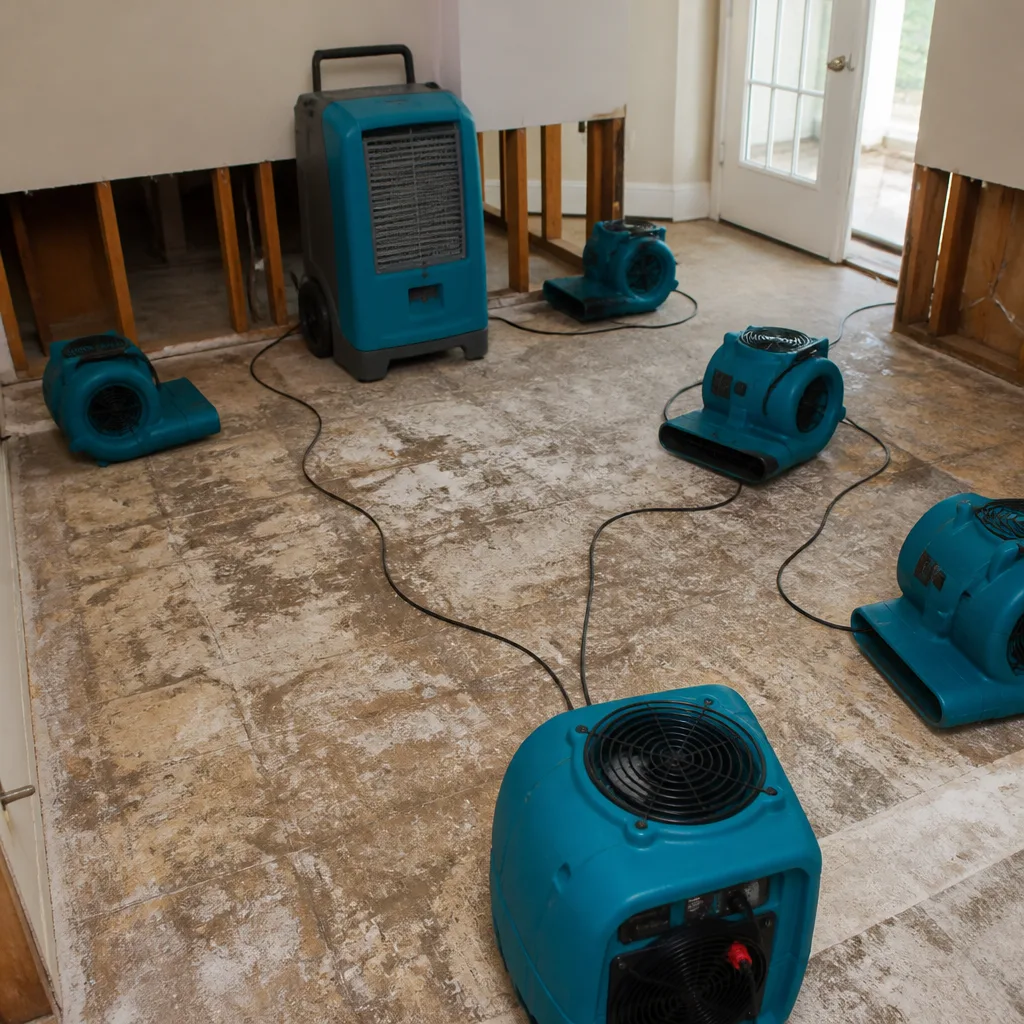 Water damage drying
 Fire & smoke cleanup
 Mold remediation
 Storm response
 Sewage cleanup
 Reconstruction
Free visual inspection and a written scope of work before any mitigation begins - photos, moisture readings, and drying logs go in your claim file
The scope we write is the scope we bill. Anything new gets shown to you, in writing, before we touch it.
Get your free estimateDamage Restoration Warning Signs: A San Antonio Homeowner’s Reference Guide
Most homeowners picture water damage as a burst pipe or a flooded living room. The truth is far quieter. In San Antonio, the most destructive water damage usually announces itself as a faint smell in a hallway, a cabinet door that doesn’t close the way it used to, or a water stain that appeared and then dried before you thought to investigate. This guide walks you through the specific warning signs room by room, explains how to tell old damage from active damage, and identifies the signals unique to San Antonio construction so you’ll know exactly when to call a professional and when to keep watching. For more guides & resources, see our blog.
Restoration work we handle
Quick Answer
The most reliable early warning signs of water damage in a San Antonio home are a musty or earthy odor that intensifies in humidity, drywall or ceiling stains with brown or copper-colored rings, paint or wallpaper that bubbles or peels without a direct water source, floors that flex or cup in specific spots, and doors or windows that begin sticking or failing to latch. Any of these signs paired with a spike in your SAWS water bill or visible mold growth means active water intrusion, and you should call a restoration professional the same day. The damage you can see is almost always smaller than the damage you can’t.
Table of Contents
- The Nose Test: Why That “San Antonio Humidity” Smell Is Almost Never Just Humidity
- Room-by-Room Warning Signs Worth Photographing
- Old Damage vs. Active Damage: How to Tell the Difference
- How San Antonio Construction Hides Water: Pier-and-Beam, Stucco, and Saltillo Tile
- The Ceiling Stain Below a Bathroom: Four Sources That Aren’t a Plumbing Leak
- The Warning Sign Homeowners Actively Ignore: Sticking Doors and Windows
- What Restoration Actually Costs in San Antonio
- Common Mistakes to Avoid
- When to Call a Professional
- Frequently Asked Questions
- The Bottom Line
The Nose Test: Why That “San Antonio Humidity” Smell Is Almost Never Just Humidity
Here’s the truth we tell every homeowner who calls us: a musty odor in a San Antonio home is almost never “just the humidity.” That smell is the odor of active microbial growth. Mold and bacteria release volatile organic compounds as they feed on wet drywall, wood, and carpet. By the time the concentration is high enough for you to notice it, the colony is large enough to require professional remediation, not a can of Febreze or a plug-in air freshener.
Humidity alone does not produce that earthy, basement-like smell. Humidity creates the conditions for the smell, but the source is biological. In San Antonio, where relative humidity routinely sits above 70% from May through October, the window between “damp” and “microbial growth” is 24 to 48 hours. That’s narrower than most homeowners realize. A small leak behind a guest bathroom vanity, combined with San Antonio’s ambient humidity, is enough to sustain mold growth indefinitely, even if the leak itself is slow.
What to do if you smell it: first, pay attention to when you smell it. Many San Antonio homeowners report the odor is strongest in the afternoon, when the attic heats up and pushes air down through the home. That timing is a strong indicator the source is in the attic, a wall cavity, or the subfloor, not in the open living space. Second, walk the house slowly with your nose at chest height. Microbial VOCs are heavier than air and tend to pool low. If you can smell it in one room but not the next, you’ve started to localize the source. Third, resist the urge to cover it up. Air fresheners, scented candles, and ozone machines mask the smell while the colony continues to grow. If anything, masking the smell makes the eventual remediation more expensive because the affected area keeps expanding.
In our experience, the homes that need the most extensive mold remediation are the ones where someone ignored the smell for six months and then tried to “air it out” by opening windows. San Antonio’s outdoor air in summer is often more humid than indoor air. Opening windows to solve a moisture smell is like pouring water on a grease fire.
Room-by-Room Warning Signs Worth Photographing
The signs below are specific enough that you can photograph them with your phone and send the photo to a contractor like Marsh Water Damage San Antonio home for a preliminary read. When you photograph damage, include something for scale (a quarter, your hand, a light switch) and take one wide shot and one close shot. These photos also matter for insurance: the more documentation you have from the first day you noticed the problem, the smoother your claim will go.
Bathrooms
- Caulk that has turned brown, orange, or pink at the tub or shower base. This is not cosmetic. Discolored caulk means water is getting behind it and the seal has failed. Left unaddressed, water migrates into the wall cavity and the subfloor below the tub.
- Baseboards that have swelled, warped, or separated from the wall. Bathroom baseboards are made of MDF in many San Antonio homes. MDF absorbs water like a sponge and swells permanently. A baseboard that looks puffy or has a visible gap at the top edge is wet.
- Floor tile that sounds hollow when tapped. Tap a quarter against the tile. A solid tile sounds sharp. A hollow thunk means the mortar bed has separated from moisture. In San Antonio homes with slab foundations, this can mean water is trapped under the tile with nowhere to go.
- Persistent toilet rocking. A toilet that moves when you sit on it has a failing wax ring. Every flush sends a small amount of water onto the floor beneath the toilet. You often can’t see it until the subfloor is already soft.
Kitchens
- Cabinet bases that have darkened or swelled at the toe kick. The toe kick is the recessed space at the bottom of a cabinet. Water from a slow supply-line leak pools there first. If the toe kick feels soft or looks darker than the rest of the cabinet, you have a leak.
- Dishwasher drips you’ve been “meaning to look at.” A dishwasher that leaks a small amount per cycle will slowly destroy the cabinet frame, the floor beneath it, and often the wall behind it. We have opened walls behind “slightly leaky” dishwashers and found 30 square feet of mold growth.
- Countertop laminate peeling near the sink or dishwasher. Laminate countertops are particleboard under a plastic skin. Once the plastic peels, the particleboard absorbs water and disintegrates quickly. Peeling at a seam is the earliest visible sign.
- The refrigerator water line you can’t see. If your fridge has an ice maker, there is a 1/4-inch plastic or copper line running behind it. These lines fail slowly, often at the compression fitting. Moisture behind a fridge is invisible until the wall is damaged. If you can pull the fridge out and see a damp spot, the line is leaking.
Laundry Rooms
- Washing machine supply hoses that feel brittle or show cracks. Rubber supply hoses have a lifespan of 3 to 5 years. In San Antonio, the hard water and heat accelerate the aging. A burst washing machine hose in an upstairs laundry room can pump 6 to 8 gallons per minute into your home until someone shuts off the valve.
- A dryer that vents into the room instead of outside. A disconnected dryer vent pumps warm, moisture-laden air into your laundry room with every load. Over time, that moisture condenses on walls and ceilings. If your laundry room feels like a sauna during a drying cycle, the vent is disconnected or blocked.
- Standing water under the washing machine pan. If your home has a drain pan under the washer and you see water in it, that water came from somewhere. The pan did its job. The leak is still happening.
Attics & Ceilings
- Roof decking that shows dark staining around nail penetrations. In San Antonio’s hot attic conditions, these stains are often mistaken for “old water marks.” They are active condensation points where warm humid air meets the cool underside of the roof deck at night. Multiple dark circles across the decking signal a ventilation problem and potentially widespread moisture.
- Ceiling stains with defined edges. A water stain that forms a ring, a circle, or a line indicates a specific source. A stain with soft, irregular edges can be from condensation. Either way, the stain means water has been present in the ceiling cavity. By the time the stain is visible on the ceiling surface, the drywall above is compromised.
- Insulation that has compressed or matted down. Wet insulation loses its loft. In the attic, look for areas where blown-in or batt insulation appears flattened. That flattening is often directly below a roof leak.
Exterior Walls
- Stucco cracks wider than 1/16 of an inch. Stucco cracks are normal in San Antonio because the soil expands and contracts with moisture. But a crack wide enough to slide a credit card into is a water entry point. During a heavy Texas downpour, water will find that crack and travel behind the stucco.
- Paint that is bubbling or blistering on an exterior wall. Bubbling paint on an exterior wall is trapped moisture pushing the paint film away from the substrate. It’s not a paint failure. It’s a moisture failure.
- Efflorescence on brick or stucco. That white, chalky powder on your exterior wall is salt. Water moves through the wall, dissolves salts in the mortar or substrate, and deposits them on the surface as the water evaporates. Efflorescence means water is moving through your wall regularly.
Old Damage vs. Active Damage: How to Tell the Difference
This distinction matters more than most homeowners realize. Insurance adjusters care deeply about whether the damage is old or active. Restoration priorities change completely. And the cost difference can be thousands of dollars.
Here’s a simple field test sequence we walk through on every inspection we perform for Water Damage Restoration in San Antonio:
- Look at the stain, not around it. An old water stain is dry, uniform in color, and often has a slightly yellow or brown tint that has faded toward the edges. An active stain is darker, and you can often see a gradient, with the darkest area at the point of water entry.
- Feel the surface with the back of your hand. Do not use your fingertips; they are less sensitive to temperature. An active wet spot will feel cooler than the surrounding drywall or ceiling because evaporation is pulling heat from the surface, especially in San Antonio’s dry winter air. A dry water stain will be the same temperature as the surrounding area.
- Press gently. Drywall that has been wet and dried will feel chalky, soft, or slightly crumbly. Active wet drywall feels spongy and gives slightly under pressure. If your finger leaves a dent, the drywall is wet and already losing structural integrity.
- Check for crystallized mineral deposits. Water carries minerals. When water evaporates, it leaves those minerals behind as a white or yellow crust. If you see a crusty deposit at the edge of a stain, the water dried there at some point, which means the leak may be intermittent or the damage is old. A wet, glossy stain with no crust means the water is current.
- Use a moisture meter. Professional restoration companies use pin-type or pinless moisture meters to measure moisture content in materials. You can buy a basic pinless meter for under $40 at most hardware stores. Dry drywall reads 5-12%. Any reading above 20% is active water damage that requires extraction and drying. Above 30% means the material is saturated.
Why urgency changes: old, dry damage is a remodeling problem. You need to repair the damaged material, but you are not racing a biological clock. Active water damage has a 48-hour window before mold colonization begins in earnest. That window is shorter in San Antonio because the ambient humidity keeps materials from drying naturally. If you find active water damage on a Friday afternoon, waiting until Monday is enough time for mold to establish.
Why insurance cares: insurance policies typically exclude “long-term seepage” or “continuous or repeated leakage” that occurred over weeks or months. If an adjuster sees old water stains with mineral deposits, they may classify the loss as maintenance-related rather than sudden and accidental. If you have photos showing the stain when it first appeared, or documentation of a recent event (a storm, a plumbing failure), include that with your claim.
How San Antonio Construction Hides Water: Pier-and-Beam, Stucco, and Saltillo Tile
San Antonio’s housing stock is different from most of the country, and those differences change how water damage shows up. A homeowner who moves here from a slab-on-grade, brick-veneer home in the Midwest will not recognize the warning signs here. Here are the three construction types that hide water most effectively.
Pier-and-Beam Foundations
Thousands of San Antonio homes, especially in older neighborhoods like Monte Vista, Alamo Heights, and Jefferson, are built on pier-and-beam foundations. The house sits on piers with a crawl space underneath. That crawl space is where water hides. A slab foundation will push water up through the concrete and into the flooring, which you’ll notice as damp carpet or cupping wood. A pier-and-beam home will channel water into the crawl space, where it can sit for months without any visible sign in the living areas. If you’re evaluating contractors, our How to Hire a Damage Restoration Contractor in San Antonio: A Step-by-Step Guide can help.
Warning signs specific to pier-and-beam homes: a musty smell that seems strongest at floor level; cold floors in summer when the rest of the house is warm; a floor that has developed a slight spring or bounce in one area; and an unexplained increase in indoor pests, especially termites, which require moisture. If you can access the crawl space, look for standing water after a rain, dark staining on the subfloor, and condensation on ductwork. You may also notice that the house “feels” humid even when the AC runs constantly; that’s moisture wicking up from below.
Stucco Exteriors
Stucco is common in San Antonio, and it’s one of the most problematic exterior systems for hidden water damage. Modern stucco is usually a three-coat system applied over a moisture barrier. When installed correctly and maintained, it works. When it fails, water gets behind the stucco and cannot escape. The damage happens inside the wall cavity, invisible from both the exterior and the interior until it’s severe.
Warning signs specific to stucco homes: horizontal cracks that run the full width of a wall; staining below window sills; stucco that has pulled away from the window or door frames; a hollow sound when you tap the stucco (delamination from the substrate); and indoor paint bubbling on the wall opposite a stucco exterior. We recommend a professional stucco inspection after any wind-driven rain event. San Antonio storms often push rain horizontally, which is exactly the condition that exploits stucco failures.
Saltillo Tile Floors
Saltillo tile is the unglazed terracotta tile you see in many San Antonio homes, particularly those built in the 1980s and 1990s. Saltillo is beautiful and extremely porous. Unsealed or poorly sealed Saltillo absorbs water like a clay pot. The water then moves through the tile and into whatever is underneath. Because Saltillo is already an earth-tone color, water stains are almost invisible against the tile’s natural variation.
Warning signs specific to Saltillo floors: the tile darkens slightly when the AC is off but lightens when the AC runs (moisture is being pulled up and then evaporating); a white, powdery film appearing on the tile surface (efflorescence, meaning water is moving up from below); grout lines that are crumbling while the tile itself looks fine; and an increasing number of loose tiles in one area. If you have Saltillo and you suspect water, do a plastic sheet test: tape a 12×12 inch sheet of clear plastic to the floor for 24 hours. If condensation forms on the underside, moisture is migrating up through the slab or subfloor.
The Ceiling Stain Below a Bathroom: Four Sources That Aren’t a Plumbing Leak
You’re standing in your living room, and you notice a yellowish-brown stain spreading on the ceiling directly below the upstairs hall bath. Your first thought is a plumbing leak. Sometimes you’re right. But tearing into the ceiling before ruling out these four other sources can cost you a drywall repair that reveals nothing.
Source one: the toilet wax ring. Every toilet sits on a wax ring that seals the toilet to the drain pipe. Wax rings last 20 to 30 years, but they fail sooner if the toilet rocks or if the original installation was poor. A failed wax ring leaks a small amount of water with every flush. That water goes straight down through the subfloor and accumulates on the ceiling below. The stain you are looking at is likely sewage-tainted water, which requires different handling than clean water.
Source two: the tub overflow or drain gasket. The tub drain has a rubber gasket underneath that can dry out and crack over time. If anyone in your home takes baths, or if the tub is used to bathe children or pets, water can overtop and run down the outside of the tub. Some of that water follows the drain pipe down and leaks at a fitting. The stain appears on the ceiling below, but the pipe above may be completely intact.
Source three: grout or caulk failure at the shower pan. A shower pan liner is a waterproof membrane that sits under the tile. If the tile grout above the pan has hairline cracks, or if the caulk at the shower floor has separated, water penetrates the tile and reaches the pan liner. The liner funnels that water toward the drain. But if the liner itself has a small tear or was installed without a proper slope, water escapes and finds the ceiling below. This is an extremely common failure in San Antonio homes built during the 1990s and early 2000s construction boom.
Source four: condensation on the supply lines. Your bathroom supply lines carry cold water. In San Antonio’s humid summer, those copper or PEX lines sweat. The condensation drips onto the subfloor and accumulates. This is most common in homes where the plumbing runs through unconditioned space or where the bathroom is not well-ventilated. If the stain below the bathroom appears in summer and does not grow in winter, condensation is a strong candidate. This is also the only source on this list that may not require a plumbing repair, but it does require insulation and possibly a ventilation upgrade.
The takeaway: before you cut into a ceiling, check all four sources. If you need help diagnosing the source, Marsh offers photo-based preliminary assessments. Send us a clear photo of the stain, note which room is directly above, and tell us when you first noticed it. That is often enough for our lead technician to give you a short list of likely causes, and we’ll be honest if we need to see it in person to know for sure. For Mold Remediation in San Antonio, the earlier we’re involved, the smaller the affected area stays.
The Warning Sign Homeowners Actively Ignore: Sticking Doors and Windows
Here’s the one we hear about constantly: “The hall bathroom door started sticking this spring, but it’s an old house, right?” Then the same thing happens to the bedroom window. Then the front door needs a hard pull to latch. Homeowners attribute it to the house settling, and in many cases, they are correct. But in San Antonio, there is a specific mechanism that turns “settling” into a water damage warning sign.
San Antonio sits on expansive clay soil. That soil shrinks during dry periods and expands when it gets wet. Your foundation moves with the soil. When doors and windows start sticking, it means the foundation is moving or the framing is absorbing moisture. The distinction matters. Foundation movement from normal soil expansion and contraction is seasonal and cyclical: doors stick more in some seasons and less in others. Moisture-related movement is progressive: the sticking gets noticeably worse over 12 to 24 months and does not improve when the weather changes.
Here is a simple checklist: note which doors or windows stick. One door sticking is likely a hinge or humidity issue. Multiple doors and windows sticking on the same side of the house, or all on the second floor, is a structural or moisture problem. The second floor is especially telling: if upstairs doors are sticking while downstairs doors are fine, water is likely entering the exterior wall assembly or the attic and wicking into door and window framing. Wood framing that absorbs water swells, and a swollen frame pinches the door or window in its opening.
The reason homeowners ignore this sign is that it’s inconvenient to address. A sticking door doesn’t feel like an emergency. It doesn’t smell bad or look bad. But structural moisture that has progressed far enough to warp framing is moisture that has been present for months. By the time the door sticks, the damage is substantial. If you’re seeing sticking doors or windows, have a professional take moisture readings in the surrounding walls. It costs far less than replacing framing, and it gives you an answer either way.
What Restoration Actually Costs in San Antonio
Homeowners hesitate to call a restoration company because they fear the unknown. Here are real price ranges for common residential water damage scenarios in San Antonio, based on our work across neighborhoods from Stone Oak to Terrell Hills to Alamo Ranch. Every Storm Damage Restoration in San Antonio job receives a written price before any work begins. These ranges are for planning, not a quote.
Water Extraction and Drying (No Structural Repair)
Most residential water extractions run between $1,800 and $4,200 before drying equipment is set. This includes removing standing water and setting commercial air movers and dehumidifiers. If the water came from a clean source, like a supply line, the extraction zone is contained, and drying takes 3 to 5 days, expect to pay on the lower end. If the water is gray or black, such as from a washing machine or sewage backup, expect the higher end because containment, antimicrobial treatment, and disposal costs increase.
Drywall Removal and Replacement (Per Room)
Expect $900 to $2,400 per room for cut-and-replace drywall work, including texture match and primer. Flood cuts, where drywall is removed from the floor to 2 feet up the wall, are the most common approach after standing water. San Antonio homes with textured ceilings often require additional matching work that adds $300 to $600 per room.
Mold Remediation (Contained Area)
A contained mold remediation for a bathroom or closet runs $1,500 to $5,000. This includes HEPA air filtration, removal of affected materials, antimicrobial treatment of the cavity, and clearance testing. The wide range reflects how far the mold has spread behind the visible surface. The earlier you catch it, the cheaper the remediation. This is the strongest argument for paying attention to that “musty smell.”
Ceiling Repairs (Per Stain/Area)
A single ceiling stain repair, assuming the leak source is already fixed, runs $400 to $1,200. This includes cutting out the stained drywall, inspecting the cavity for mold, and patching and texturing. If the ceiling is wet and actively leaking, the repair cost doubles because of drying time and potential insulation replacement.
Floor Drying or Replacement
Wood flooring that has cupped from water exposure can sometimes be dried in place for $800 to $2,000, depending on square footage and the drying equipment needed. If the hardwood has delaminated or the subfloor is wet, expect full replacement at $12 to $25 per square foot. Saltillo tile removal and replacement runs $8 to $18 per square foot, plus subfloor repairs if needed.
These are the numbers we give homeowners over the phone when they call (325) 252-3917. We’d rather have you know the range before we arrive than surprise you after the damage is opened up.
Common Mistakes to Avoid
- Painting over a water stain without fixing the source. The stain will bleed through the paint within weeks, and now you’ve added a cosmetic layer to a structural problem. In San Antonio, many home flippers do exactly this before selling. If you’re buying, look for fresh paint rings on ceilings.
- Assuming your insurance covers “maintenance” leaks. Sudden and accidental losses are covered. A slow leak you ignored for six months may not be. Document everything, report promptly, and let the adjuster make the call rather than assuming either way.
- Using a household fan to dry a wet carpet. A box fan moves air across the surface but does not extract water trapped in the pad and subfloor. You’ll dry the carpet fibers while the pad underneath stays wet, which is how mold starts growing under your feet.
- Waiting until Monday for a weekend water event. The 48-hour mold clock does not pause for weekends. Every restoration company, including us, charges more for emergency response. But the premium for a Sunday extraction is almost always less than the cost of mold remediation the following week.
- Turning off the AC to “save money” while drying out a leak. In San Antonio, your AC is your best dehumidifier. Running it during a water event helps pull moisture from the air and slows microbial growth. Set it to 72-75 degrees and keep it running.
- Calling a general contractor for mold. General contractors build and repair. Restoration companies trained in IICRC standards contain, remove, and remediate microbial growth. A general contractor who cuts out moldy drywall without containment will spread mold spores throughout your home.
- Ignoring the small signs because “the house is old.” Old houses have quirks. But a quirk that is getting worse month over month is not a quirk. Old houses also have older plumbing, older roofs, and older seals. They need closer attention, not less.
When to Call a Professional
Call a professional the same day if you have standing water that will not drain, a ceiling leak that is actively dripping, a sewage backup, or visible mold growth larger than 10 square feet. Call the next day if you have a water stain that is growing, a musty odor you have localized, or a floor that is becoming noticeably softer. Call within the week for a dry stain you found, sticking doors that are progressing, or unexplained paint bubbling. For any of these situations, Mold Remediation in San Antonio through Marsh Water Damage San Antonio starts with a written assessment and a clear scope of work. We offer free estimates in San Antonio, call (325) 252-3917, and a live person answers 24 hours a day, including weekends and holidays.
Frequently Asked Questions
A new water stain feels cool and damp to the touch, has a darker center with visible gradient, and will leave a small indentation if you press it gently. An old water stain is dry, uniform in color, often yellowish with faded edges, and feels the same temperature as the surrounding surface. If you see any crusty mineral deposit, the water dried at least once, which suggests intermittent or previous damage. When in doubt, hire a pro with a moisture meter, or buy a basic pinless meter for under $40 yourself.
A musty smell is the odor of active mold or bacterial growth. It is not a humidity smell. Mold releases VOCs as a metabolic byproduct, and that’s what you’re smelling. The source is usually hidden: behind a wall, under flooring, or in a crawl space. By the time you can smell it, the growth is established and needs professional remediation. Call (325) 252-3917 and describe the smell, where it’s strongest, and when you notice it most. We’ll help you narrow down the source over the phone.
Homeowners insurance typically covers sudden and accidental water damage, such as a burst pipe, a wind-driven rain event that breaches the roof, or an overflow from an appliance. It typically does not cover slow leaks, seepage, or maintenance-related failures unless you have a specific endorsement. The best thing you can do is document the damage on day one with photos, contact your agent promptly, and save any invoices for emergency mitigation. We work directly with adjusters and provide photo-documented assessments that support your claim.
Marsh Water Damage San Antonio answers calls 24/7 with a live person, and we aim to have a technician dispatched within a few hours of your call in most parts of San Antonio. We cover the entire metro, from downtown to Helotes to Schertz. For active water loss, same-day response is the standard. For a dry stain or a smell you’ve been investigating, we’ll schedule a standard inspection at a time that works for you. Call (325) 252-3917 and we’ll tell you over the phone what kind of timeline applies to your situation.
If the mold is on a non-porous surface like tile, glass, or metal and the area is smaller than 10 square feet, a careful cleaning with a proper antimicrobial solution may be adequate. If the mold is on drywall, wood, carpet, or insulation, or if the area is larger than 10 square feet, cleaning alone will not solve the problem. Mold roots penetrate porous materials, and surface cleaning leaves the colony alive underneath. In those cases, the affected material must be removed and the cavity treated. We follow IICRC standards on every job, and we’ll be honest if a simple cleaning is all you need. Call us at (325) 252-3917 and describe your situation in detail; we’ll give you our read.
Sticking doors in summer that improve in winter are caused by humidity-driven expansion of the wood framing and door itself. This is normal in San Antonio’s humid summers and usually not a structural problem. However, if doors and windows stick on the same side of the house, or if the sticking is getting worse year over year rather than cycling with the seasons, you may have moisture accumulating in the wall assembly or a foundation issue related to the expansive clay soil. A moisture inspection will tell you which situation you’re dealing with.
The Bottom Line
Water damage in San Antonio is quiet, persistent, and expensive when ignored. The climate accelerates microbial growth, the soil moves foundations, and the construction types common in this city hide water better than most. The warning signs covered in this guide cost nothing to check and can save you thousands in remediation. If you’ve found one or more warning signs in your home, don’t wait to see if it gets worse. Marsh Water Damage San Antonio has been serving this city since 2005, and a live person answers our phone 24 hours a day. Call (325) 252-3917 for a free estimate, and we’ll tell you what we’re seeing, what it will cost, and who is coming to your door before anyone knocks.
Written by Tobias Reyner, Owner at Marsh Water Damage San Antonio, serving San Antonio since 2005.
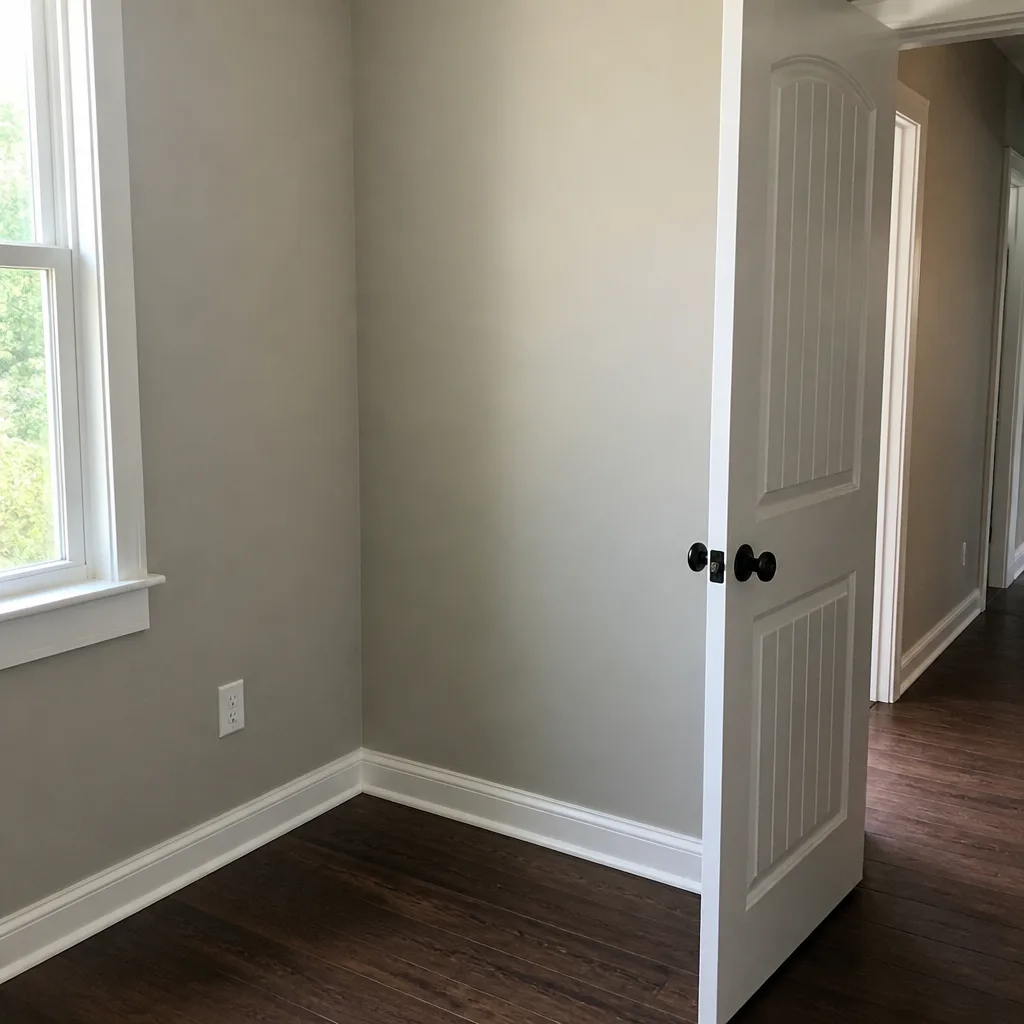
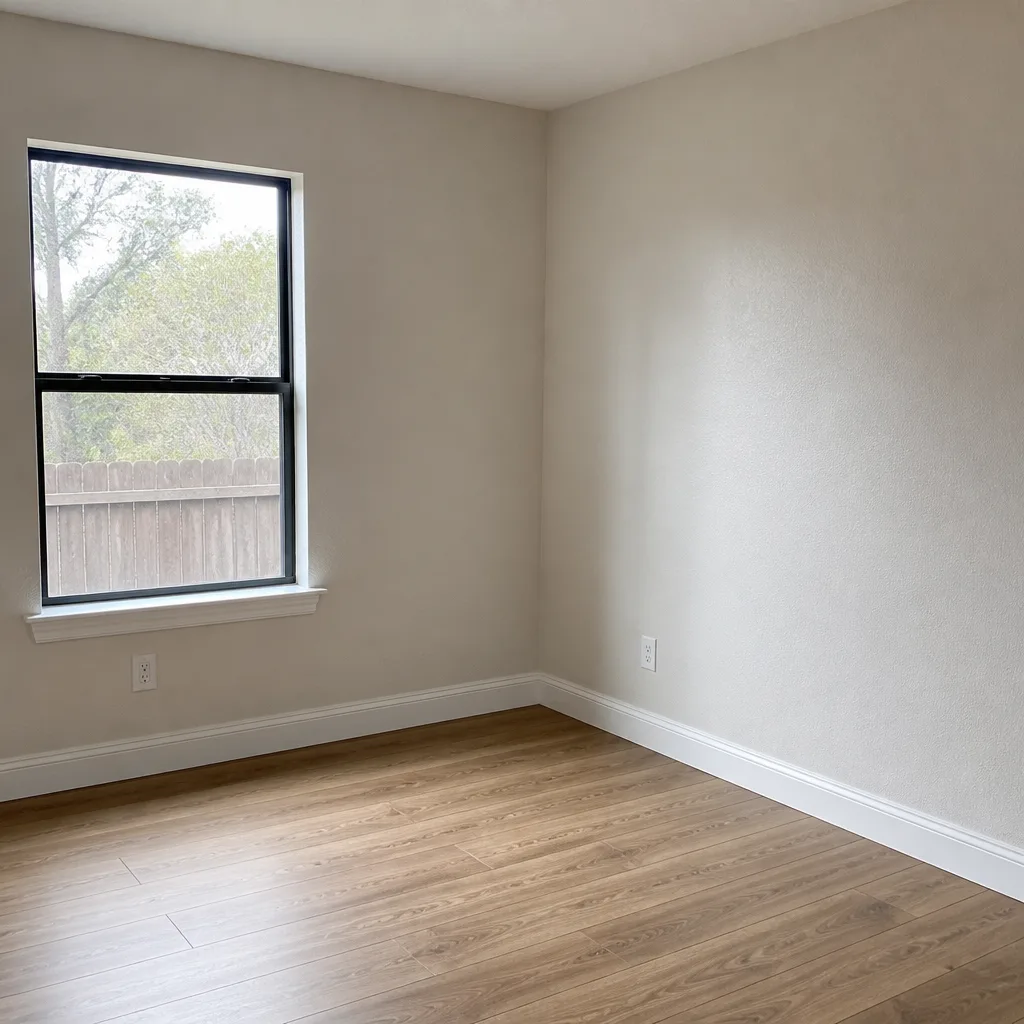
See the difference
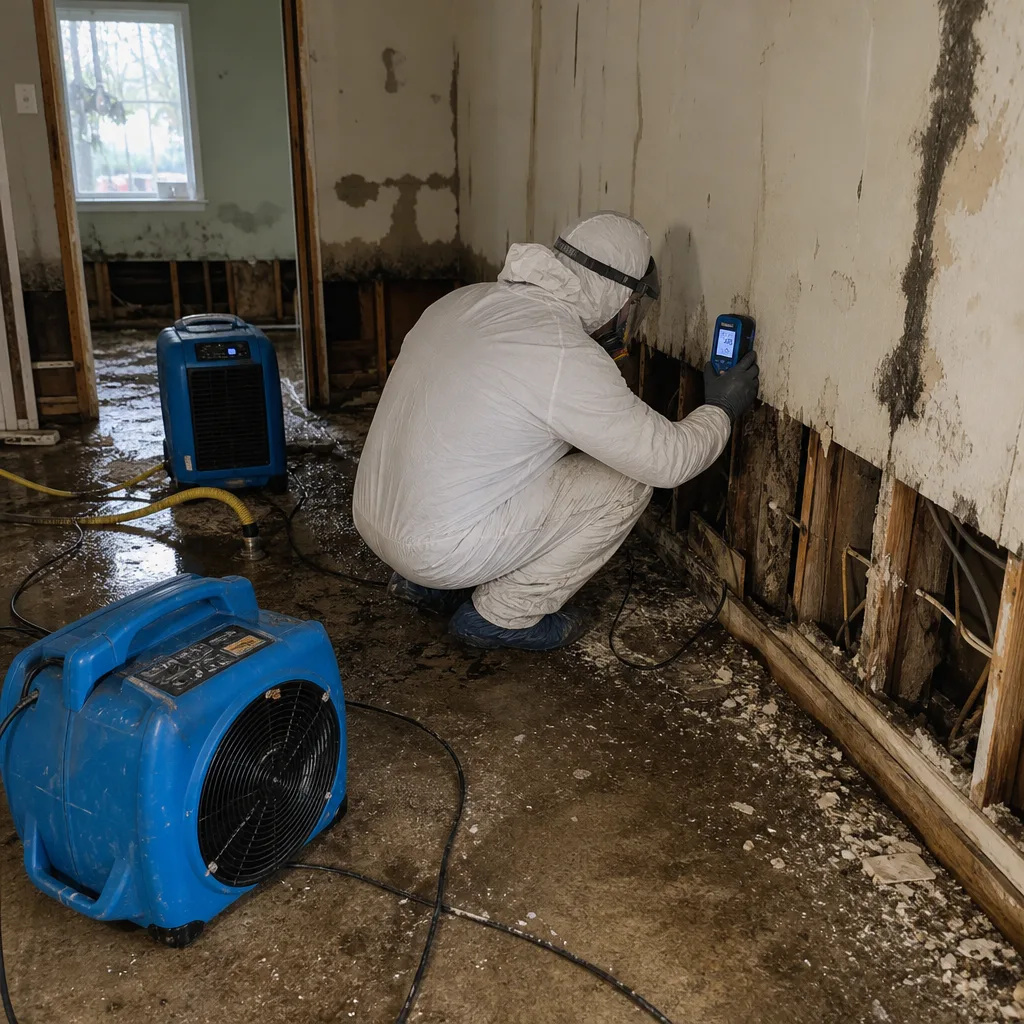 Before
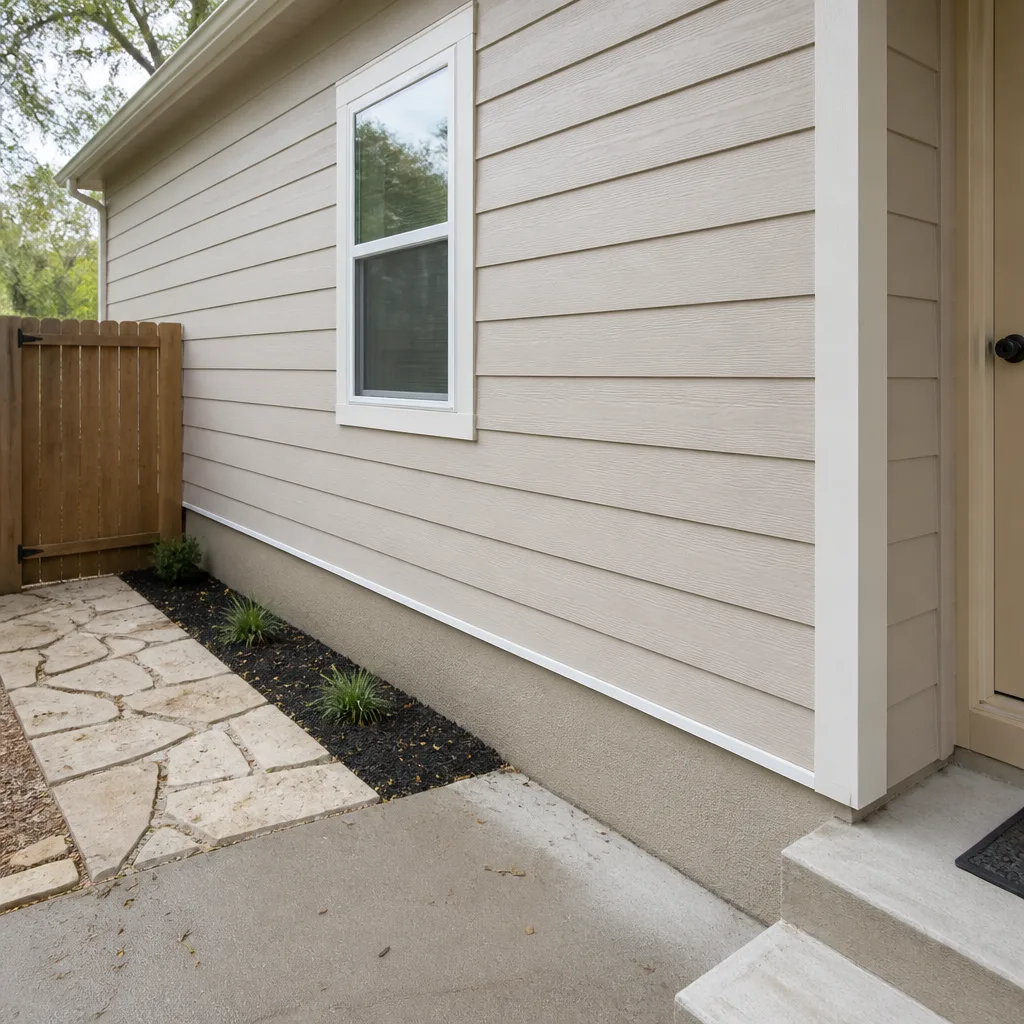 After
After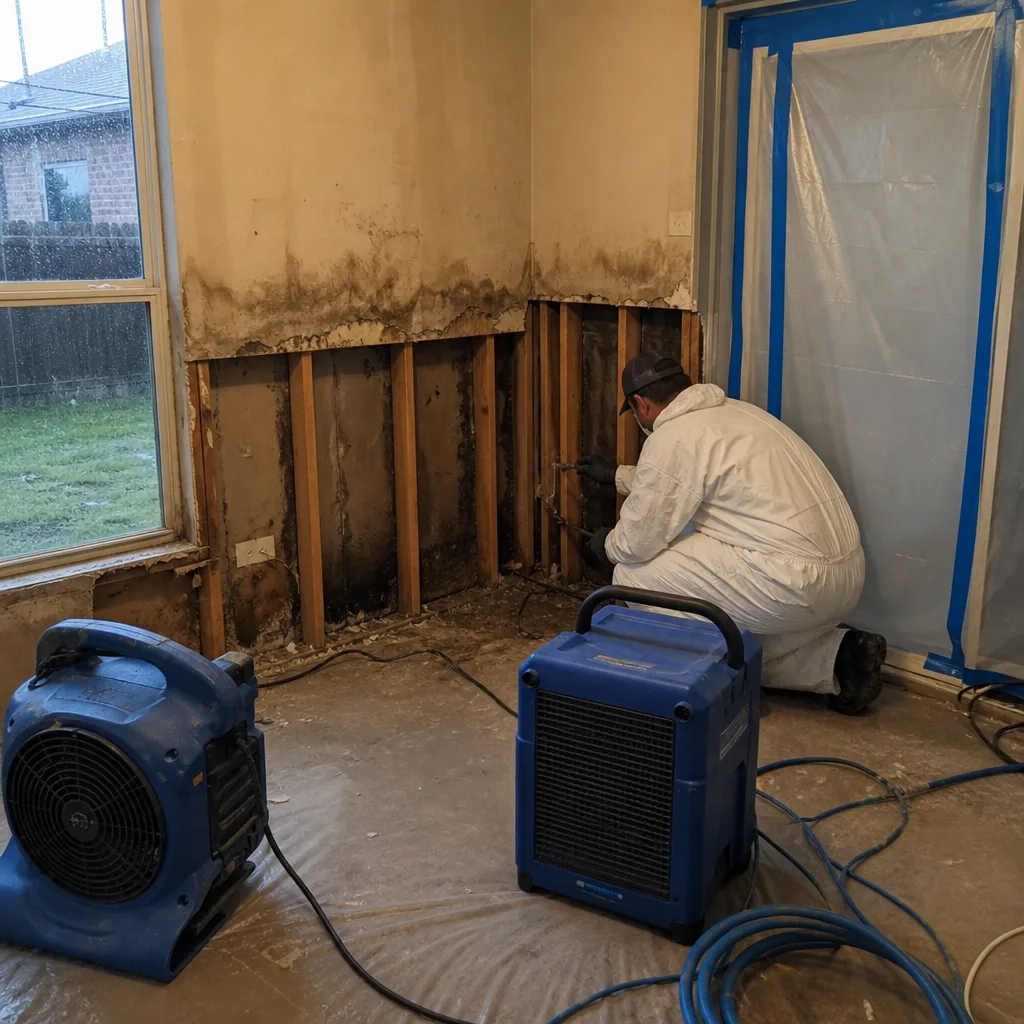 Before
 After
After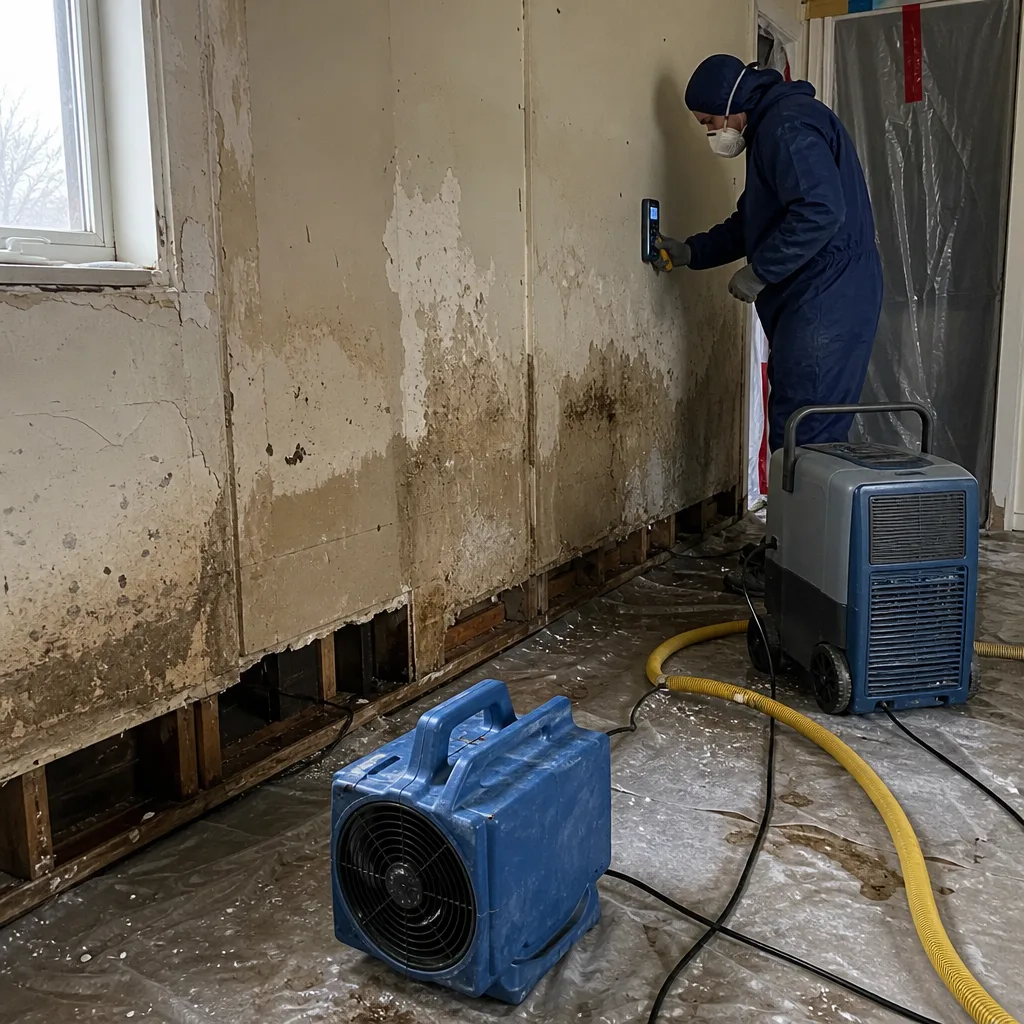 Before
 After
After