
Last updated October 16, 2026
 Water damage drying
 Fire & smoke cleanup
 Mold remediation
 Storm response
 Sewage cleanup
 Reconstruction
Free visual inspection and a written scope of work before any mitigation begins - photos, moisture readings, and drying logs go in your claim file
The scope we write is the scope we bill. Anything new gets shown to you, in writing, before we touch it.
Get your free estimateHow to Hire a Damage Restoration Contractor in San Antonio: A Step-by-Step Guide
Texas does not require a state-issued license to perform water damage restoration. Anyone with a truck, a fan, and a website can call themselves a restoration contractor in San Antonio, show up at your flooded home at 11 PM, and start tearing out drywall. This guide gives you a hiring framework you can execute in under 20 minutes during a crisis, because the worst time to screen a contractor is when water is actively spreading across your floor. For The Complete Guide to Damage Restoration in San Antonio, see our full resource. You will learn the three credentials that actually matter, the five questions that expose an unqualified company in under three minutes, and why a written scope of work is the single most important document in the entire process.
Quick Answer
To hire a damage restoration contractor in San Antonio, verify three things before anyone touches your property: IICRC certification on the technical team, general liability insurance with at least $1 million in coverage, and a physical business address in Texas. Then demand a written scope of work with a line-item price before any equipment is placed, and confirm the identity of every technician who will enter your home before they knock. A qualified San Antonio restoration company will provide all of this without hesitation; an unqualified one will stall, deflect, or pressure you to skip the paperwork.
Restoration work we handle
Table of Contents
- The Texas Licensing Problem: Why Credentials Matter More Here
- The Three Credentials That Actually Matter in San Antonio
- The Midnight Call: Five Questions That Expose a Bad Contractor in Three Minutes
- The Written Scope of Work: Your Legal Shield Before Any Demo Starts
- The ‘Who Is Showing Up’ Problem: Verifying Technicians Before They Enter
- Red Flags: Out-of-State Storm Chasers and the Post-Storm San Antonio Market
- San Antonio-Specific Factors: Climate, Construction, and What They Mean for Restoration
- Your 20-Minute Hiring Checklist
The Texas Licensing Problem: Why Credentials Matter More Here
In most skilled trades, licensing is a floor. Electricians in Texas answer to TDLR. Plumbers answer to the Texas State Board of Plumbing Examiners. Restoration contractors answer to no state licensing board at all. Texas is one of a minority of states with no universal licensing requirement for water damage restoration, mold remediation, or storm damage work. That means the person who shows up at your San Antonio home after a pipe burst could have completed formal training through IICRC, or could have bought a wet vac at Home Depot last week. Their website will not tell you which one.
This absence of state oversight shifts the entire burden of vetting onto the homeowner and onto third-party credentials that carry actual weight. Industry certifications from organizations like the IICRC (Institute of Inspection, Cleaning and Restoration Certification), RIA (Restoration Industry Association), and IFA (International Franchise Association) are not government-issued, but they represent real training, real testing, and real continuing education requirements. A company that invests in IICRC-certified technicians is signaling something concrete: we paid for training because we intend to do this work correctly. A company with no certifications is signaling something else entirely.
In our experience serving San Antonio since 2005, the gap between a credentialed crew and an uncredentialed one shows up fastest in the details. Trained technicians take psychrometric readings, which means measuring the moisture in the air and inside wall cavities, before declaring a structure dry. Untrained operators run fans until the surface feels dry to the touch and call it done. Six months later, the homeowner notices a musty smell behind the baseboard. The damage never left; it just moved deeper.
This is why the hiring conversation has to start before the emergency. You cannot research credentials at midnight with water spreading across your kitchen floor. You can, however, store a shortlist of vetted San Antonio restoration companies in your phone today, and this guide will show you exactly how to build that list. For Water Damage Restoration Maintenance Checklist for San Antonio Homeowners, see our companion resource.
The Three Credentials That Actually Matter in San Antonio
Most contractor websites in San Antonio list credentials. Very few list the ones that matter. Here is what to look for and what to ignore.
1. IICRC Certification (or Equivalent Training)
The IICRC is the closest thing the restoration industry has to a national standard-setting body. Technicians who hold IICRC certifications in water damage restoration, applied structural drying, and mold remediation have passed written exams and demonstrated field competency. The certification is not permanent; technicians must earn continuing education credits to maintain it. When a San Antonio company says their team is IICRC-certified, ask for the specific certifications and the names of the technicians who hold them. A vague claim like “our techs are certified” without specifics is a red flag.
2. General Liability Insurance With a Specific Minimum
Every legitimate restoration contractor in San Antonio carries general liability insurance. The question is how much. A policy with $300,000 in coverage costs far less than one with $1 million or $2 million, and the difference matters when a a drying job goes wrong and a ceiling collapses or mold spreads to an unaffected room. Ask for a certificate of insurance naming you as the certificate holder. If the contractor hesitates, move on. This is a standard request that any established company processes daily.
3. A Physical Business Address in Texas
After major storm events in San Antonio, out-of-state contractors appear within days. They rent equipment locally, work out of hotel rooms, and register a PO box for marketing purposes. When punch-list time comes, they are gone. A physical business address in Texas, one you can drive past, is the single most reliable filter for identifying a company that plans to exist next year. You do not need to visit the office, but you should confirm the address is real. Google Street View takes 30 seconds. A real building with a real sign attached to a real local phone number is what you are looking for.
Credentials that are easy to fake or carry little weight include: “licensed and insured” as a phrase with no underlying documentation, stars and review counts on a company’s own website, “family owned and operated” as a trust signal, and membership badges from organizations that sell memberships without requiring any demonstrated competence. If a credential can be purchased for a few hundred dollars without a test, it belongs on the ignore list.
The Midnight Call: Five Questions That Expose a Bad Contractor in Three Minutes
You called a restoration company at 11 PM on a Tuesday because a supply line burst behind the washing machine. Water is moving toward the hallway. You need help fast, but you also need three minutes of information before you say “come over.” Here are the five questions that separate qualified San Antonio restoration crews from everyone else.
- “Can you email me a copy of your certificate of insurance before your tech arrives?” A qualified company can do this from a smartphone in under five minutes. An unqualified company will tell you they will “bring it to the job” or that it is “in the office somewhere.”
- “What drying equipment will you set, and how do you determine when the structure is actually dry?” Listen for two things: brand names like Dri-Eaz or Phoenix (commercial-grade equipment, not box-store fans) and mention of moisture readings rather than touch. If the answer is “we run fans until it feels dry,” you are talking to the wrong company.
- “Who exactly is coming to my house? Can you send me their name and a photo before they arrive?” A legitimate company knows exactly who is on call tonight, and can tell you. A company that says “we’ll send someone out” without naming the someone has not integrated basic dispatch accountability.
- “Will you give me a written scope of work with a line-item price before any equipment gets placed?” The only acceptable answer is yes. If the contractor wants to start demo or place drying equipment before putting anything in writing, you are about to lose control of the job’s cost.
- “What is your physical business address in San Antonio?” A PO box, a virtual office, or an out-of-state address is a disqualifier after a storm. You want an address you can verify on a map while you are still on the phone.
These five questions take about three minutes to ask. The answers tell you almost everything you need to know. A company that answers all five cleanly and without hesitation is organized, insured, and accountable. A company that stumbles on any of them is telling you who they are in real time.
The Written Scope of Work: Your Legal Shield Before Any Demo Starts
The written scope of work is the most under-discussed document in residential restoration. It is also the one that separates professional Water Damage Restoration in San Antonio companies from operators who make up pricing as they go. Here is what a scope of work does and why you should never allow work to begin without one.
Legally, a written scope of work is a contract. It defines what work will be performed, what materials will be used, what the labor will cost, and what is excluded. Once signed by both parties, it becomes the controlling document for the entire job. If a contractor starts demolition without a written scope, relies on verbal agreements, then presents you with a bill three weeks later for “additional unforeseen work,” you have very little leverage to dispute it. The contractor can claim you authorized the extra work verbally. Your memory of the conversation and their memory of the conversation will not match. A written scope eliminates the ambiguity.
A proper scope of work includes: a line-item breakdown of labor and materials, the specific rooms and surfaces affected, the drying equipment to be placed and for how long, the demolition boundaries (which walls, which flooring, how high the drywall cut), and the total price. It should also state what happens if additional damage is discovered during the job. A professional company will write a scope that anticipates this: additional work requires a written change order signed by the homeowner before any additional charges accrue.
At Marsh Water Damage San Antonio home, every job receives a written price before any work begins. This is a non-negotiable part of how we operate, not a promotional offer. The written scope is produced before equipment is placed, before demo begins, and before any invoice is generated. If a homeowner does not understand a line item, we walk through it together until they do.
The ‘Who Is Showing Up’ Problem: Verifying Technicians Before They Enter
You are about to let a stranger into your home, possibly while you are home alone, possibly with young children present, possibly at 2 AM. The restoration industry has a documented problem with contractor trust, and the “who is showing up” question is the one homeowners most often skip because they feel awkward asking. You should not feel awkward. You should demand the answer.
The Threshold Standard, applied by Marsh Water Damage San Antonio on every visit, exists specifically to solve this problem. It works in five defined steps:
- Step 1: Background check. Every technician undergoes a criminal background check before they are permitted to enter a customer’s home.
- Step 2: Identity verification. Government-issued ID is verified and the technician’s identity is confirmed by the company, every time they are dispatched.
- Step 3: Advance notification. The customer receives the technician’s name and photo before the visit, not just a vague “your tech is on the way” text.
- Step 4: Photo ID badge at the door. The technician presents a company-issued photo ID badge when they arrive, every time, without exception.
- Step 5: Uniform and marked vehicle. The technician arrives in a company uniform in a marked company vehicle, so there is no question about who is walking up your driveway.
This is not a premium add-on. It is the baseline for what any homeowner should expect from any contractor entering their home. If a San Antonio restoration company cannot tell you who is coming before they arrive, and cannot prove that person is who they say they are at the door, you are within your rights to refuse entry and call someone else. The fact that you have water damage does not mean you surrender your right to know who is in your house.
Red Flags: Out-of-State Storm Chasers and the Post-Storm San Antonio Market
San Antonio sits in a weather corridor that produces two distinct storm-damage seasons: spring hail and supercell thunderstorms, and late-summer hurricane remnants that push inland from the Gulf. For year-round preparation, see our Seasonal Damage Restoration Care for San Antonio: Year-Round Homeowner’s Guide. After every major event, out-of-state contractors arrive. They set up in hotel conference rooms, flood local Facebook groups with paid ads, and offer “free roof inspections” or “free damage assessments” that turn into high-pressure sales pitches.
The storm chaser playbook follows a predictable pattern. They sign as many contracts as possible in the weeks after the storm. They take deposits or get homeowners to sign assignment-of-benefits forms that hand over insurance claim authority. Then they either do the work quickly and poorly, or they take the deposit and disappear. When the homeowner tries to file a warranty claim or schedule punch-list repairs, the phone number is disconnected and the website redirects to a new company name registered in a different state.
Specific red flags in the San Antonio market include: an out-of-state license plate on an unmarked truck, an address that traces to a UPS store or virtual office, a contract that requires a large upfront deposit, a contractor who asks to see your insurance claim before telling you the cost of repairs, and any company that appeared in local ads within the past seven days but has no history in San Antonio before the storm.
The best defense is simple: work with a company that existed before the storm, has a physical address in San Antonio, and can show you local references going back years. If you already have a relationship with a local restoration company, or have vetted one using the framework in this guide, a storm chaser’s pitch becomes irrelevant. Storm Damage Restoration in San Antonio is a year-round service for established local companies, not a seasonal side hustle.
San Antonio-Specific Factors: Climate, Construction, and What They Mean for Restoration
San Antonio’s climate shapes restoration work in ways that generic national guides miss. The city averages 32 inches of rain per year, but the distribution is uneven. Flash floods along the San Antonio River corridor and its tributaries can dump several inches in a few hours, overwhelming drainage and sending water into low-lying homes in neighborhoods like Woodlawn Lake, Olmos Park, and parts of the South Side. When water enters a slab-on-grade home in San Antonio, it behaves differently than in a raised foundation home in Houston or Dallas.
Most San Antonio homes are built on concrete slabs. When water runs across a slab foundation, it wicks into the bottom plate of interior walls and into any porous flooring material. Vinyl plank and tile trap moisture underneath, creating conditions for mold growth that are invisible from the surface. Drying a slab-foundation home requires different techniques than drying a pier-and-beam home: equipment placement matters more, and moisture mapping of the slab itself is critical. A contractor without specific experience in San Antonio slab construction may miss moisture that a local crew will catch.
The local construction stock also skews toward limestone and stucco exteriors, which present their own water intrusion patterns. Hairline cracks in stucco, common after the freeze-thaw cycles San Antonio experiences in winter, allow slow water intrusion that causes damage over months rather than hours. These jobs require Mold Remediation in San Antonio experience, because the moisture has usually been present long enough for microbial growth to establish. The remediation process involves containment, air scrubbing, and disposal of affected materials under specific protocols. A water extraction company without mold remediation credentials is not equipped to handle a long-term stucco leak.
Summer heat adds another variable. San Antonio regularly exceeds 100 degrees from June through August, which accelerates evaporation but also creates the illusion of dryness. A wall that feels dry on the surface in August may still hold 18 percent moisture content inside the cavity, which is well above the threshold for mold growth. This is why we take psychrometric readings, which measure the actual moisture in the air and in materials, rather than relying on touch. Surface dryness is not structural dryness, and San Antonio’s heat makes that distinction more important here than in most markets.
Your 20-Minute Hiring Checklist
Here is the complete framework from this guide, compressed into a checklist you can execute in under 20 minutes during an active emergency. Explore more guides & resources on our blog.
- Verify IICRC, RIA, or IFA credentials. Ask for the specific certifications and the names of the technicians who hold them. Vague claims do not count.
- Request a certificate of insurance naming you as the certificate holder. Check for at least $1 million in general liability coverage. Confirm it can be emailed to you before the tech arrives.
- Confirm a physical business address in Texas. Verify it on Google Maps. A PO box, virtual office, or out-of-state address is a disqualifier after a storm.
- Ask the five midnight-call questions. Insurance certificate, drying equipment and moisture measurement, named technician with photo in advance, written scope before equipment placement, physical address.
- Demand a written scope of work before any work starts. Line-item labor, line-item materials, demolition boundaries, total price, and a change-order process for additional work.
- Verify the identity of every technician before they enter. Name and photo in advance, photo ID badge at the door, uniform and marked vehicle.
- Check for storm-chaser red flags. Recent arrival in the market, out-of-state plates, high-pressure insurance claim tactics, large upfront deposits.
- Ask about San Antonio-specific experience. Slab foundation drying, stucco intrusion, and summer moisture mapping. Local construction knowledge matters.
Common Mistakes to Avoid
- Allowing work to start before a written scope exists. This is the single most consequential mistake. Once demo starts, you have lost leverage over pricing. Get the scope in writing first.
- Hiring the first company that shows up in a Google search. Paid ads are not a quality signal. The top result at 11 PM is often the company paying the most for that click, not the most qualified crew in San Antonio.
- Trusting a phrase like “licensed and insured” without documentation. Ask for the certificate of insurance and the specific certifications. Words on a website cost nothing.
- Skipping the identity check because it feels rude. Knowing who is entering your home is a basic safety expectation. A professional company will volunteer this information.
- Falling for the “we’re already in your neighborhood” pitch after a storm. Storm chasers use this line to create false urgency. An established San Antonio company does not need a coincidental neighborhood presence to justify a visit.
- Assuming any fan will dry the structure. Box-store fans circulate air but do not remove bound moisture from drywall, framing, or slab materials. Commercial drying equipment from manufacturers like Dri-Eaz and Phoenix, operated by trained technicians, is what actually dries a structure.
- Waiting until you have water damage to research restoration companies. The entire premise of this guide is that you should have a vetted shortlist before you need it. Twenty minutes today saves you a panic-driven decision later.
See the difference
 Before
 After
After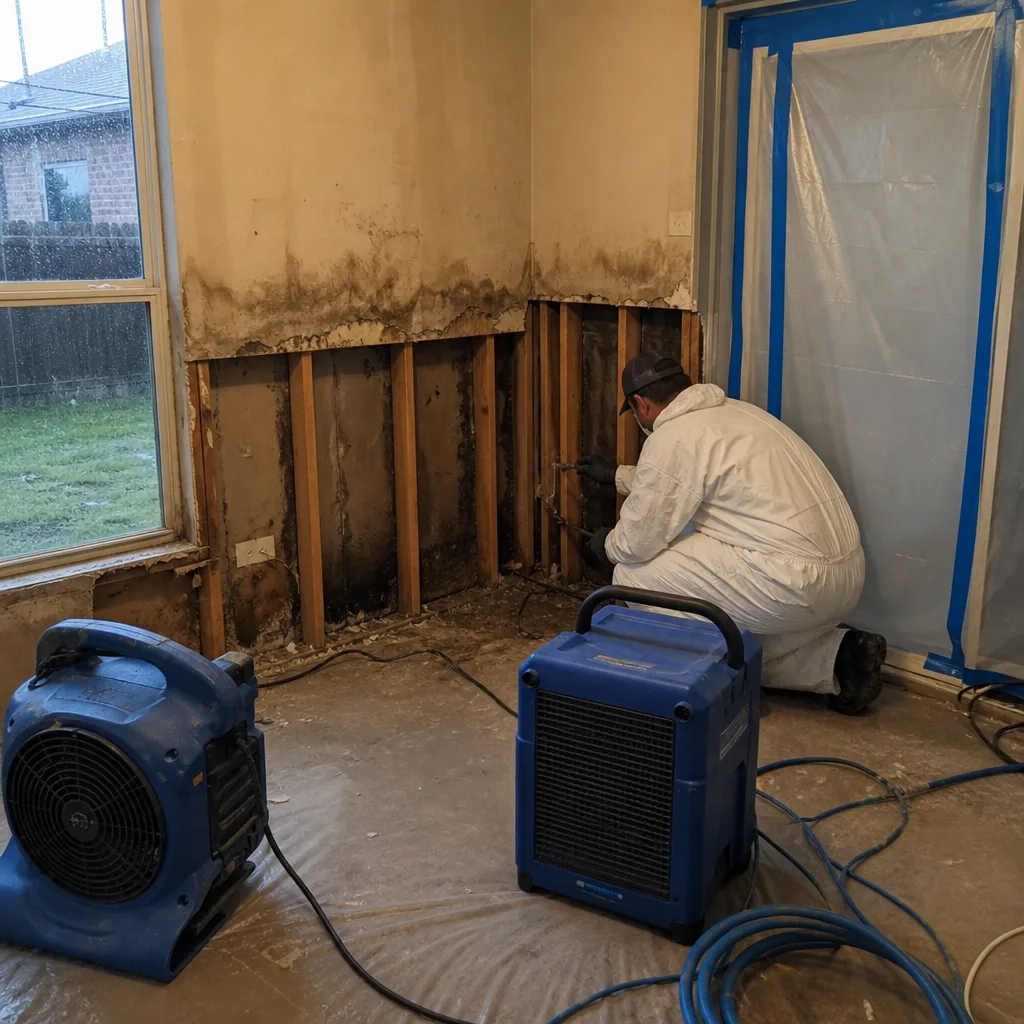 Before
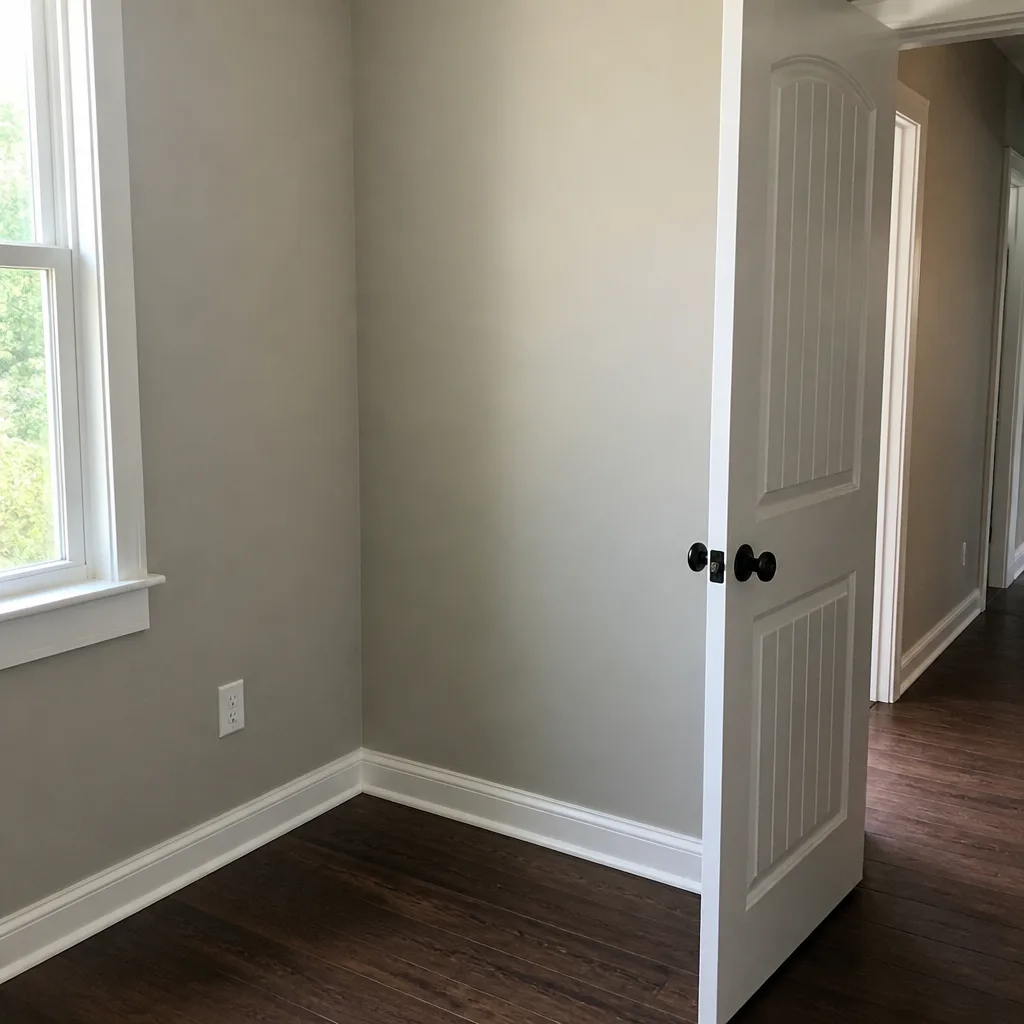 After
After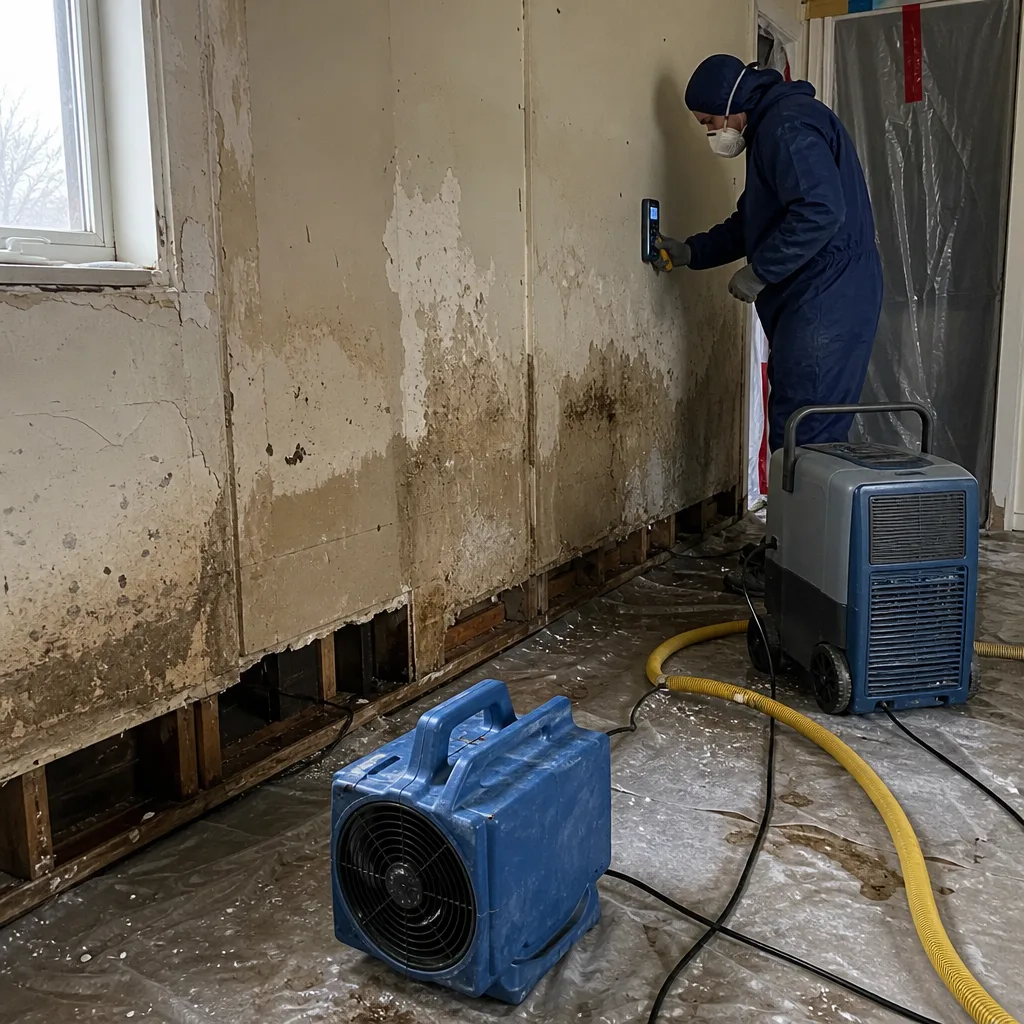 Before
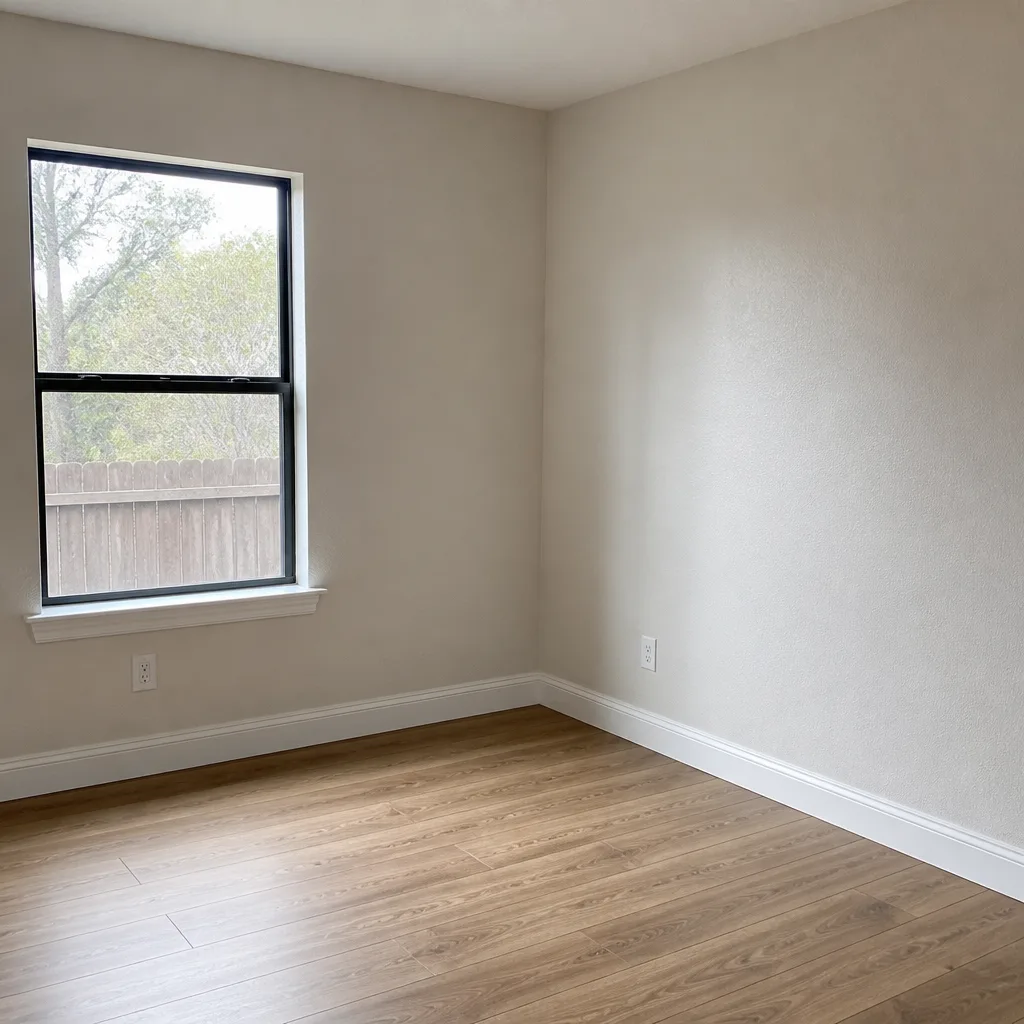 After
AfterWhen to Call a Professional
Water damage is not a DIY project, and the threshold for professional help is lower than most homeowners assume. Call a restoration company immediately if water has penetrated walls, flooring, or cabinetry; if the affected area exceeds what you can dry with towels and a shop vac in 24 hours; if the water source is a sewage backup or stormwater from flooding (both carry contaminants that require containment and disinfection, not just drying); or if you see visible mold growth or detect a musty odor that persists after surface drying. Delays compound the damage. Materials that could have been dried in the first 48 hours become tear-out jobs after a week. Marsh Water Damage San Antonio offers free estimates in San Antonio; call (325) 252-3917 and a live person answers, day or night.
Frequently Asked Questions
Most residential water extractions in San Antonio run between $1,200 and $4,500 before drying equipment is set, depending on the affected square footage, the category of water, and the amount of demolition required. A small supply-line leak confined to a bathroom may cost under $2,000 total. A sewage backup affecting multiple rooms with full drywall removal and drying equipment over five days can exceed $8,000. The only way to get an accurate number is a written scope of work after inspection. Call (325) 252-3917 for a free estimate.
Homeowners insurance generally covers sudden and accidental water damage from burst pipes, appliance failures, and storm-related intrusion, but typically excludes damage from gradual leaks, poor maintenance, or flooding from rising groundwater unless you carry a separate flood policy. A restoration company that documents damage thoroughly with photos and moisture readings makes the claims process easier. Ask whether the contractor coordinates directly with your adjuster.
A local San Antonio restoration company with 24-hour live dispatch should have a technician at your door within 60 to 90 minutes of your call, depending on your location within the city and current demand. If a company tells you they can arrive tomorrow, call someone else. Water damage compounds by the hour, and the first 48 hours are the window where drying is most effective.
If visible mold growth covers more than 10 square feet, or if moisture has been present for more than 72 hours inside wall cavities or under flooring, full remediation is typically required. Cleaning the surface without addressing the moisture source and removing affected materials means the mold returns within weeks. A credentialed mold remediation company will tell you honestly which situation you are in. A company that always says “just needs a cleaning” or always says “full remediation” regardless of the facts is not giving you an assessment; they are giving you a sales pitch.
A qualified restoration company should document the damage thoroughly, provide photo evidence and moisture readings, and communicate directly with your adjuster about the scope of work and pricing. You should still be present for the adjuster’s inspection and understand what your policy covers. The best approach is a contractor who treats the insurance process as part of the job, not a separate service that requires you to coordinate everything yourself.
A written estimate is a broad pricing proposal, often with a single lump-sum number and minimal detail. A written scope of work is a specific line-item contract defining exactly which rooms are affected, what materials will be removed, what equipment will be placed and for how long, and what the final price will be. The scope of work is the document that protects you from price inflation after demo begins. Demand the scope, not just the estimate.
The Bottom Line
Hiring a damage restoration contractor in San Antonio comes down to three verifications and one document. Verify credentials (IICRC, RIA, or IFA training), verify insurance (certificate with you named as holder, $1 million minimum), and verify physical presence (a real Texas address you can confirm). The one document is the written scope of work, which controls the price and the boundaries of the job before anyone swings a hammer. Add the identity check, because you should know exactly who is entering your home before they arrive. Do the vetting now, store a shortlist, and when the water comes, you will make a 20-minute decision instead of a 20-second panic. Missing pieces, as we have seen in San Antonio since 2005, are far more expensive than taking the time to hire right.
Written by Tobias Reyner, Owner at Marsh Water Damage San Antonio, serving San Antonio since 2005.