
 Water damage drying
 Fire & smoke cleanup
 Mold remediation
 Storm response
 Sewage cleanup
 Reconstruction
Free visual inspection and a written scope of work before any mitigation begins - photos, moisture readings, and drying logs go in your claim file
The scope we write is the scope we bill. Anything new gets shown to you, in writing, before we touch it.
Get your free estimateFast, Reliable Storm Damage Restoration Across Leon Valley
Storm damage in Leon Valley doesn’t wait, and neither do we. A spring thunderstorm can drop three inches of rain on Bandera Road in under an hour, turning quiet cul-de-sacs into creeks and pushing water through slab foundations that were never designed for it. Our crews reach Leon Valley fast from the San Antonio dispatch office, usually within 60 to 90 minutes of your call. The first thing we do is figure out where the water actually came from, because in Leon Valley, what looks like flood water on the floor is often hiding something beneath the slab. Call (325) 252-3917 day or night and a live person answers. Not a voicemail, not a callback queue. A person who can send a crew to your street.
Why Marsh Water Damage San Antonio Is Leon Valley’s Preferred Storm Damage Restoration Company
Leon Valley homeowners deal with a very specific kind of storm damage. The houses here were mostly built between the 1950s and 1980s, single-story ranch and traditional styles on concrete slabs. That matters because when storm water floods a slab home, it doesn’t just sit on the floor. It wicks through walls, under baseboards, and into the same slab penetrations those original cast-iron sewer lines already run through. We’ve spent years working on exactly this kind of house. Our technicians carry IICRC, RIA, and IFA credentials, and they show up for every job with Dri-Eaz moisture meters and Phoenix drying equipment that matches what any national franchise deploys. The difference is we know Leon Valley’s homes, Leon Valley’s permit office, and Leon Valley’s failure patterns.
Before any technician knocks on your door in Leon Valley, you get their name, their photo, and a confirmed arrival window. That’s the Threshold Verified standard, and it’s not negotiable. Every tech is background-checked and identity-verified, and they show a photo ID badge at your door. We know you’re letting strangers into your home during one of the worst days you’ll have as a homeowner. We’ve made that part of the job as serious as the drying itself.
Restoration work we handle
Storm Damage Cleanup in Leon Valley
Storm Damage Cleanup in Leon Valley has to account for something most national checklists miss: the water you can see is rarely the whole story. When a storm floods a 1960s ranch house off Evers Road, the visible puddle might be surface runoff, but the moisture reading at the base of an interior wall could trace back to a cracked cast-iron sewer line under the slab that shifted during the same storm. We map moisture before we touch a single piece of drywall. That changes what we tear out, what we dry, and what we document for the city.
Slab Penetration Assessment
Every flood cleanup in Leon Valley starts with a question: did water come in from outside, or up from below? We run moisture mapping across the slab, focusing on areas where plumbing lines, electrical conduits, and sewer penetrations pass through the foundation. If a reading spikes near a penetration, we’ve likely got a Category 2 or 3 water source, which means different antimicrobial treatment and different scope of work than a simple rainwater intrusion.
Code-Ready Drying Documentation
Leon Valley code enforcement wants proof that a flood-damaged home is actually dry before repairs close out. We log every drying reading with Dri-Eaz meters, document equipment placement, and generate a drying log that satisfies permit requirements. Most storm damage cleanup jobs in Leon Valley run between $2,800 and $5,400 depending on square footage and how far water traveled through the slab. That price is written down before any work starts, and it doesn’t change after demolition begins.
Flood Cleanup in Leon Valley
Flood Cleanup in Leon Valley isn’t just extracting water from floors. Sitting in the flash-flood prone stretch of Bexar County, Leon Valley catches intense spring and fall thunderstorms that dump water faster than aging drainage can move it. When that water meets a slab-on-grade home, the flood itself is just the first problem. The second is what the water carried into the structure, and the third is what was already wet underneath before the storm arrived.
Source Classification Before Pack-Out
Before we pack out a single item, we classify the water. Rainwater that came through a doorway is Category 1. Water that backed up from a storm sewer or sat in contact with soil is Category 2 or 3. The difference determines whether soft goods get dried, disposed of, or professionally cleaned. In Leon Valley, where summer droughts crack the clay soil and stress the plumbing, we frequently find that a flood that started as Category 1 turned into something worse once it reached a cracked sewer line in the slab. Skipping this step is how homeowners end up with recurring musty odors weeks after the water is gone.
Injectidry Slab Drying
Some Leon Valley floods require more than air movers and dehumidifiers. When moisture readings confirm water traveled through a slab penetration, we set up Injectidry drying mats that pull water out from within the slab itself. It’s a commercial-grade technique, and it’s the only way to dry a slab channel without tearing out the entire foundation. Most flood cleanup work in Leon Valley falls between $3,200 and $6,800, depending on how many slab penetrations are involved and how much drywall has to come out. Every estimate is free, and the price you sign is the price you pay.
Trusted Brands We Service in Leon Valley
We maintain and repair storm damage restoration systems from every major brand homeowners in Leon Valley actually use. That means Dri-Eaz dehumidifiers and air movers for drying, Phoenix extraction units for standing water, XPOWER and B-Air axial fans for air circulation, and Injectidry systems for slab penetrations. Because Leon Valley has such a high concentration of slab-on-grade homes, we keep slab-specific drying components stocked and ready to deploy, not sitting in a warehouse two cities away. Fast turnaround on wet drywall and soaked carpet backing means the difference between a cleanup and a mold remediation.
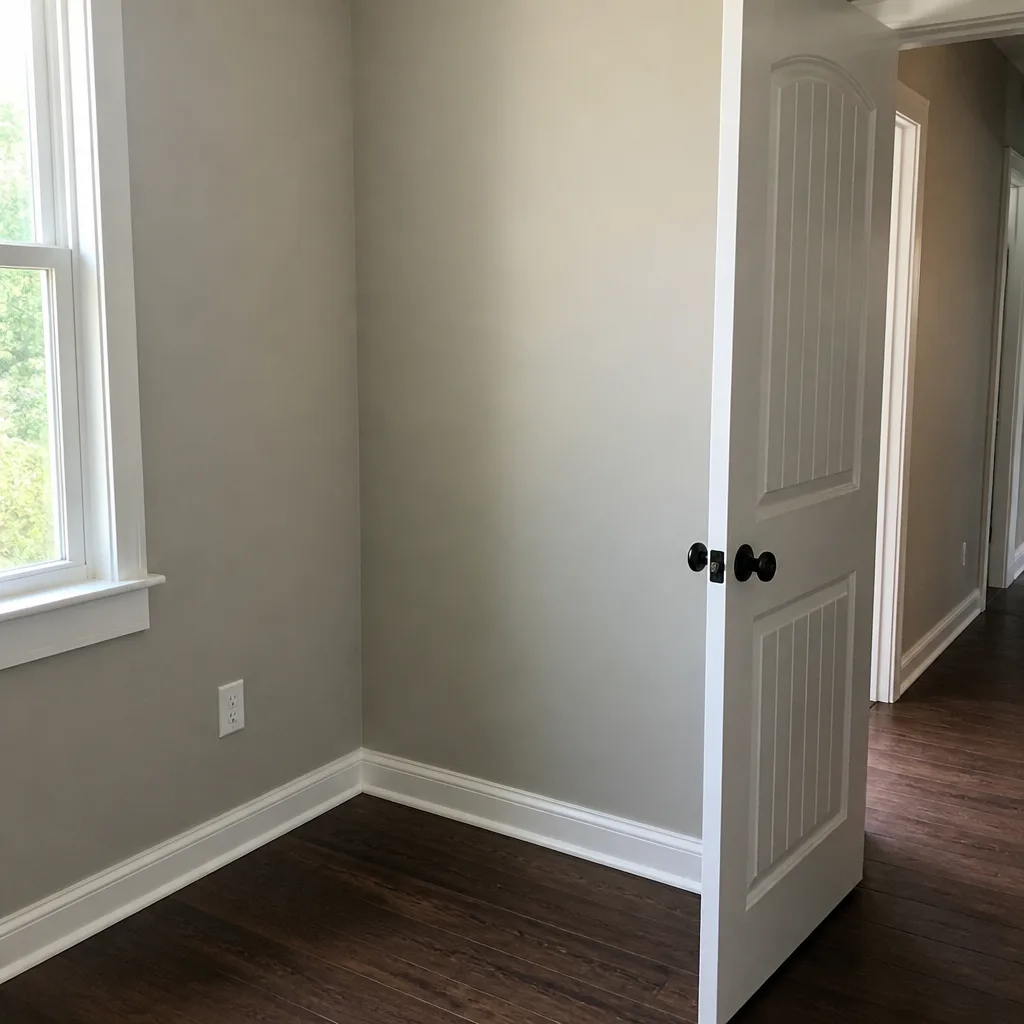
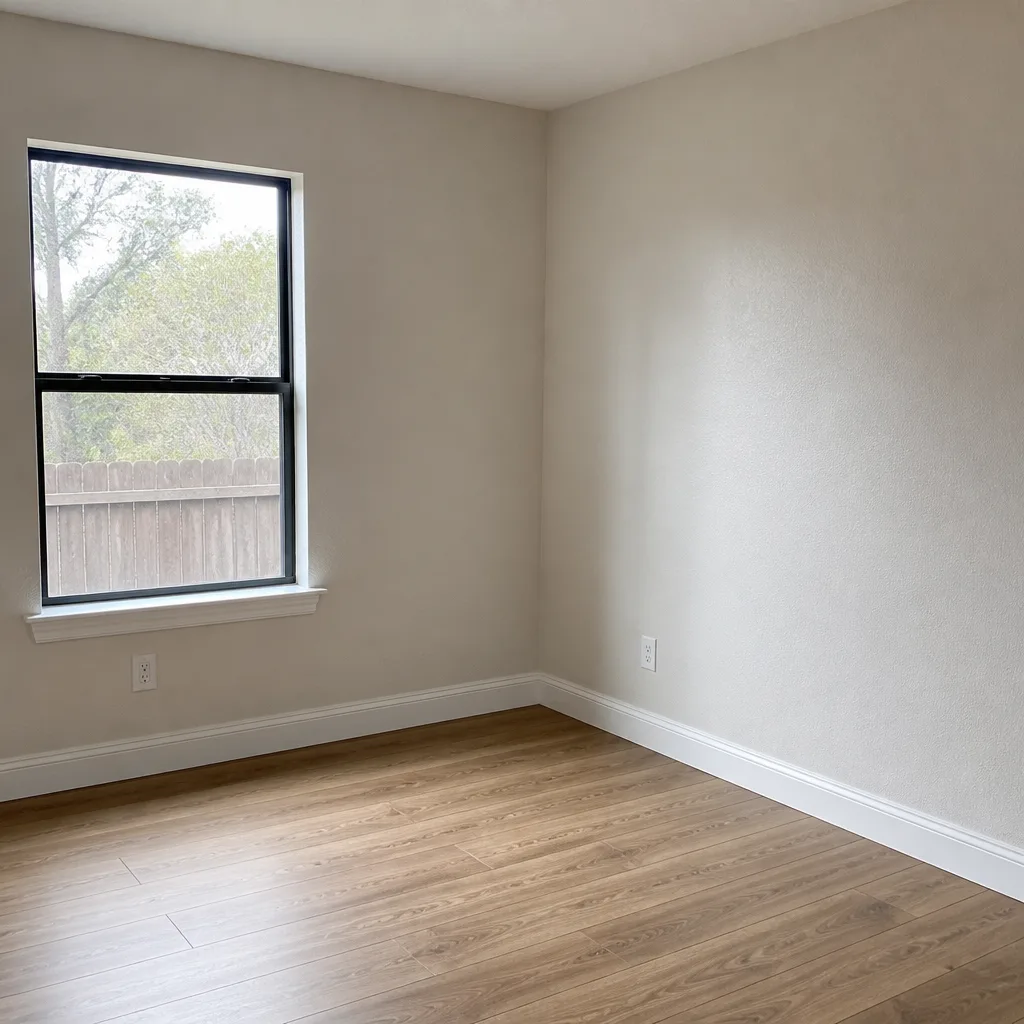
See the difference
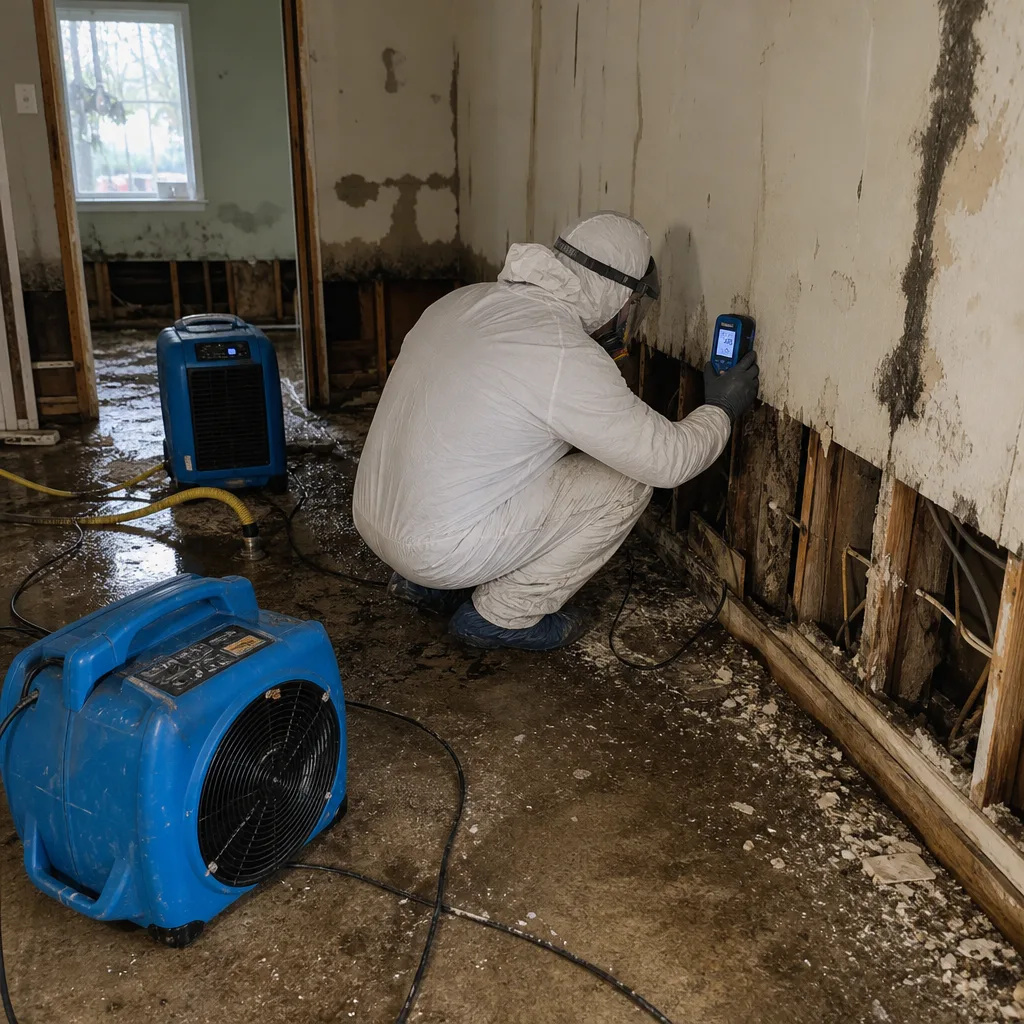 Before
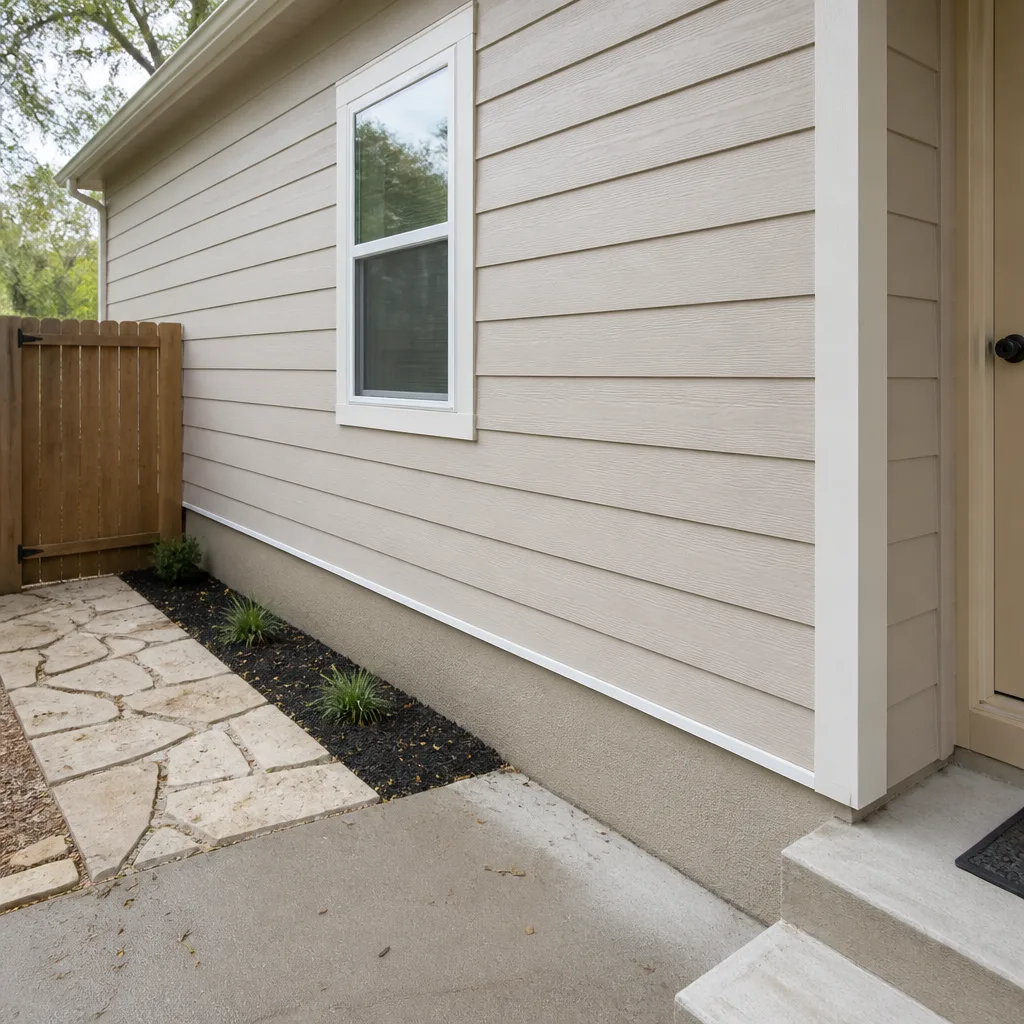 After
After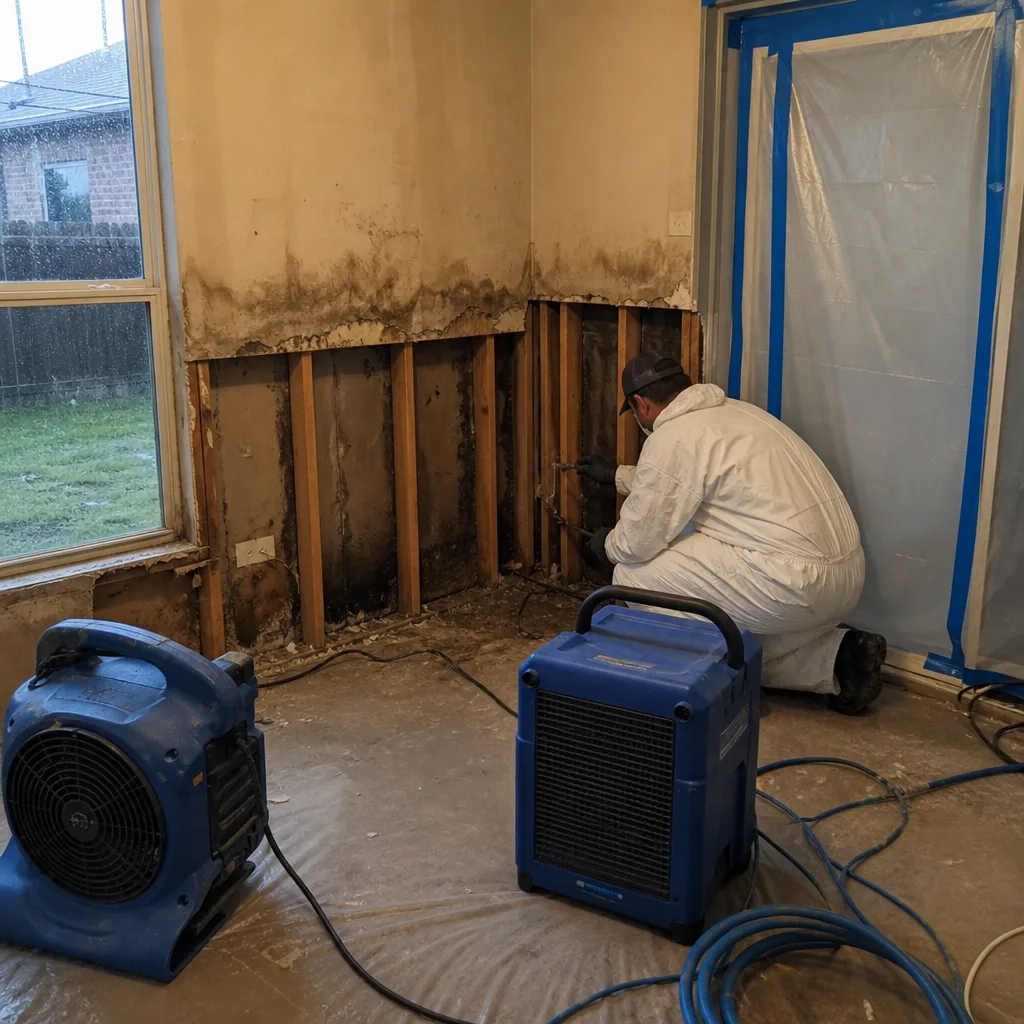 Before
 After
After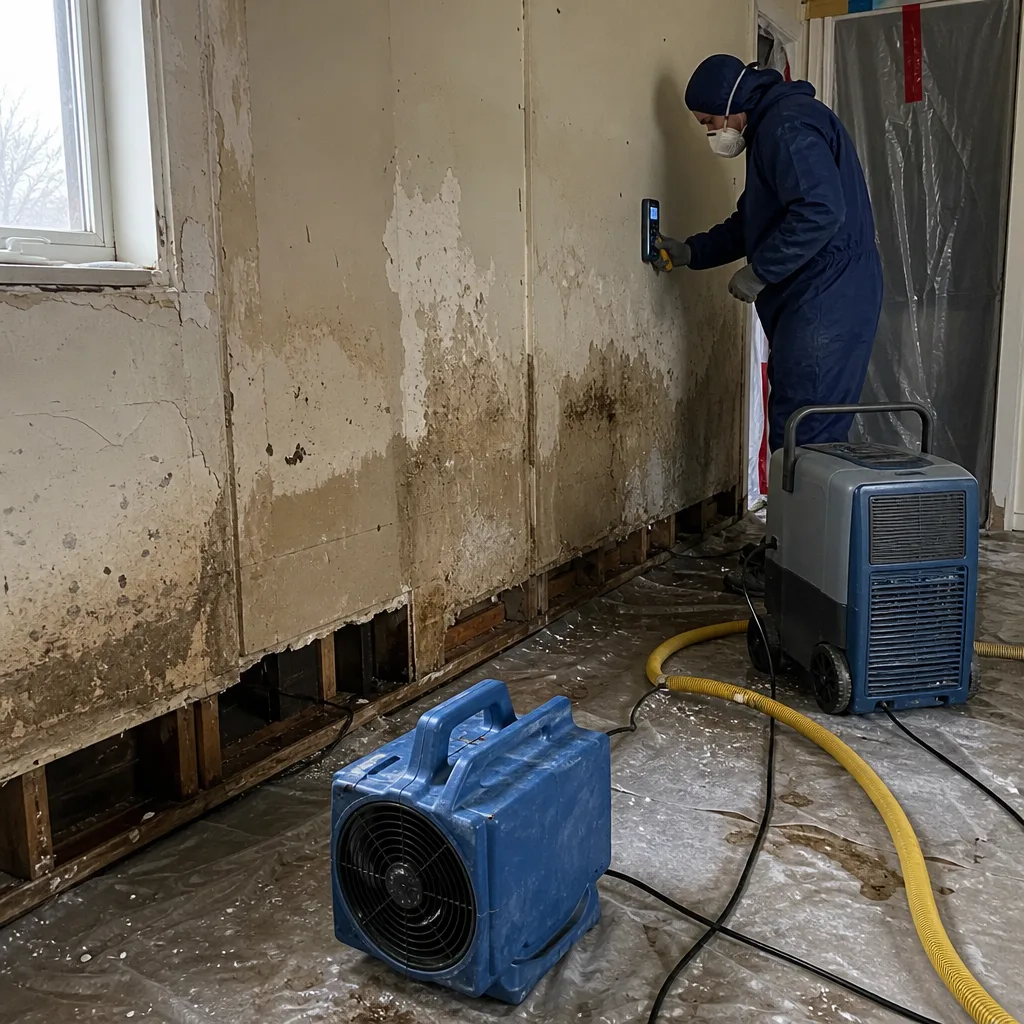 Before
 After
AfterCommon Storm Damage Restoration Problems We See in Leon Valley Homes
- Hidden slab leaks from original cast-iron sewer lines. Many Leon Valley homes still have the cast-iron lines installed when the house was built. Decades of drought cycles and shifting clay soil crack these lines, and storm water finds the path into the slab. The first sign is often a musty smell, not a visible puddle.
- Surface-only water assessment that misses the real source. A contractor who shows up, extracts the visible water, and leaves has missed the point in Leon Valley. Without moisture mapping across the slab, you can’t know whether a foundation-level breach is feeding the dampness. That’s how recurring odor and mold happen.
- Improper Category 2/3 water handling. Storm water that carries soil or sewage is not drying water, it’s contamination water. Treating it like Category 1 rainwater means skipping antimicrobial treatment and packing out contaminated goods. Weeks later, the smell comes back, and now it’s in the drywall.
- Code-required scope of work that skips slab penetration repair. Leon Valley’s permit process expects a documented scope of work. If moisture readings weren’t taken before structural drying started, there’s no proof a hidden slab penetration ever got addressed. The repair closes out, and the home stays wet where nobody looked.
Pricing for Storm Damage Restoration in Leon Valley, TX
We Also Serve Cities Near Leon Valley
Our storm damage restoration crews cover the entire northwest Bexar County corridor. Beyond Leon Valley, we respond daily to storm damage calls in San Antonio, Selma, Boerne, and Converse. If you’re on the edge of Leon Valley or a neighbor in a nearby city, the same Threshold Verified technicians and the same written-price guarantee apply. Read more about our full Storm Damage Restoration services, or learn how we serve Storm Damage Restoration in Leon Valley specifically.
Serving Leon Valley, TX - Our Local Coverage Area
We’re based in the Leon Valley area and know this community well. Use the map below to see our service coverage - if you’re nearby, we can almost certainly help.
FAQs About Storm Damage Restoration in Leon Valley
How does Leon Valley’s code enforcement change a flood cleanup job?
Leon Valley requires repair permits for flood damage restoration on most post-war homes, and the permit office expects moisture documentation, not just a verbal claim that the house is dry. That means every flood cleanup we do in Leon Valley includes logged drying readings from Dri-Eaz meters, documented equipment placement, and a written scope of work that matches what the city will inspect. Skipping this step risks a repair that can’t pass code, or a closed permit that leaves hidden moisture behind. Call (325) 252-3917 and we’ll walk you through what your specific street requires.
Why does a flooded Leon Valley slab home sometimes smell musty weeks after the water is gone?
Because the water never fully left. In Leon Valley, many slab homes have original cast-iron sewer lines that cracked during a drought cycle long before the storm. When flood water reaches that crack, it wicks into the slab itself. If the slab penetration wasn’t dried with Injectidry or an equivalent system, the moisture stays inside the foundation and off-gasses that musty odor for weeks. The fix is slab-specific drying and a moisture map that proves the penetration is dry, not just the surface.
How fast can mold start on wet drywall after a Leon Valley storm?
Mold can start within 24 to 48 hours on wet drywall in Leon Valley’s humid spring and fall months. Once drywall wicks flood water and the indoor humidity stays above 60%, mold spores that were already in the home start colonizing. In a slab home, the clock starts the moment water contacts the drywall, not when you notice it. That’s why we send crews the same day you call, and why our drying logs include humidity readings from the moment we arrive.
Do you classify storm water before deciding what to dry or tear out?
Yes, always. We classify every storm water source as Category 1, 2, or 3 before we touch the structure. Rainwater that came straight through a doorway is Category 1. Water that backed up from a storm drain or sat in contact with soil is Category 2. Water that contains sewage is Category 3. The classification determines whether we dry soft goods in place, remove and clean them, or dispose of them. In Leon Valley, where storm water routinely finds cracked cast-iron lines under the slab, a Category 1 flood can turn into a Category 2 situation quickly. We document the classification on the work order.
Is slab penetration drying common in Leon Valley storm damage jobs?
Yes, more common than in most parts of Bexar County. Leon Valley’s post-war housing stock sits on concrete slabs with original cast-iron plumbing running through multiple penetrations. When drought cycles crack those pipes and a storm adds water pressure, the slab itself becomes a moisture reservoir. Slab penetration drying using Injectidry mats is a regular part of our Leon Valley storm damage work. If your house was built between 1950 and 1980, we assume slab involvement until moisture mapping proves otherwise. Call (325) 252-3917 and we’ll tell you what your slab is showing.
Written by Tobias Reyner, Owner at Marsh Water Damage San Antonio, providing storm damage restoration to Leon Valley homes since 2005.