
 Water damage drying
 Fire & smoke cleanup
 Mold remediation
 Storm response
 Sewage cleanup
 Reconstruction
Free visual inspection and a written scope of work before any mitigation begins - photos, moisture readings, and drying logs go in your claim file
The scope we write is the scope we bill. Anything new gets shown to you, in writing, before we touch it.
Get your free estimateFast, Reliable Storm Damage Restoration Across Selma
Storm damage restoration in Selma, TX typically runs between $2,500 and $18,000 depending on whether you’re dealing with roof leaks, flooding from oversaturated clay soil, or Category 3 stormwater intrusion. Most jobs we handle here involve water extraction, structural drying, and material matching for homes built after 2000, and we can usually get a crew to your door within 60 to 90 minutes of your call. Selma’s particular problem is that thousands of homes sit on former farmland with no weeping tile and no sump pump, so a slow slab leak becomes an indoor flood faster than most homeowners expect. Our Storm Damage Restoration team knows exactly how that plays out here, and we’ve seen enough of it to move quickly when you call (325) 252-3917.
Key takeaways for Selma homeowners:
- Stormwater in Selma is frequently Category 3, meaning it carries contaminants from saturated clay and agricultural runoff, not just rainwater.
- Slab-on-grade construction means water travels under flooring fast; you need moisture mapping, not just visible-water extraction.
- Open floor plans in newer Selma subdivisions let humidity spread room to room before you even see standing water.
- A written price and a 365-Day Done Right Promise come with every job, because you should know what you’re paying before we cut anything open.
Why Marsh Water Damage San Antonio Is Selma’s Preferred Storm Damage Restoration Company
Marsh Water Damage Restoration has worked on storm losses across Selma since the residential boom of the 2000s put thousands of new slab homes on former agricultural land. That history matters, because the damage profile in Selma isn’t the same as it is in San Antonio proper. Foundation movement from clay soil, undersized subdivision drainage, and no-sump-pump construction are the recurring culprits here, and a crew that doesn’t know that will treat your flood like a standard plumbing leak and miss half the problem.
Every technician who arrives at your door is Threshold Verified: background-checked, identity-verified, and sent to you by name and photo before the visit. They’ll show a photo ID badge at the door. Tobias Reyner, who leads our team, set this standard because he knows the second fear homeowners carry alongside storm damage is the unease of opening the door to a stranger. That’s true whether you’re home alone, you’ve got young kids, or you’ve lived in Selma long enough to remember when this was farmland. You’ll know who’s coming before we knock, and the same standard applies on every return visit.
Calls are answered by a live person 24/7. That’s not a phone tree and not a chatbot. You’ll reach someone at (325) 252-3917 who can dispatch a Selma crew immediately.
Restoration work we handle
Flood Cleanup in Selma
Flood Cleanup in Selma almost always starts with figuring out whether the water is Category 1, 2, or 3. Stormwater that flows across Selma’s clay-heavy soil and into a home is frequently Category 3, which means it carries soil bacteria, agricultural runoff, and whatever the street drainage picked up on the way. That changes the cleanup protocol completely. Materials that absorbed Category 3 water typically get removed, not dried, because drying dirty water doesn’t make the material safe. In a Selma slab-on-grade home, that often means pulling wet carpet pad, cutting drywall above the water line, and running our Dri-Eaz sensors beneath the slab to find where the water actually traveled. Most flood cleanup jobs in Selma run between $3,500 and $12,000 depending on square footage, the category of water, and whether we’re doing a partial or full pack-out.
Water Extraction and Structural Drying
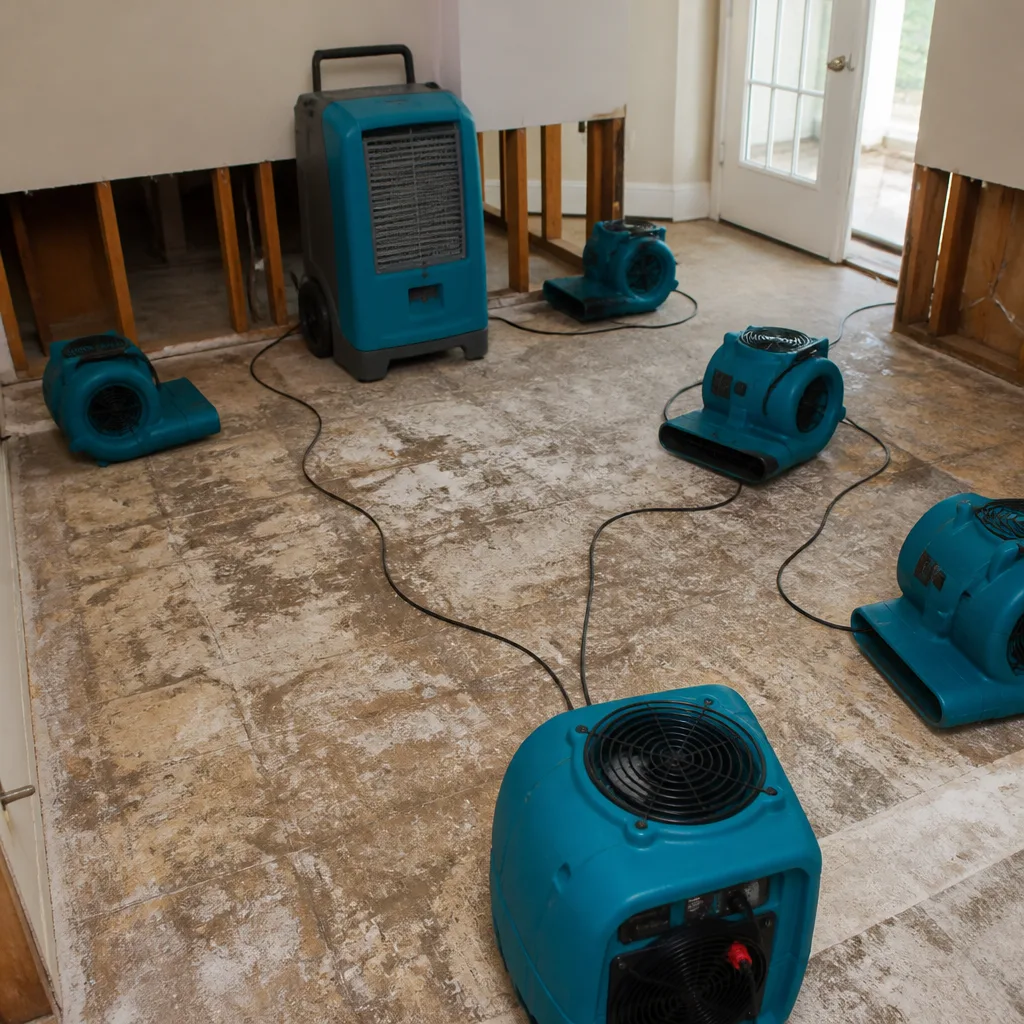
We use professional extraction equipment from Dri-Eaz and Phoenix to pull standing water fast, then set drying boundaries with real psychrometric readings (measuring the moisture in the air) so we know when the structure is genuinely dry, not just dry on the surface. On a Selma slab home, this stage is where experience counts: water that seeped under vinyl plank or tile can sit against the slab for weeks. Our techs map that hidden moisture, not just the puddle you saw.
Category 3 Compliance and Disinfection
When stormwater is classified as Category 3, we follow the same protocols you’d see on a commercial loss: containment, removal of saturated porous materials, and antimicrobial application on the remaining structure. We write this into your scope before we start, in plain language, so you know exactly what’s being removed and why. The last thing we want is for you to find out after demo that something was torn out that you expected to keep.
Flooded House in Selma
A Flooded House in Selma usually doesn’t mean two feet of water in the living room. It means you came home from work or woke up to water spreading across an open floor plan because the slab shifted, or the undersized drainage outside finally gave way, or a storm dumped more rain in 45 minutes than the subdivision’s grading was built to handle. When a whole house is affected, we set containment first. In Selma’s open-concept homes, that step is non-negotiable, because humidity from the wet area will move into dry rooms within hours and push a $6,000 extraction into a $25,000 rebuild. A flooded house job in Selma typically runs $4,000 to $18,000 depending on the category of water, how far it spread, and whether kitchens and bathrooms are involved.
Containment Before the Water Spreads
We responded to a flooded house in the Olympia Hills subdivision after a spring thunderstorm overwhelmed the undersized drainage. Our crew set up containment, mapped moisture with Dri-Eaz sensors, and ran air movers and dehumidifiers to dry the open-concept slab-on-grade home back to pre-loss condition before mold could take hold. That job took five days from arrival to final clearance, and the family never had to leave the whole house, because we contained the affected zone from the start.
Moisture Mapping on Slab Foundations
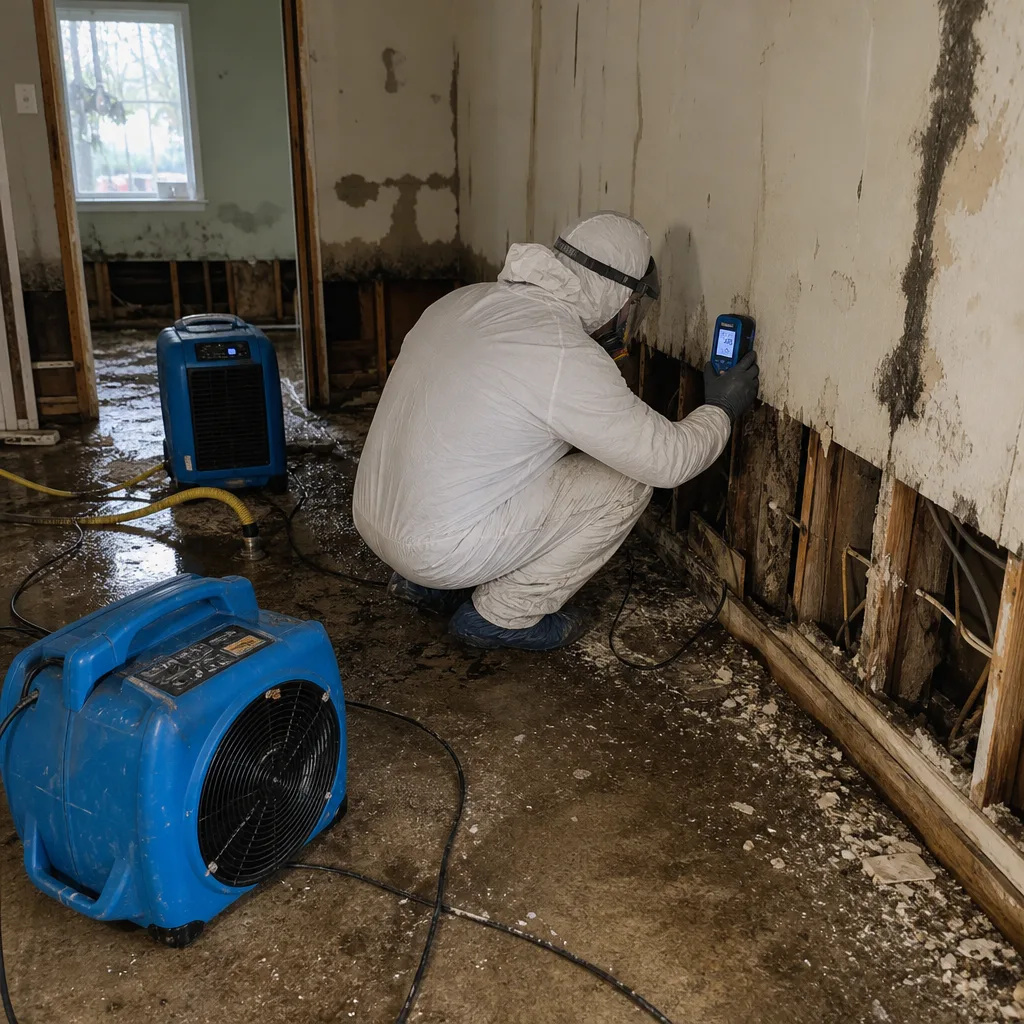
Selma homes built on slab-on-grade foundations hide water in a way pier-and-beam houses don’t. Water moves beneath flooring, under cabinets, and along baseplates without ever showing on the surface. Our IICRC-credentialed technicians use Dri-Eaz sensors to map that migration before we demo anything, so we remove only what’s actually wet, and we show you the moisture readings in writing. You’ll see what we see before anything is cut.
Trusted Brands We Service in Selma
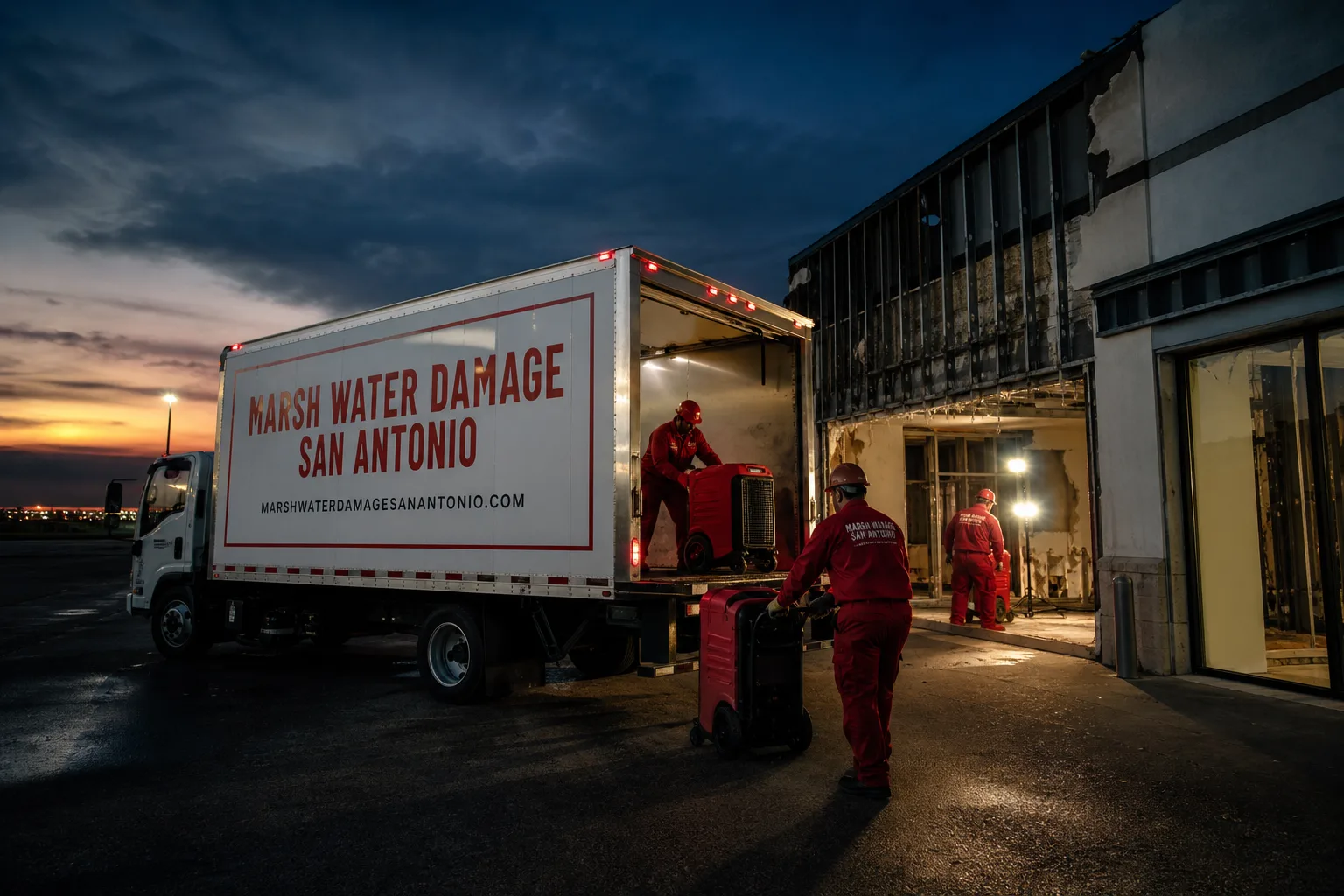
We stock and service components from the industry’s leading equipment manufacturers: Dri-Eaz, Phoenix, XPOWER, B-Air, and Injectidry. Our techs hold IICRC, RIA, and IFA credentials, which means the drying plan on your Selma house is built on the same standards used in large commercial losses, applied to your slab-on-grade home. When you work with us, you’re getting commercial-grade drying capacity with residential urgency, and because we keep parts and equipment staged for Selma dispatch, we don’t lose a day waiting on gear that should already be on the truck.
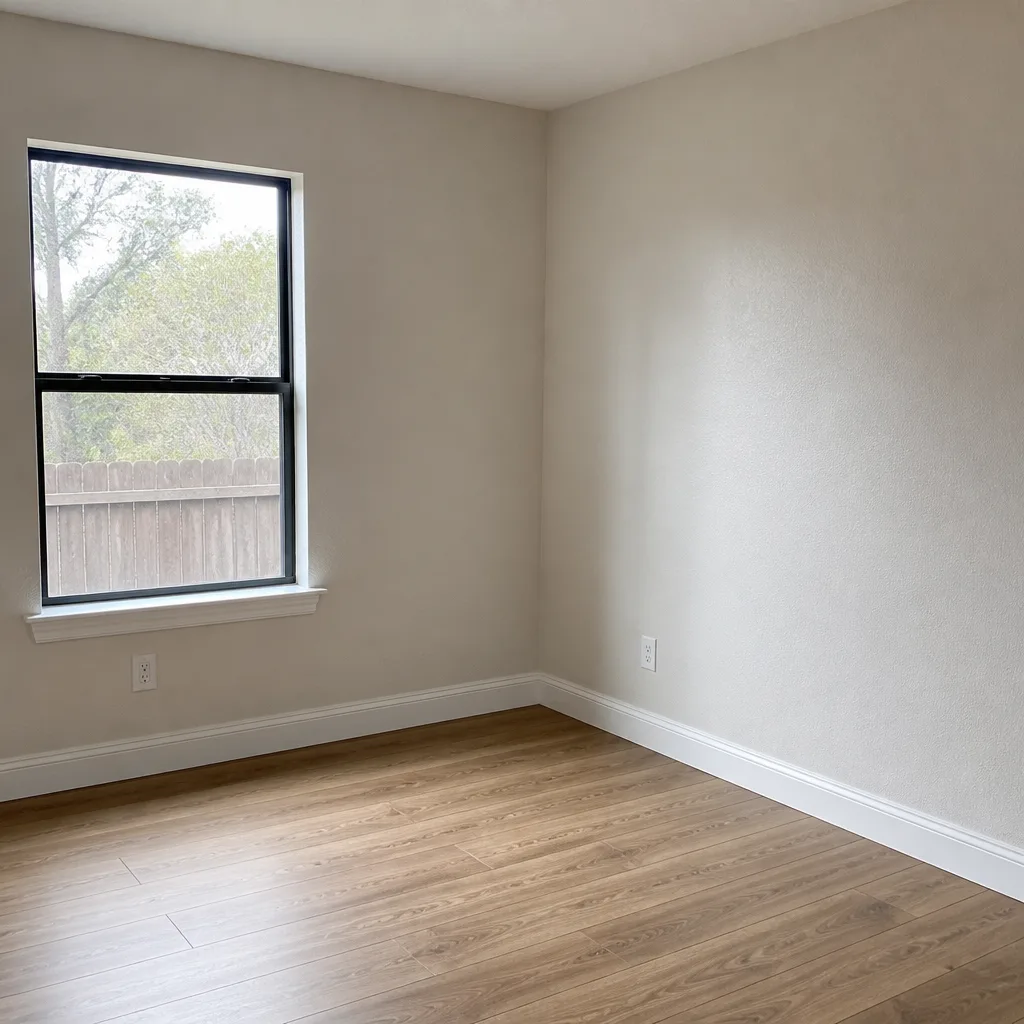
See the difference
 Before
 After
After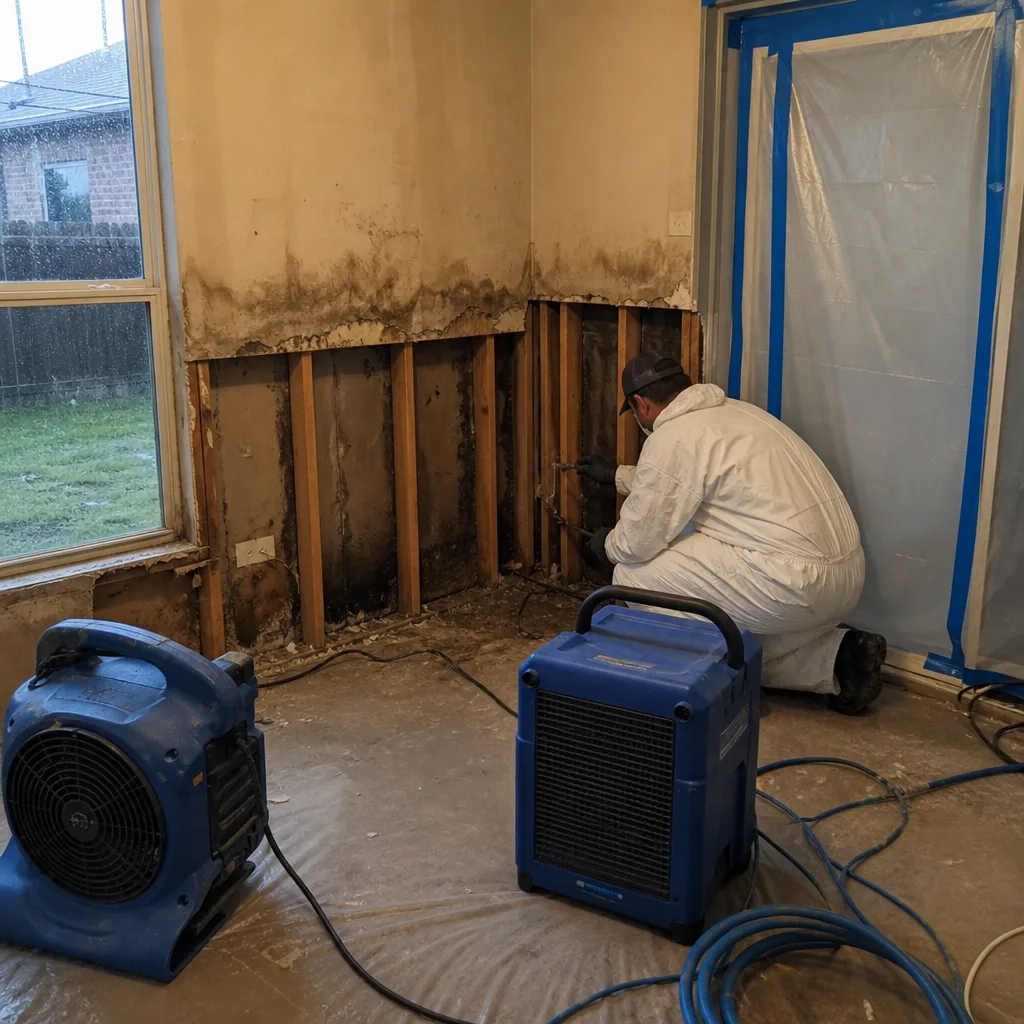 Before
 After
After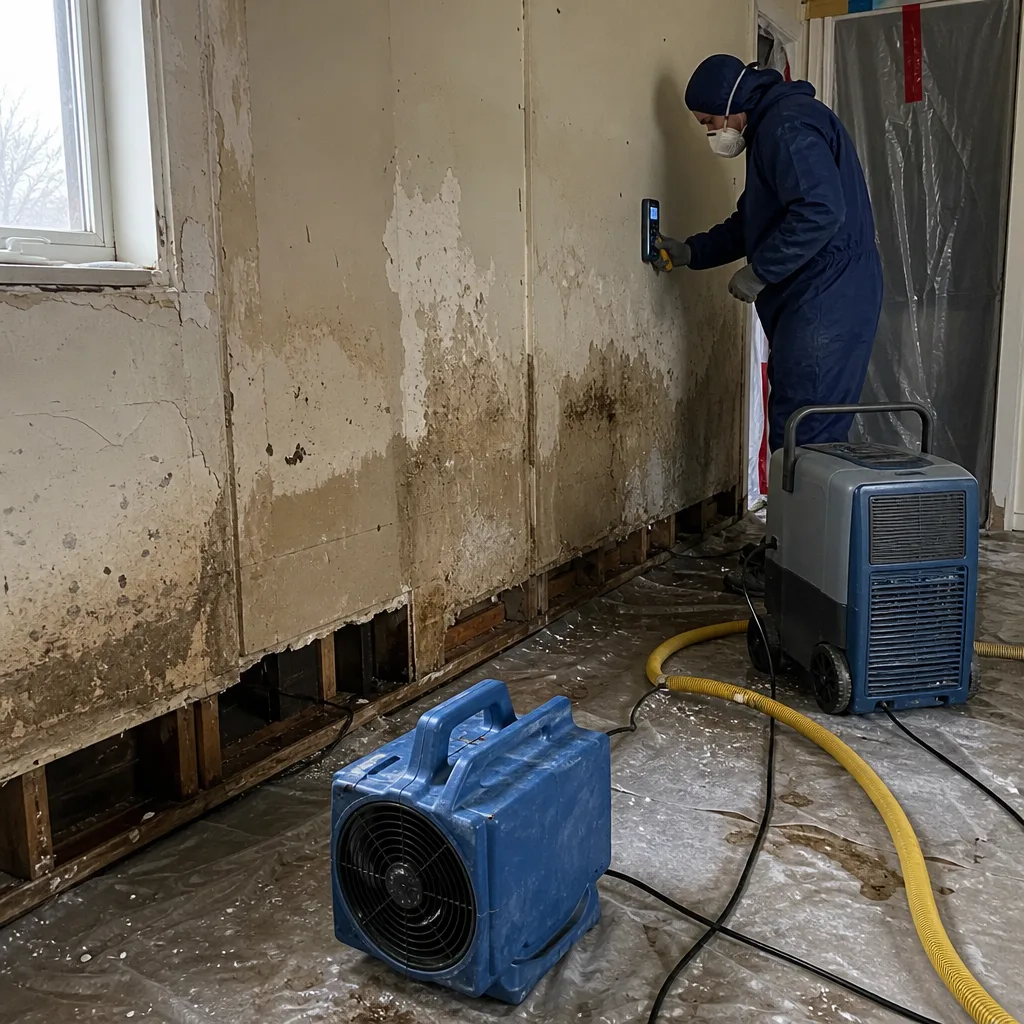 Before
 After
AfterCommon Storm Damage Restoration Problems We See in Selma Homes
- Slab leaks turning into whole-house floods: Selma’s clay soil shifts with moisture, and when a water line under the slab finally fails, there’s no sump pump to catch it. What starts as a damp spot becomes a floor-level flood in a few hours.
- Open floor plans spreading humidity: The same open-concept layout Selma homeowners love is a liability when water enters. Without early containment, humidity travels to unaffected rooms and turns a single-room loss into a whole-house drying job.
- Misclassified stormwater: Some crews treat stormwater as Category 1 clean water and try to dry materials that should be removed under Category 3 protocols. In Selma’s neighborhoods with septic systems and agricultural runoff, that mistake leaves contaminated material in the home.
- Skipped moisture mapping on slabs: Restorers who only extract visible water miss what’s soaked into the slab and behind baseboards. Mold blooms weeks later, and the homeowner is told it’s a new problem. It isn’t. It’s the same problem, poorly dried.
Pricing for Storm Damage Restoration in Selma, TX
Storm damage restoration pricing in Selma depends on what actually happened, but here are the ranges we see most. Water extraction and drying for a single-room stormwater intrusion typically runs $3,500 to $7,000. A whole-house Category 3 flood with pack-out, material removal, structural drying, and rebuild starts around $8,000 and goes to $25,000 or more depending on finishes and square footage. Roof leak repairs from storm damage usually land between $1,500 and $6,000. What affects your number: the water category, how far it spread, whether kitchen cabinets and bathroom vanities are involved, and how much material must be removed versus dried in place. Every job gets a written price before work starts, and that price doesn’t change after demo unless you approve a written change order first. Call us at (325) 252-3917 for a free estimate based on your specific damage.
We Also Serve Cities Near Selma
Marsh Water Damage Restoration handles storm damage across the San Antonio metro. Beyond Selma, our crews serve homeowners in San Antonio, Boerne, Converse, and Kirby. If you’re in one of those communities and the storm just came through, call (325) 252-3917 and we’ll get a Threshold Verified crew to your door.
Serving Selma, TX - Our Local Coverage Area
We’re based in the Selma area and know this community well. Use the map below to see our service coverage - if you’re nearby, we can almost certainly help.
FAQs About Storm Damage Restoration in Selma
Slab-on-grade homes in Selma flood quickly because most were built on former farmland with clay soil and no weeping tile or sump pump. The slab sits directly on that clay, and when the ground gets oversaturated, water has nowhere to go but up through seams, plumbing penetrations, and the slab edge. Add undersized subdivision drainage, and a storm that barely touches a pier-and-beam home will put water under your flooring within the hour. Call (325) 252-3917 the moment you see water, because every hour of slab contact means more material that has to come out.
We extract the standing water immediately, then we switch to containment and removal of saturated porous materials. In a home with no sump pump, stormwater collects against the slab and pushes in from the edges, so we also inspect where the water entered and let you know whether grading or drainage needs correction to prevent a repeat. The water is the urgent problem. The grading is the structural problem. We handle both.
Yes, and we’ve gotten good at it because Selma’s housing stock is consistently modern: post-2000 construction with brick or stone veneer, composition shingle roofs, and open-concept interiors. We source replacement materials to match what was there before the storm, so your rebuild looks like the house you bought, not a patch job. If your neighborhood has an HOA with material requirements, we’ll get the specs from you and match them in writing before we order anything.
Mold typically needs 24 to 48 hours of consistent moisture to start colonizing, so if you’re calling us within the first day, we can usually prevent it entirely with immediate extraction and structural drying. Selma’s heat and humidity accelerate the timeline, though, so if the flood happened more than two days ago, we’ll include mold assessment as part of the restoration scope. Don’t wait to call (325) 252-3917. In this climate, delay turns a water job into a mold job.
Not always. In an open floor plan, a full pack-out becomes necessary when the water spread far enough that furniture, area rugs, and lower-cabinet contents in multiple zones are wet. If we get containment up early, we can often protect the dry portions of the home and limit the pack-out to a single zone. The key is speed, which is why we dispatch to Selma within 60 to 90 minutes and why containment is the first thing we set, not the last.
Written by Tobias Reyner, Owner at Marsh Water Damage San Antonio, serving Selma and the surrounding San Antonio metro with storm damage restoration, water extraction, and structural drying since 2005.