
 Water damage drying
 Fire & smoke cleanup
 Mold remediation
 Storm response
 Sewage cleanup
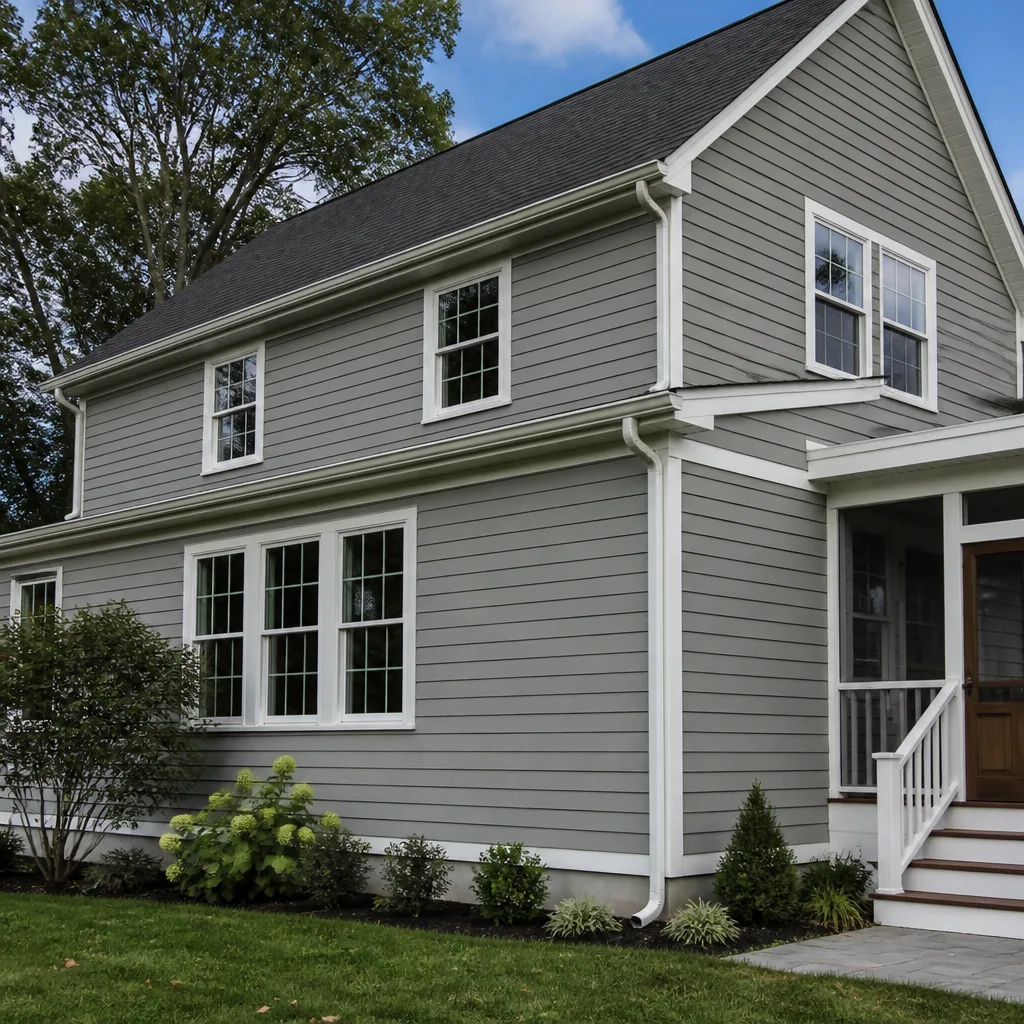 Reconstruction
Free visual inspection and a written scope of work before any mitigation begins - photos, moisture readings, and drying logs go in your claim file
The scope we write is the scope we bill. Anything new gets shown to you, in writing, before we touch it.
Get your free estimateFast, Reliable Storm Damage Restoration Across Lackland AFB
Storm damage restoration in Lackland AFB typically runs between $2,800 and $7,500 for a full cleanup and drying scope, and most on-base jobs get a crew on post within 60 to 90 minutes of your call, once gate clearance is confirmed. We’re not a crew that shows up at the gate asking for directions. We already know the housing office protocols, the west gate procedures, and what a flat-roofed enlisted family housing unit on the north side looks like after a San Antonio thunderstorm. If water is inside your unit right now, call (325) 252-3917 and a live person answers, day or night, no callbacks.
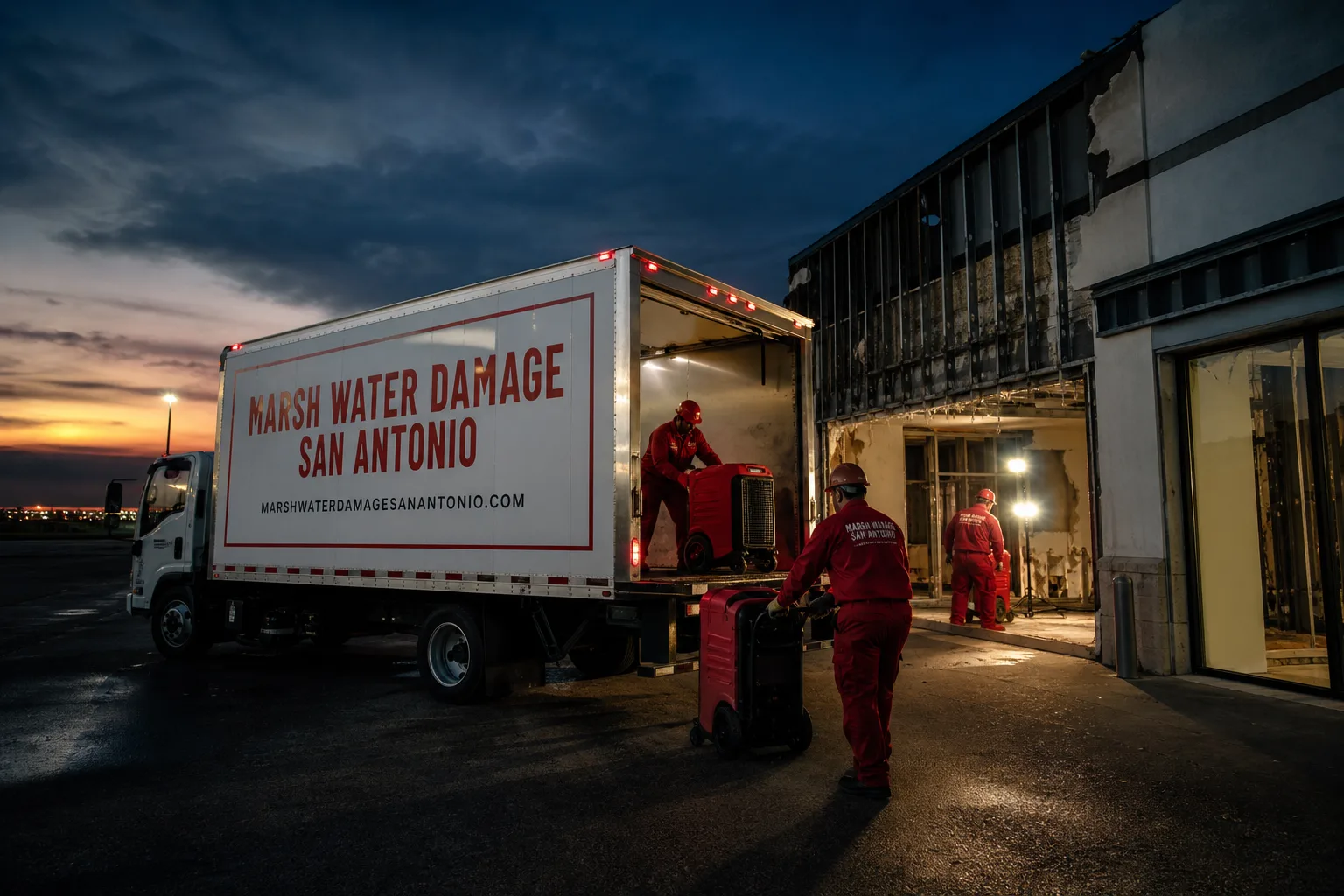
Why Marsh Water Damage San Antonio Is Lackland AFB’s Preferred Storm Damage Restoration Company
We’ve handled storm losses inside the gates long enough to know that standard civilian restoration plans don’t always work here. Military housing has its own rhythm. A restoration crew that can’t get cleared at the visitor center wastes your time and leaves water sitting where mold starts growing within 48 hours. Our technicians arrive with DoD background checks completed, photo ID badges visible, and their names and photos sent to you before we ever pull up to the gate.
That’s the Threshold Verified standard, and it applies to every single visit. Five things happen before your door opens: the technician’s identity is verified, their background check is run, their photo and name are sent to you, they present a photo ID badge at the door, and you get a written price before any equipment comes off the truck. Tobias Reyner, who leads our team, built this process because he knows what it feels like to wait for a stranger to knock during an emergency. You’ll know exactly who is coming, and you’ll know what the work costs before it starts.
Response time to Lackland AFB matters because the mold clock starts the moment the storm ends. We answer live 24/7, and dispatch coordinates directly from our metro office to crews stationed locally, so there’s no “we’ll call you back tomorrow” if tonight’s storm is the one that breaches your roof. The north side family housing, the older duplexes with shared walls, the barracks with original 1960s drainage, we’ve worked all of it.
Restoration work we handle
Storm Damage Cleanup in Lackland AFB
Storm Damage Cleanup inside Lackland AFB means more than extracting water. It means getting cleared at the gate, notifying the housing office of the scope, and documenting everything in a way that passes a military housing inspection. Wind-driven rain through aging roof penetrations, water pooling against slab foundations, downspouts that back up into shared wall cavities, these are the calls we run most often after severe weather rolls across the base.
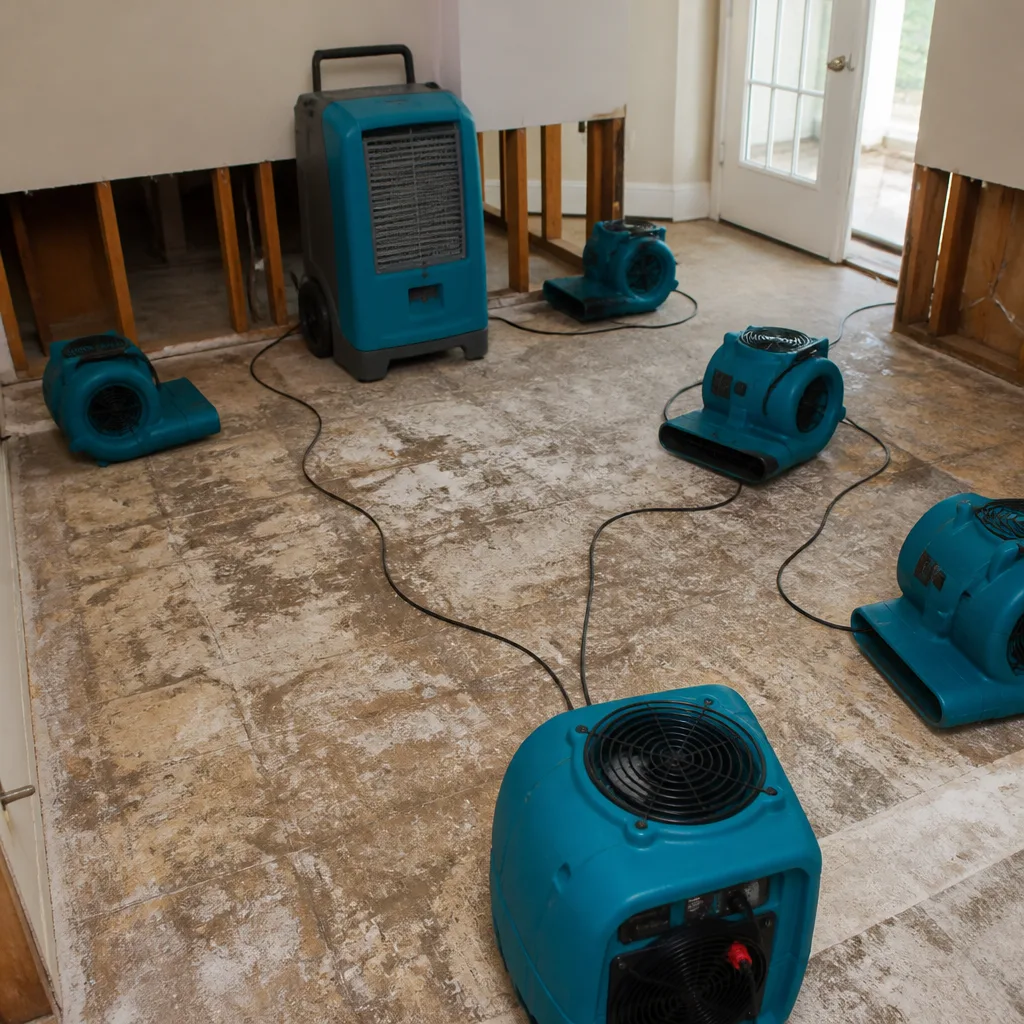
Water Extraction and Structural Drying
We use truck-mounted extraction from Dri-Eaz and Phoenix, then set up high-volume air movers and low-grain refrigerant dehumidifiers. In a Lackland AFB duplex with shared walls, we don’t just dry the unit that called us. We test the adjoining unit too, because water migrates through common wall cavities and under sill plates faster than most people realize.
Post-Storm Debris and Roof Tarping
When wind peels shingles off a flat or low-slope roof on base, the priority is stopping more water from getting in. We tarp and board up same day, then coordinate any structural repairs through the housing office’s approved contractor list. This matters because a repair that isn’t on the approved materials list will get rejected at final inspection, and you’ll be waiting weeks for a redo.
Flood Cleanup in Lackland AFB
Flood Cleanup in Lackland AFB starts with a hard reality: the clay-rich soil under San Antonio moves, and when it moves, supply lines under the older base housing units stress and crack. Add a flash flood, and water finds the path of least resistance, which is often under a door threshold or through a foundation seam. What starts as a damp corner becomes a Category 2 or Category 3 water damage event within hours.
Category 2 and Category 3 Water Handling
Floodwater from storms is rarely clean. Category 2 water carries contaminants from soil and drainage, Category 3 water carries sewage. We treat both with full containment, antimicrobial application, and controlled demolition of materials that can’t be dried, following IICRC standards the whole way. On base, we also coordinate with the housing office on any materials that require disposal documentation.
Flooring and Subfloor Evaluation
The original mid-century hardwood floors in many older enlisted family housing units can sometimes be saved, but only if we start drying within the first 24 hours. We use thermal imaging and moisture meters to map how far water has traveled under the floor. If the readings show saturation moving under walls, the answer is often controlled removal, not a longer drying attempt that invites mold into the subfloor.
Trusted Brands We Service in Lackland AFB
Most of the homes we restore on base are either government-owned family housing units or privatized units under a DoD management contract. That means fixtures, water heaters, and HVAC equipment come from a rotating list of approved manufacturers. We carry parts for the most common systems used in military housing, and when a storm takes out a water heater or a sump pump, we can often pull the replacement part from local stock and avoid a two-week wait for a backorder. Our equipment includes Dri-Eaz and Phoenix drying systems, and our technicians hold credentials through the IICRC and RIA, so you’re getting trained professionals, not a pickup truck with a shop vac.
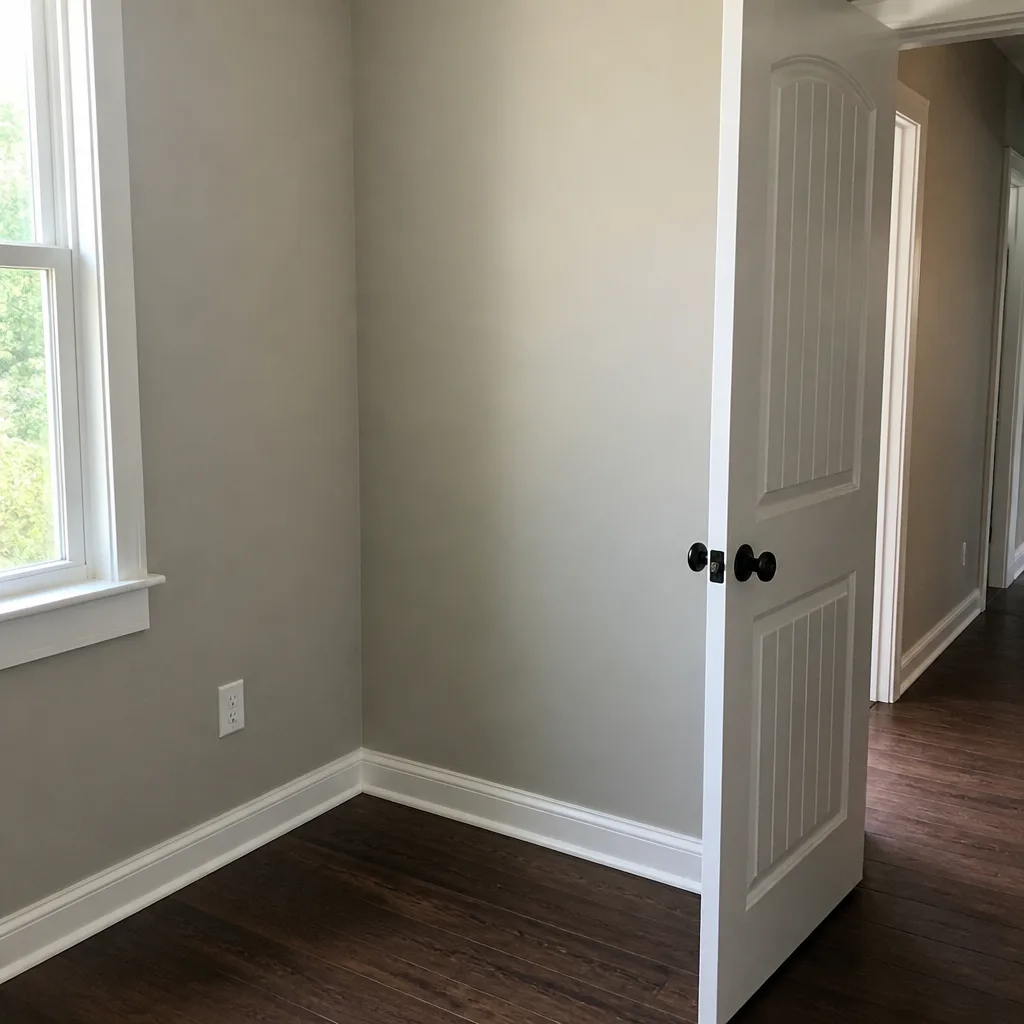
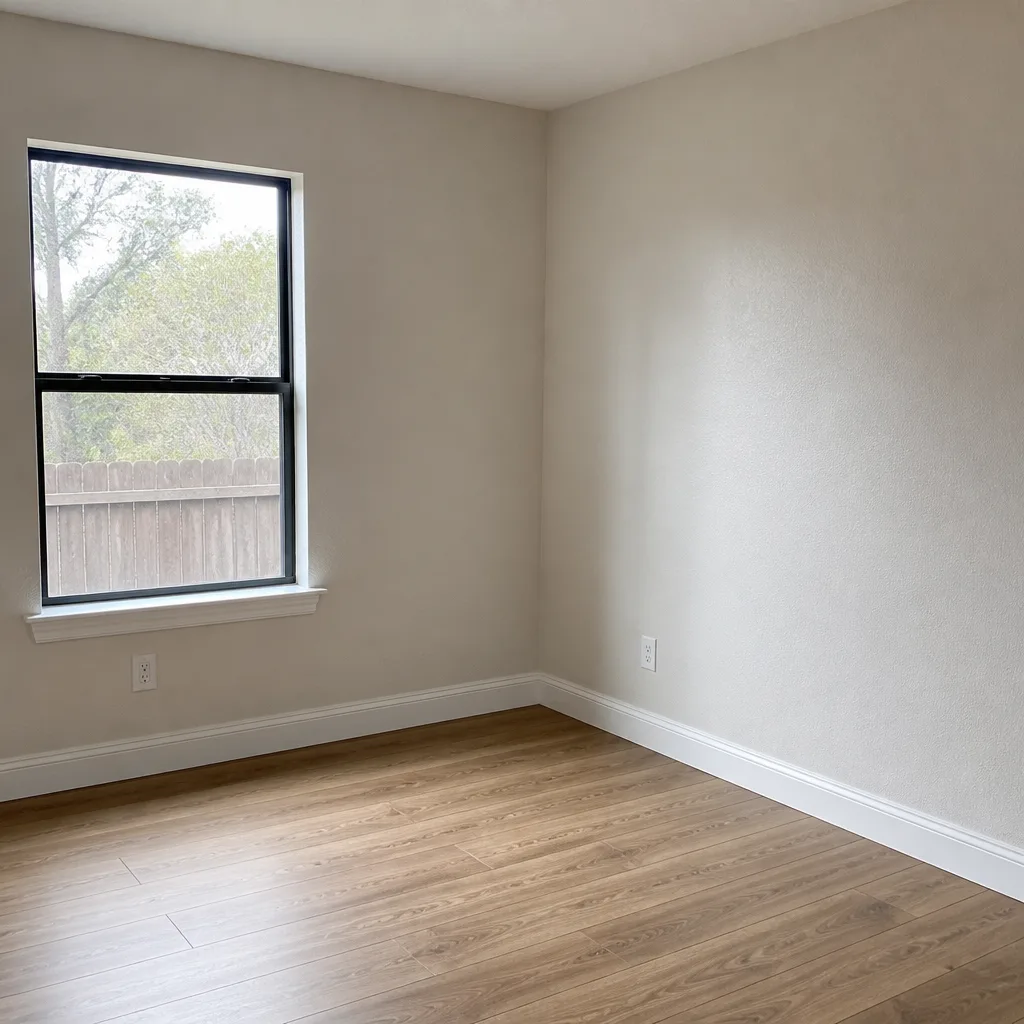
See the difference
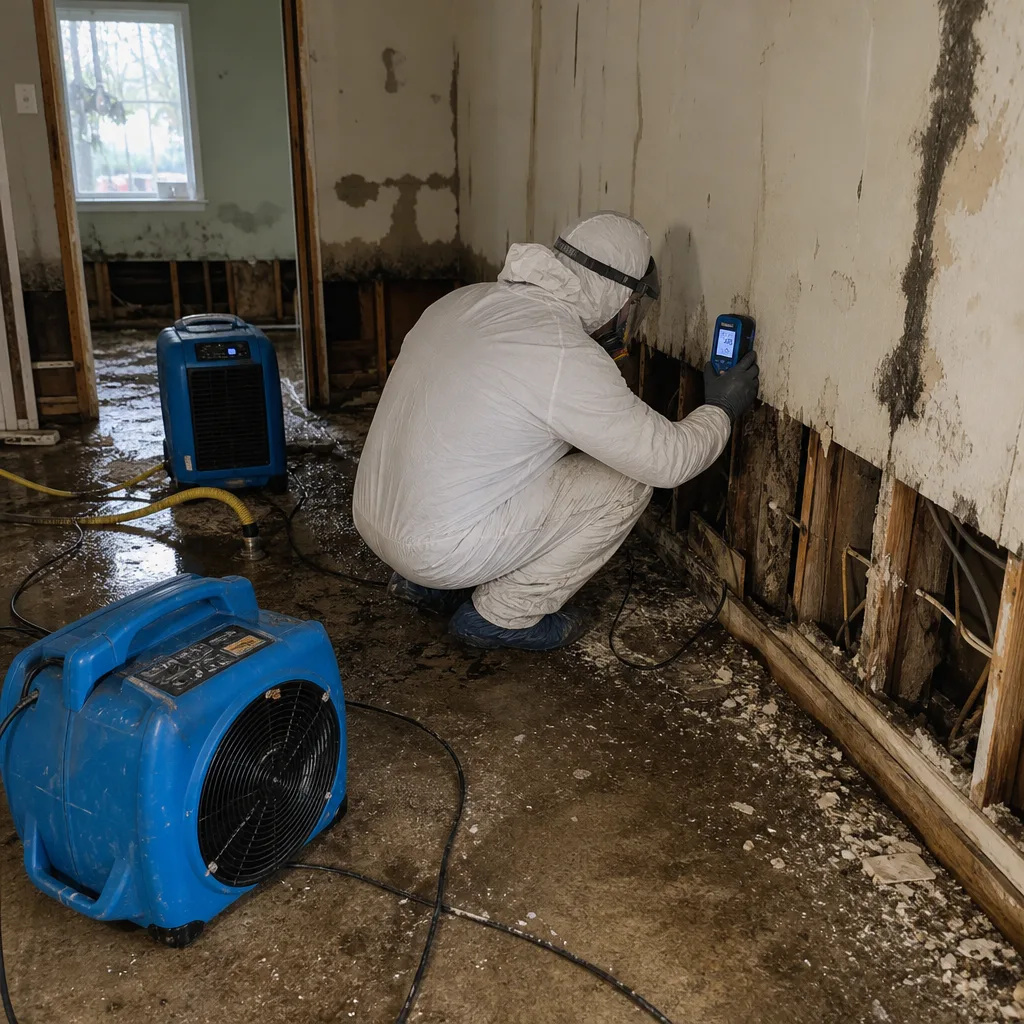 Before
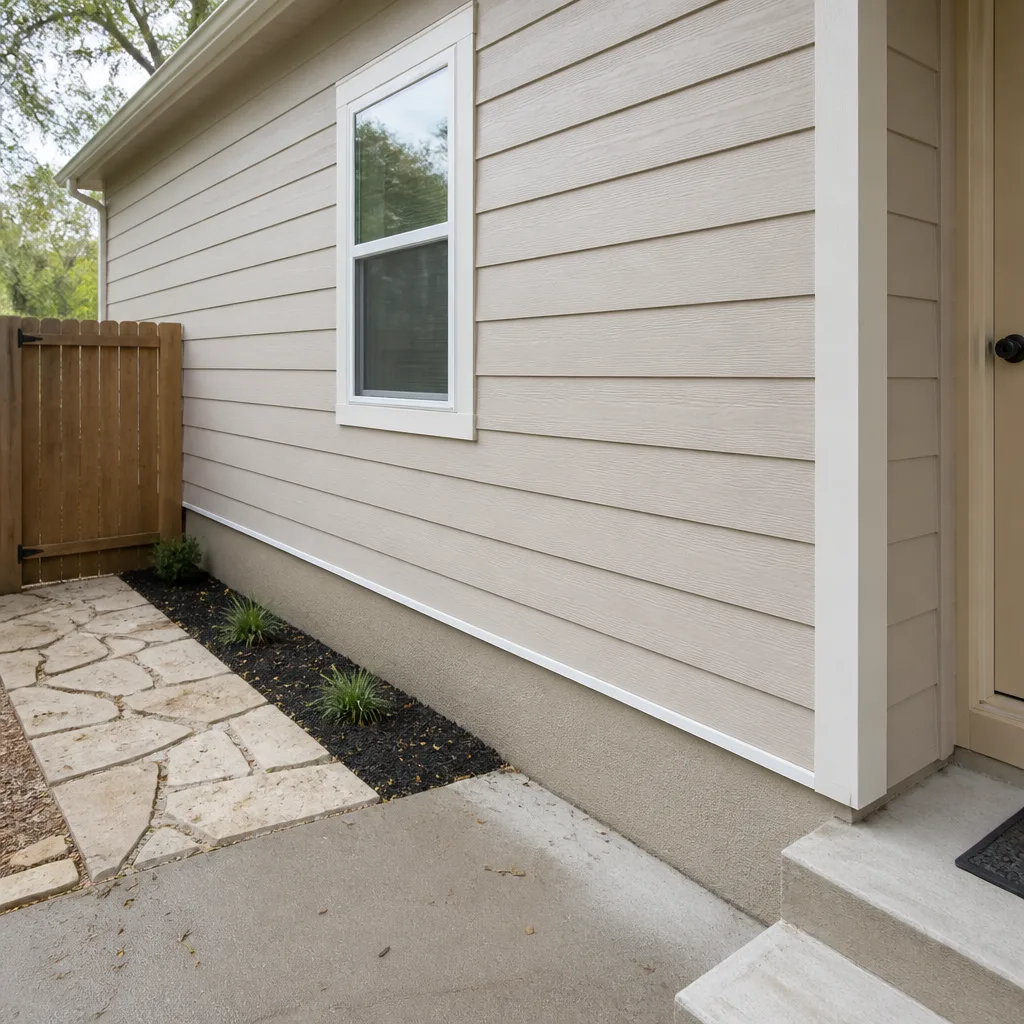 After
After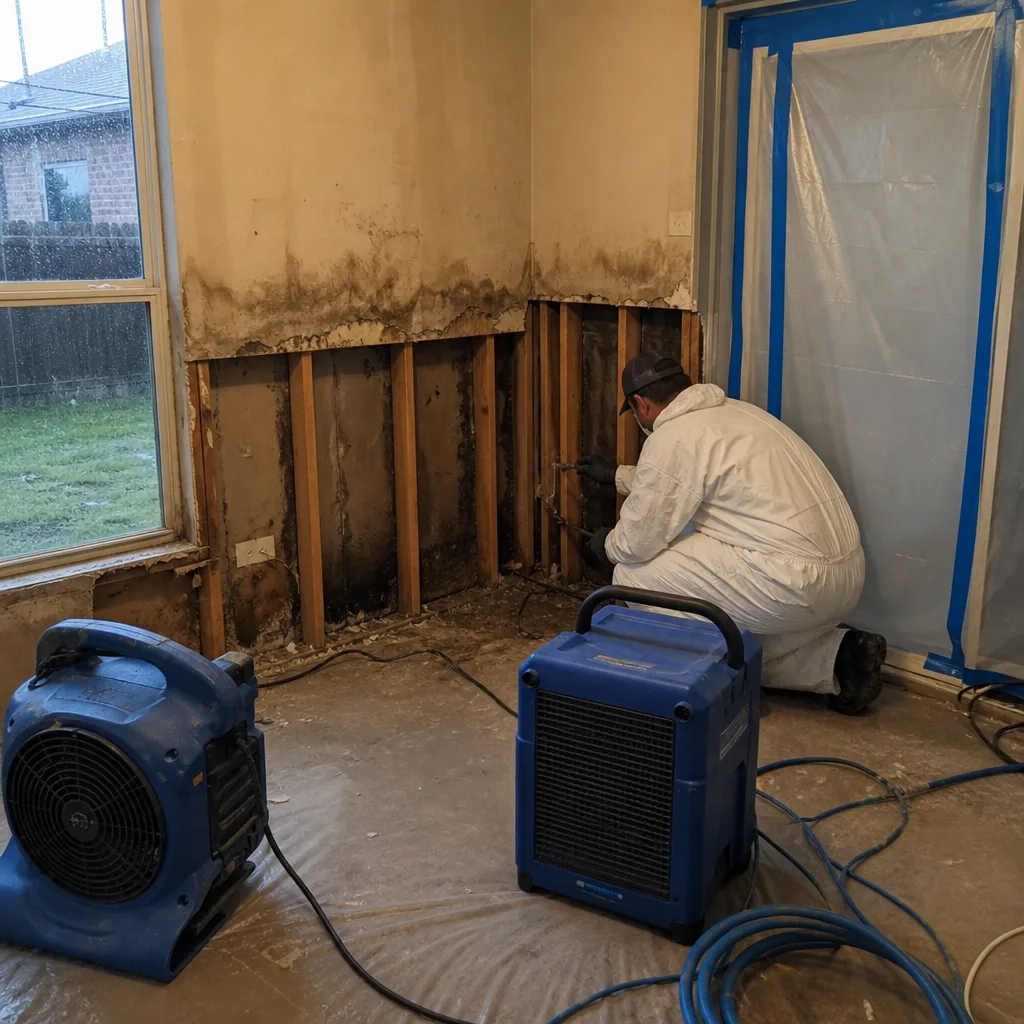 Before
 After
After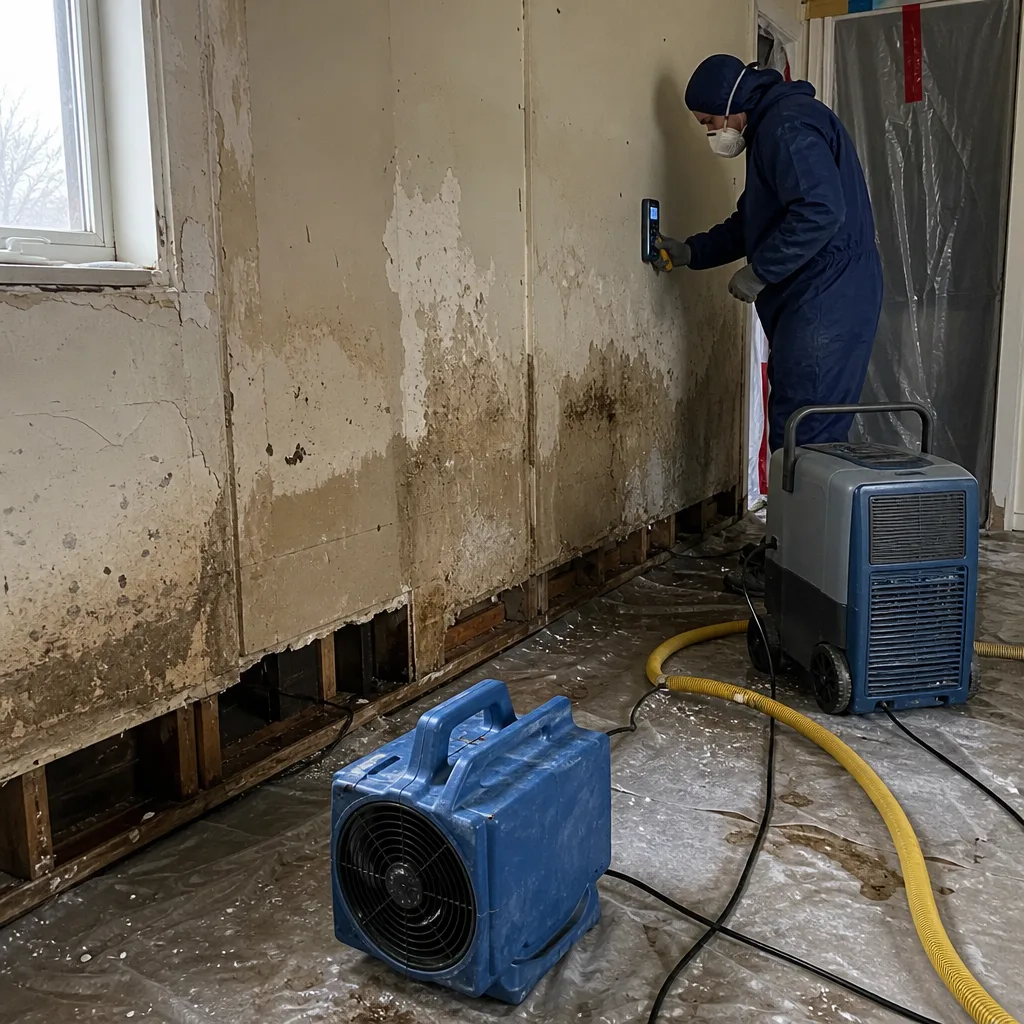 Before
 After
AfterCommon Storm Damage Restoration Problems We See in Lackland AFB Homes
- Flat roof ponding on north side family housing. Aging downspouts and low-slope roofs let water pool after heavy rain, and that pooled water eventually finds a seam. We see chronic water intrusion in the ceilings and top plates of these units after almost every major storm.
- Shared wall migration in duplex and row-house units. Water doesn’t stop at the property line inside a shared wall. We routinely find that the unit next door to a flooded one has moisture in its wall cavities, even if the occupant hasn’t noticed anything yet.
- Clay soil stress on older supply lines. San Antonio’s expansive clay soil moves with moisture, and that movement stresses the original galvanized supply lines in mid-century base housing. After a heavy rain, those stressed joints fail, and the leak doesn’t always show up where the water surfaces.
- Delayed entry because the restoration crew isn’t cleared. If a crew has not completed DoD background checks and base access paperwork, they sit at the visitor center while your floors saturate. By the time they get in, the damage window has narrowed from restoration to full replacement.
Pricing for Storm Damage Restoration in Lackland AFB, TX
A typical storm damage cleanup inside Lackland AFB runs between $2,800 and $7,500. Smaller scopes, like a single bedroom with water extraction and three days of drying equipment, usually land in the $2,800 to $4,000 range. Full flood cleanup with controlled demolition of drywall and flooring, antimicrobial treatment, and structural drying across multiple rooms typically hits $5,000 to $7,500. What moves the number is the size of the affected area, whether water reached the subfloor or wall cavities, and whether any materials need to be removed under housing office oversight. You get a written price before any work begins, and the price doesn’t change because we found more damage once the drywall came off. Call (325) 252-3917 for a free estimate.
We Also Serve Cities Near Lackland AFB
We handle storm and flood cleanup across the immediate region, including Storm Damage Restoration work in San Antonio, Selma, Boerne, and Converse. If you live just outside the gates and the same thunderstorm flooded your home, the same crew, the same equipment, and the same Threshold Verified protocol applies. Our Storm Damage Restoration in Lackland AFB team knows the whole corridor, from the west gate out to Loop 1604.
Serving Lackland AFB, TX - Our Local Coverage Area
We’re based in the Lackland AFB area and know this community well. Use the map below to see our service coverage - if you’re nearby, we can almost certainly help.
FAQs About Storm Damage Restoration in Lackland AFB
It’s a different access system entirely. Inside Lackland AFB, restoration crews must pre-clear through base security, carry valid identification, and often coordinate with the military housing office before any work begins. That adds 30 to 60 minutes to every call, but it also means you’re dealing with uniform construction standards and predictable layouts across family housing and barracks. A civilian contractor working in San Antonio doesn’t face any of those layers. We already have the clearance process down, so the delay is measured in minutes, not hours.
Call us at (325) 252-3917 first, then notify your housing office that water is inside the unit. Do not walk through standing water with electrical cords plugged in, and do not try to vacuum it up with a household shop vac. Storm floodwater carries contaminants from soil and drainage. Document what you can with photos from a safe distance, and let us handle the extraction and drying. Our crew will be cleared through the gate and on site within 60 to 90 minutes of your call.
In most cases, yes. For government-owned or privatized military family housing, the housing office or property management company must approve the scope of work and sometimes the materials before repairs begin. We handle that coordination for you. What you should not do is hire a contractor who starts tearing out drywall without talking to the housing office, because that work can be rejected at final inspection and you’ll be stuck with the cost of a redo.
The flat and low-slope roofs on those older units have a limited drainage capacity, and the original downspouts are undersized for the volume of rain San Antonio thunderstorms can dump in an hour. When the downspouts back up, water ponds on the roof and finds its way through seams, flashing, and penetrations that have been there for decades. The water then runs down through wall cavities and under flooring, often showing up far from where it entered. We’ve seen this exact failure pattern repeatedly, which is why our drying plans for north side units always include wall cavity checks.
We can dry most of your belongings on site, including furniture, area rugs, and clothing that hasn’t been sitting in Category 3 water. But if structural cavities like the space under your floors are wet, some contents may need to be moved temporarily within the unit or to a secure drying chamber. We’ll go through every item with you during the initial assessment. For anything that can’t be dried safely on base, we’ll explain why and give you a written list before anything moves. Call (325) 252-3917 and we’ll walk you through the whole process.
Written by Tobias Reyner, Owner at Marsh Water Damage San Antonio, serving Lackland AFB and the surrounding region with storm damage restoration since 2005.
If storm water is inside your Lackland AFB unit right now, don’t wait for the mold window to close. Call (325) 252-3917 for a free estimate and a written price before any work begins. A live person answers, 24 hours a day, every day.