
 Water damage drying
 Fire & smoke cleanup
 Mold remediation
 Storm response
 Sewage cleanup
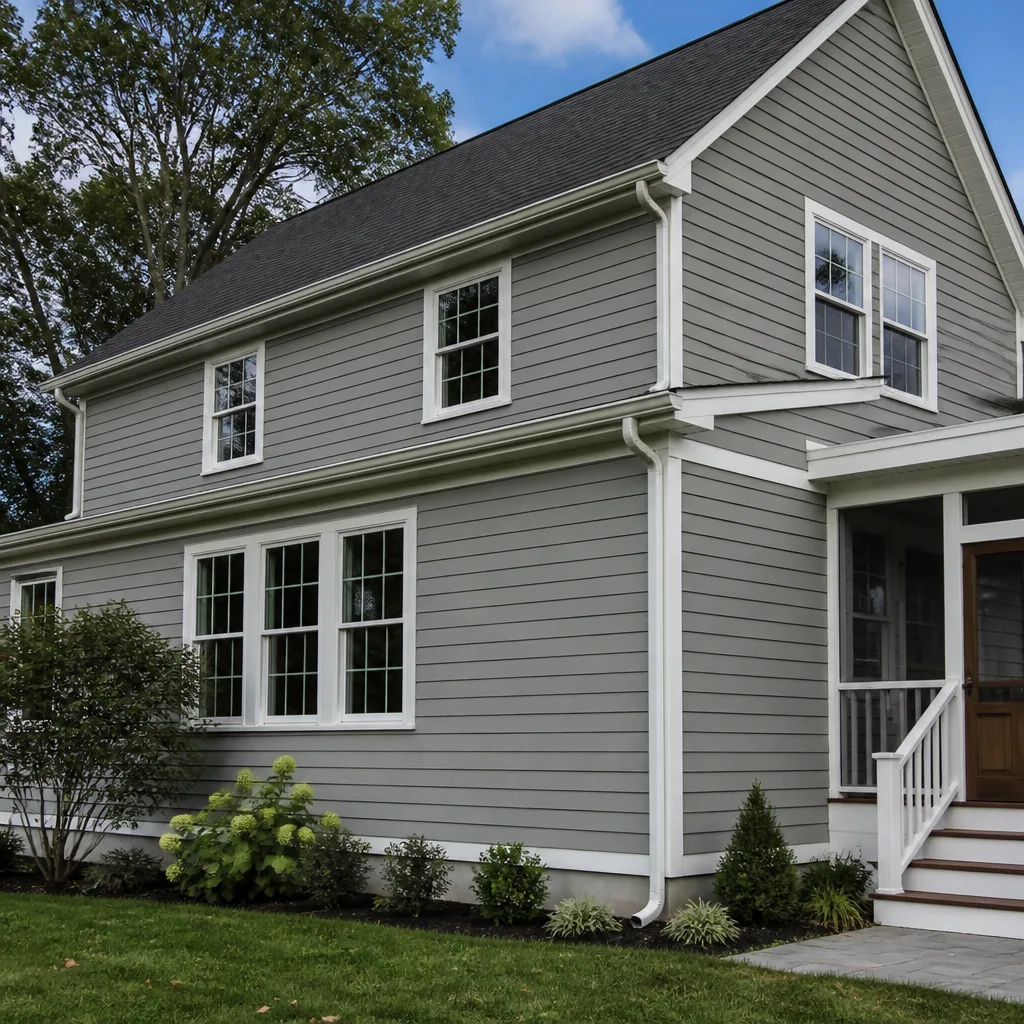 Reconstruction
Free visual inspection and a written scope of work before any mitigation begins - photos, moisture readings, and drying logs go in your claim file
The scope we write is the scope we bill. Anything new gets shown to you, in writing, before we touch it.
Get your free estimateFast, Reliable Storm Damage Restoration Across Converse
Storm damage in Converse moves fast, and so do we. When a convective storm drops hail on Savannah Place or wind-driven rain pushes water under a front door on Creutzfeldt Road, you need someone who knows the difference between surface dampness and a slab leak brewing beneath your vinyl plank. Our crews respond to Converse homes within hours, not days, because the clay soil under your foundation doesn’t wait. Call (325) 252-3917 and a live person answers, 24 hours a day. We’ll tell you exactly who’s coming to your door, by name and photo, before they knock.
Why Marsh Water Damage San Antonio Is Converse’s Preferred Storm Damage Restoration Company
Converse homeowners call us because we treat every job like it’s our own house on the line. The team, led by Tobias Reyner, has worked storm losses across Bexar County since 2005, and we’ve seen what Converse’s specific building patterns do when water gets involved. Most homes here sit on monolithic slabs with PEX plumbing and flexible ducting. That means the water damage story isn’t usually about rusted cast iron or corroded copper. It’s about drainage, grading, and the way expansive Blackland Prairie clay pushes and pulls at your foundation during drought and deluge cycles. When we pull up to a house in Escondido or along Loop 1604, we already know what we’re likely to find before the moisture meter comes out.
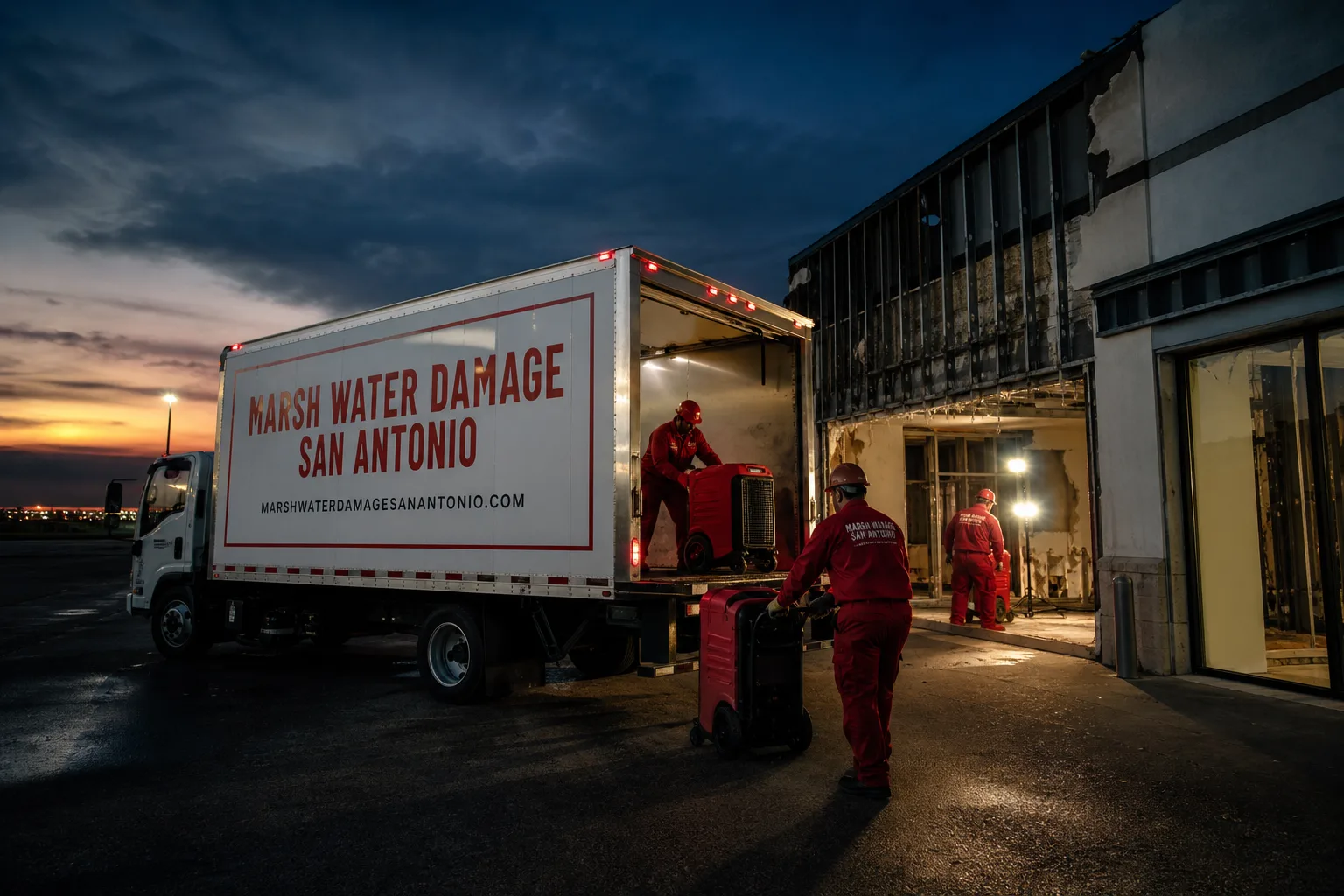
Our Storm Damage Restoration team carries the same equipment you’d see on a large commercial loss. Dri-Eaz dehumidifiers, Phoenix air movers, and thermal imaging cameras that show us water where the naked eye sees nothing. Every technician is background-checked and identity-verified under the Threshold Standard. You get the name and photo of who’s coming before the visit, and they show a photo ID badge at the door. Every time. That matters when you’re home alone with kids, or when an older parent is the one letting a crew inside. We don’t ask you to take our word for it. We prove it at the threshold.
Reviews from Converse customers mention two things repeatedly: the speed of our response and the fact that the price we wrote down at the start is the price on the final invoice. We don’t balloon estimates after demo begins. The written price, the written guarantee, and the 365-Day Done Right Promise are stamped on every work order. Not as marketing language. As printed commitments.
Restoration work we handle
Flooded House in Converse
A flooded house in Converse usually means one of two things: a storm overwhelmed your drainage and sent runoff toward the slab, or a hail-damaged roof finally let water through the decking and down into the ceiling cavities. We start with extraction. Standing water is removed with truck-mounted units and high-volume pumps, then we take psychrometric readings (measuring the moisture in the air and materials) to map how far the water traveled through drywall, insulation, and flooring. In a slab-on-grade home, water doesn’t just sit on the surface. It finds its way under baseboards, into wall cavities, and through the joints in the slab where hydrostatic pressure pushes it up from below.
For a typical flooded house extraction in Converse, most residential jobs run between $2,800 and $5,500 before drying equipment is set. The spread comes down to how much flooring is saturated, whether cabinetry has wicked water, and how far the moisture has traveled into wall cavities. We write the scope and the price before any work begins. You sign off on it, then we start.
Extraction and Containment
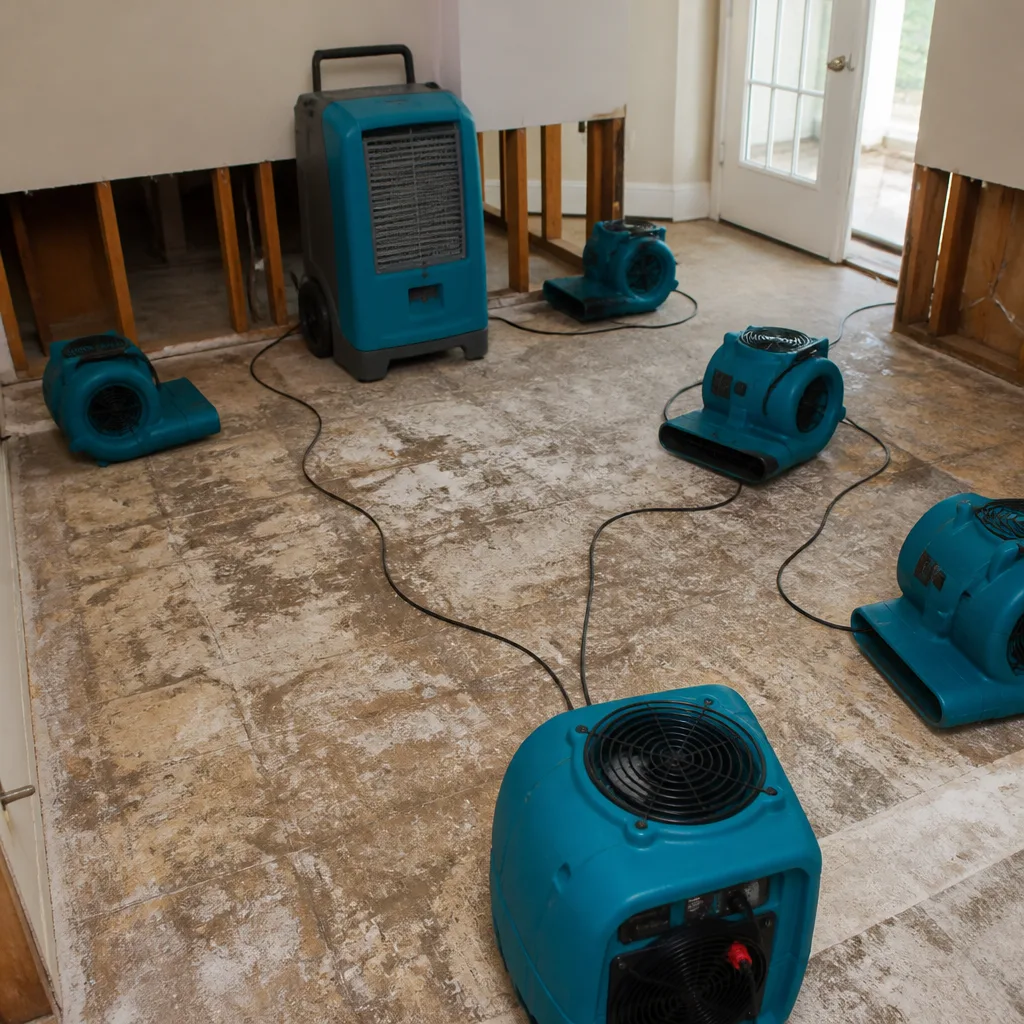
We set containment immediately to keep moisture from spreading through the HVAC system. Air movers and dehumidifiers go in within the first hours, not the next day. In Converse’s newer homes with flexible ducting, we pay close attention to air pathways in the attic and between floors, because that’s how water vapor migrates from a wet first floor to a dry second story.
Drying and Verification
Drying isn’t done when the surface feels dry. It’s done when our moisture meters and psychrometric readings say the materials have returned to their dry standard. We document every reading. You see the numbers. If the repair isn’t right within 365 days, we come back and make it right, free. That’s not a promise we hedge.
Flood Restoration in Converse
Flood restoration in Converse goes beyond pulling water out. It’s the rebuild, the repair, the return of your home to living condition. After the extraction and drying phases, we assess what can be saved and what needs to go. In homes built since the 1990s, the materials are often salvageable if we get to them fast. Vinyl plank can sometimes be reset and dried if water didn’t sit under it for days. Drywall with wicking above a few inches gets cut and replaced. Insulation in wall cavities that wicked moisture comes out, because it hides mold and loses R-value even when it looks fine on the surface.
Flood restoration costs in Converse typically run between $4,000 and $9,000 for a single-room flood, and $12,000 to $25,000 or more when multiple rooms, cabinetry, and structural framing are involved. The range reflects material choices, the extent of demolition, and whether we’re matching existing finishes in newer master-planned homes where flooring runs continuously through open-plan layouts.
Material Salvage and Replacement
We take a measured approach. Category 2 water from storm runoff carries contaminants, but many building materials can still be saved with proper cleaning and drying. The threshold is whether the material can be dried to standard within 48 to 72 hours. If it can, we save it. If it can’t, we cut it out and replace it, and you see the written scope before a single cut is made.
Rebuild and Finish Work
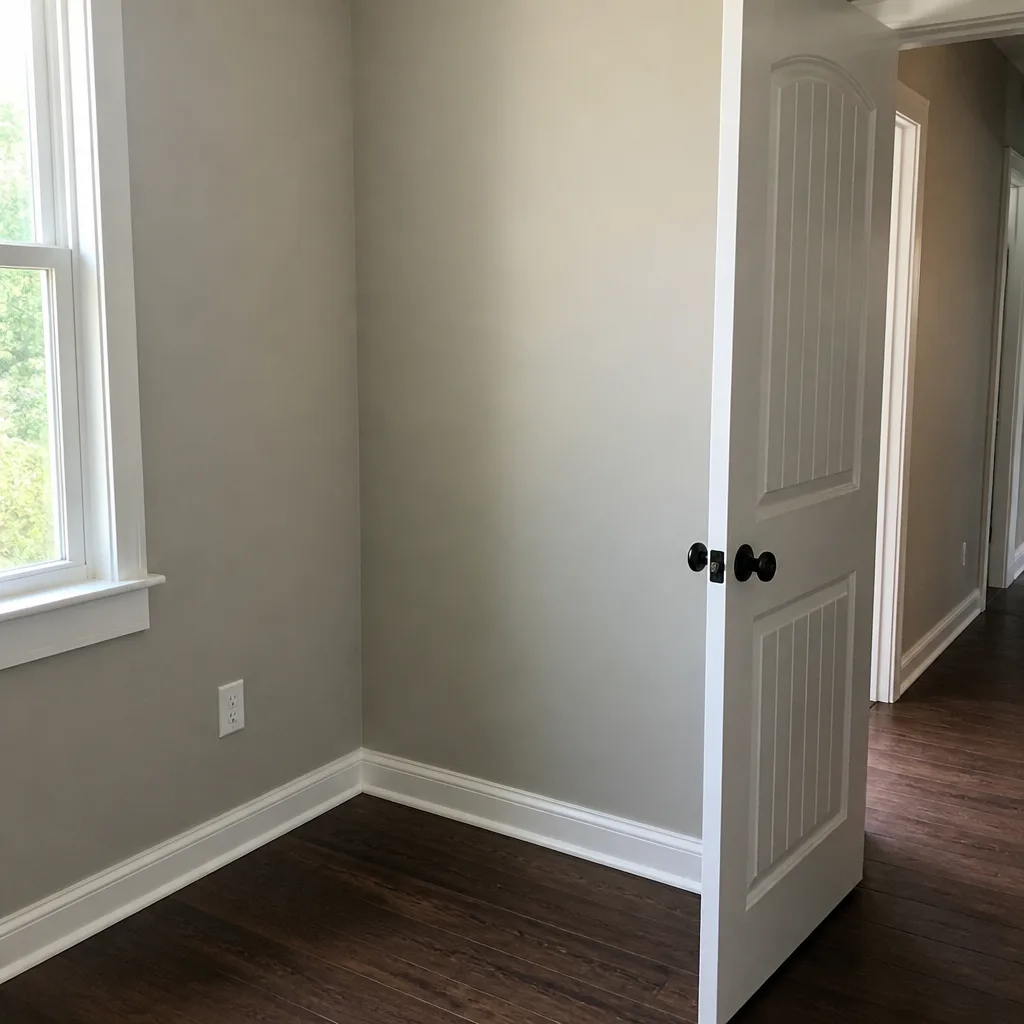
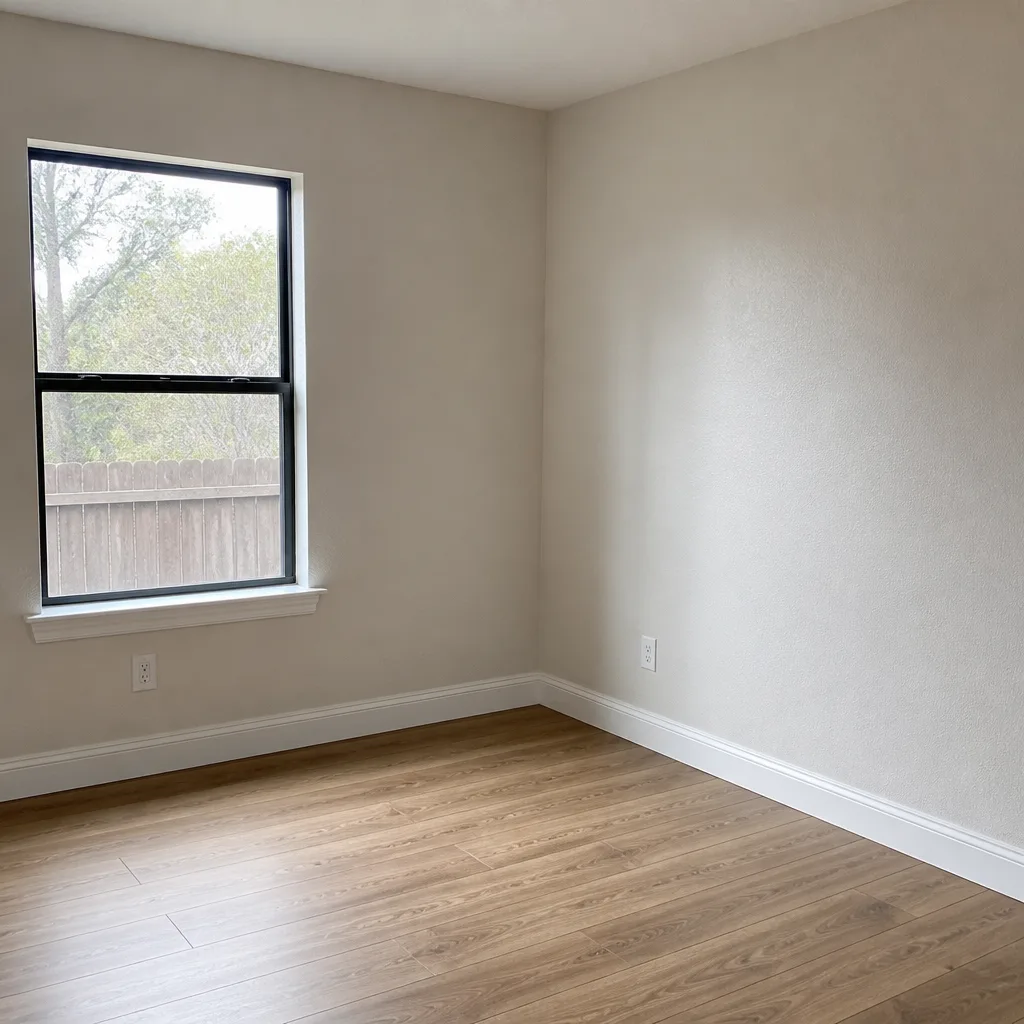
Once the structure reads dry, we rebuild. Drywall, paint, baseboards, flooring, cabinetry. The crew cleans up like they were never there except for the finished work. In Converse’s newer homes with open sight lines and continuous flooring, we match seams and patterns carefully. The 365-Day Done Right Promise covers every bit of it.
Trusted Brands We Service in Converse
We service all major brands you’ll find in Converse homes, from builder-grade units in Escondido and Savannah Place to upgraded systems on newer construction. If you’ve got a Dri-Eaz drying system spec’d by our techs, we stock common replacement parts locally for fast turnaround. Our team also stays current on IICRC and RIA standards, so when the insurance adjuster asks about the drying log, the documentation stands up. For Converse customers, that means less back-and-forth and faster approval on claims. Photo documentation goes to your adjuster directly, which removes the “he said, she said” from the equation.
See the difference
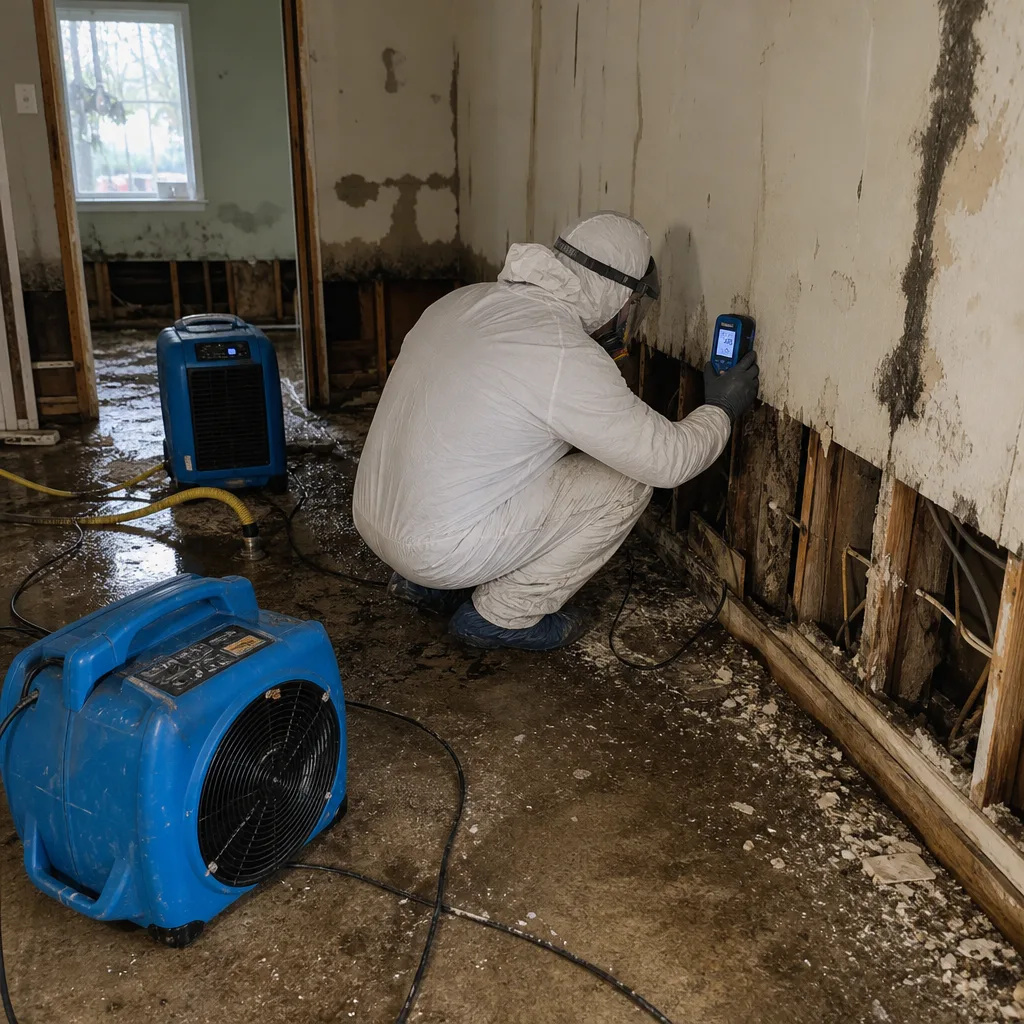 Before
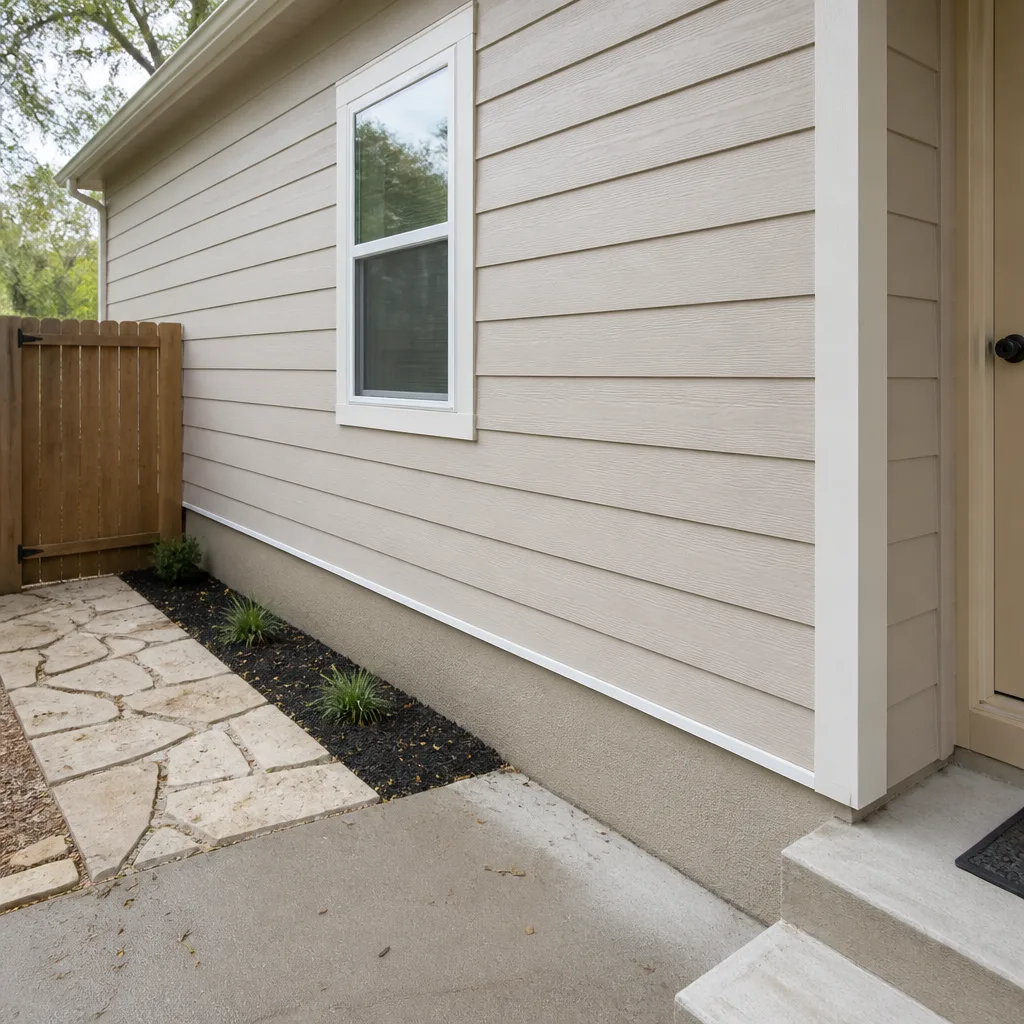 After
After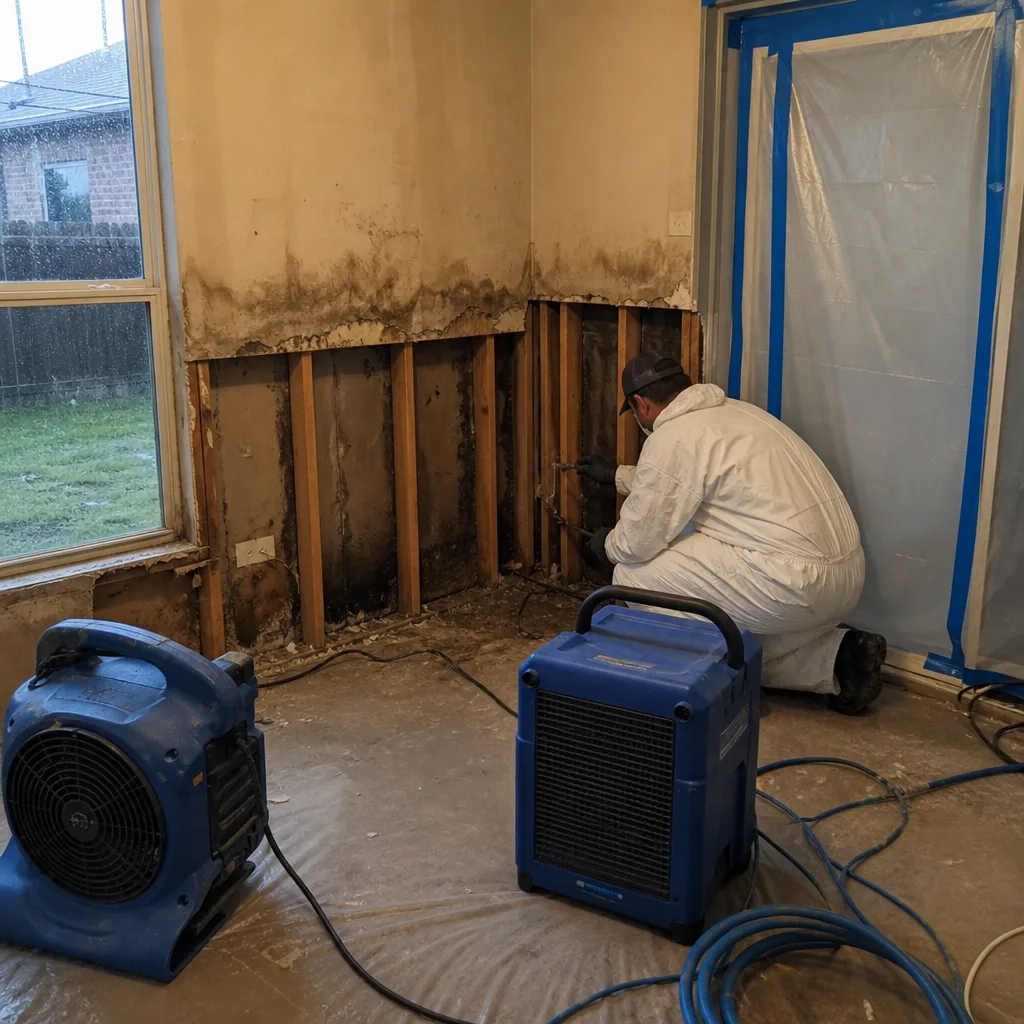 Before
 After
After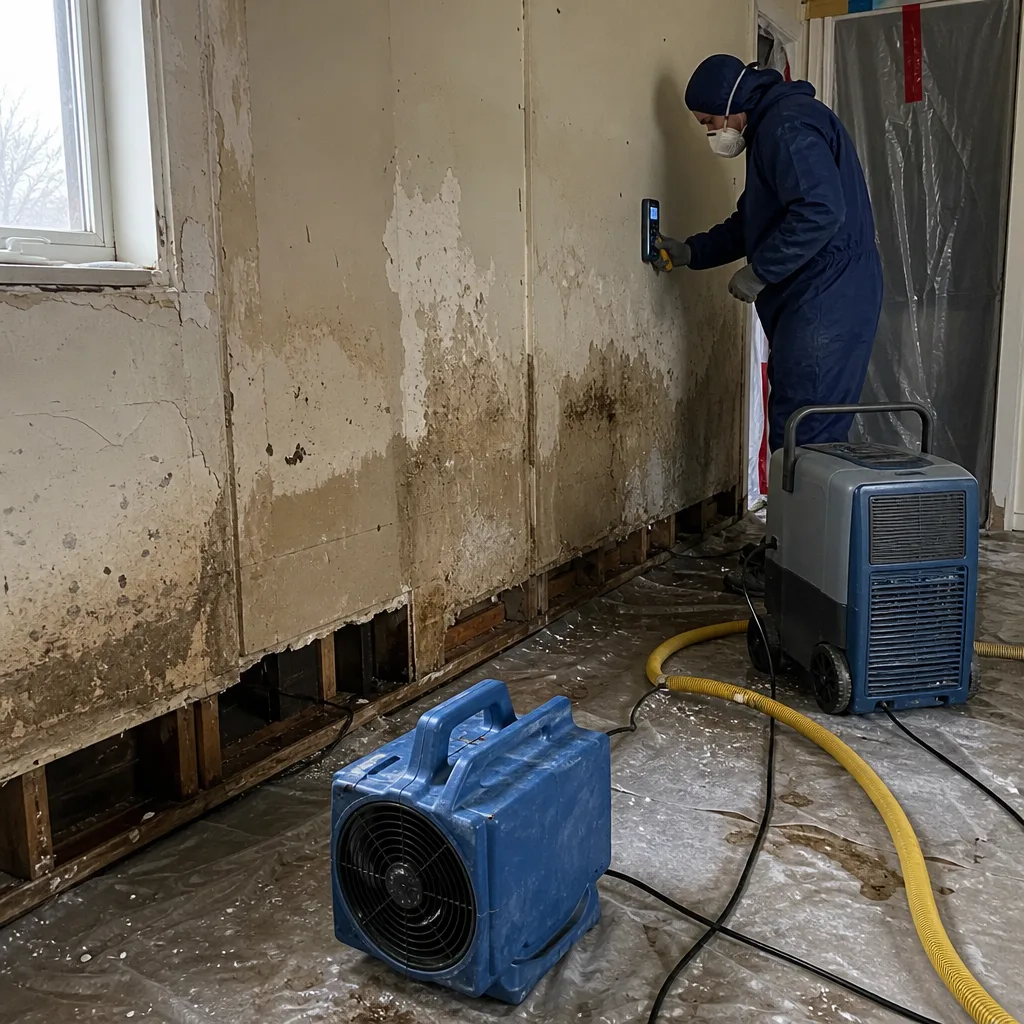 Before
 After
AfterCommon Storm Damage Restoration Problems We See in Converse Homes
- Hail-damaged composition shingles that don’t look broken. Converse sees frequent convective storms where hail bruises shingles without cracking them. The granule loss lets water through slowly, and the first sign is often a ceiling stain in a second-floor game room weeks after the storm. By then, insulation and drywall have been wet for a while.
- Builder-grade weatherstripping that fails during wind-driven rain. Newer homes in Converse often leave the factory with the cheapest door and window seals available. When rain blows sideways, water seeps under thresholds and along jambs, ruining adjacent vinyl plank in entryways. We see this constantly in homes under ten years old.
- Hydrostatic pressure against monolithic slabs. The Blackland Prairie clay under Converse expands when wet and shrinks when dry. After heavy storms, water pushes against the slab from below and seeps through joints and cracks. Homeowners see damp carpet or cupping flooring and assume a pipe burst, but it’s usually groundwater pressure.
- Irrigation systems over-saturating foundation soil. On new lots, builders install irrigation and homeowners run it on schedule. But when a storm adds inches of rain on top of irrigated clay soil, the ground heaves and pipes shift. Slow leaks develop behind walls, unnoticed until mold appears or a water bill spikes.
Pricing for Storm Damage Restoration in Converse, TX
Here’s what you can expect to pay in Converse, TX. A basic water extraction from a single room after a storm runs $1,800 to $3,200. A flooded house with multiple rooms, drying equipment, and containment typically lands between $2,800 and $5,500. Full flood restoration including demolition, drying, and rebuild spans $4,000 to $9,000 for a single room, and $12,000 to $25,000 or more for multi-room losses. A hail-related ceiling repair with attic insulation replacement usually runs $3,500 to $7,000 depending on square footage. These are real numbers from finished jobs in this market, not national averages. Call (325) 252-3917 and we’ll give you a written price for your specific home. Estimates are free.
We Also Serve Cities Near Converse
Our crews work all over the northeast San Antonio metro. We serve Converse and the surrounding communities including Universal City, San Antonio, and Boerne. If your storm damage falls just outside Converse city limits, call us at (325) 252-3917 and we’ll confirm dispatch availability for your address.
Serving Converse, TX - Our Local Coverage Area
We’re based in the Converse area and know this community well. Use the map below to see our service coverage - if you’re nearby, we can almost certainly help.
FAQs About Storm Damage Restoration in Converse
Converse sits on Blackland Prairie clay that expands when saturated and contracts during dry spells. After a heavy storm, the soil swells and pushes against your monolithic slab from below, creating hydrostatic pressure that forces water up through joints and cracks. This is why Converse homeowners often see damp carpet or cupped vinyl plank in the middle of a room, not just along exterior walls. The fix requires removing the water, drying the slab and building materials, and often correcting the exterior grading so water stops pooling against the foundation. Call us at (325) 252-3917 for an assessment, and we’ll include a drainage evaluation with your written estimate.
Hail on composition shingles often bruises the mat beneath the granules without leaving visible cracks. Water then seeps through slowly, traveling along roof decking and down into attic insulation before it finally pools enough to stain a second-floor ceiling. By the time you see the stain, the insulation and drywall above that game room may have been wet for weeks. We trace the water path with thermal imaging and moisture mapping, then dry the affected areas with containment rather than guessing and tearing out drywall that might be salvageable. Call (325) 252-3917 for a free visual inspection after any significant hail event.
Water extraction should begin within the first 24 hours, and ideally within the first 6. In Converse’s heat and humidity, mold can begin colonizing wet drywall and padding in 48 hours. Category 2 water from storm runoff carries contaminants that make materials degrade faster than clean water would. We answer calls live 24/7 and typically dispatch to Converse neighborhoods the same day you call. The sooner extraction starts, the more flooring, drywall, and insulation we can save. Call (325) 252-3917 the moment you see standing water.
Category 2 water contains significant contamination from soil, fertilizers, and whatever the runoff picked up on its way to your house. Materials that are non-porous can often be cleaned and saved. Porous materials like drywall, carpet padding, and insulation that saturated with category 2 water generally need to be removed, especially if they’ve been wet more than 48 hours. We evaluate each material with moisture readings and a contamination assessment, then give you a written list of what stays and what goes. You approve the scope before demolition starts. Call (325) 252-3917 for a free assessment.
Escondido and similar master-planned communities in Converse were built fast, and the drainage infrastructure often hasn’t kept up with the pace of construction. Homes on the outer edges of these neighborhoods, especially those backing up to open fields or drainage channels, see runoff that overwhelms the lot’s grading during heavy convective storms. Water flows toward the slab instead of away, and the expansive clay soil beneath makes the problem worse. We’ve worked enough losses in Escondido to know the specific drainage failure points, and we bring that knowledge to every job. Call (325) 252-3917 to schedule a storm damage assessment with someone who knows your neighborhood’s patterns.
Contact us now at (325) 252-3917. A live person answers, we’ll send you the name and photo of your technician before they arrive, and you’ll have a written price before any work begins. That’s how Marsh Water Damage San Antonio does storm damage restoration in Converse.
Written by Tobias Reyner, Owner at Marsh Water Damage San Antonio, serving Converse since 2005.