
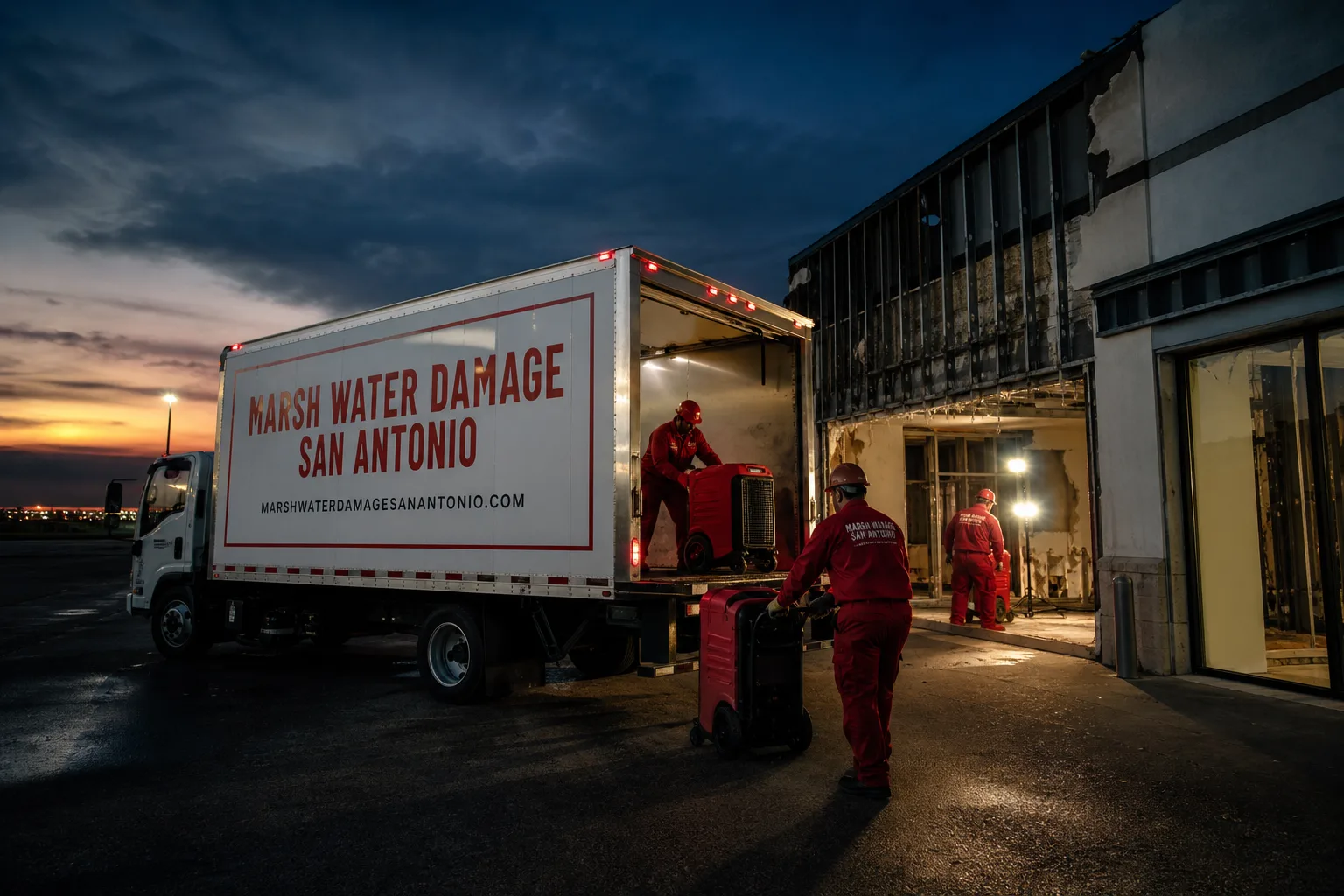
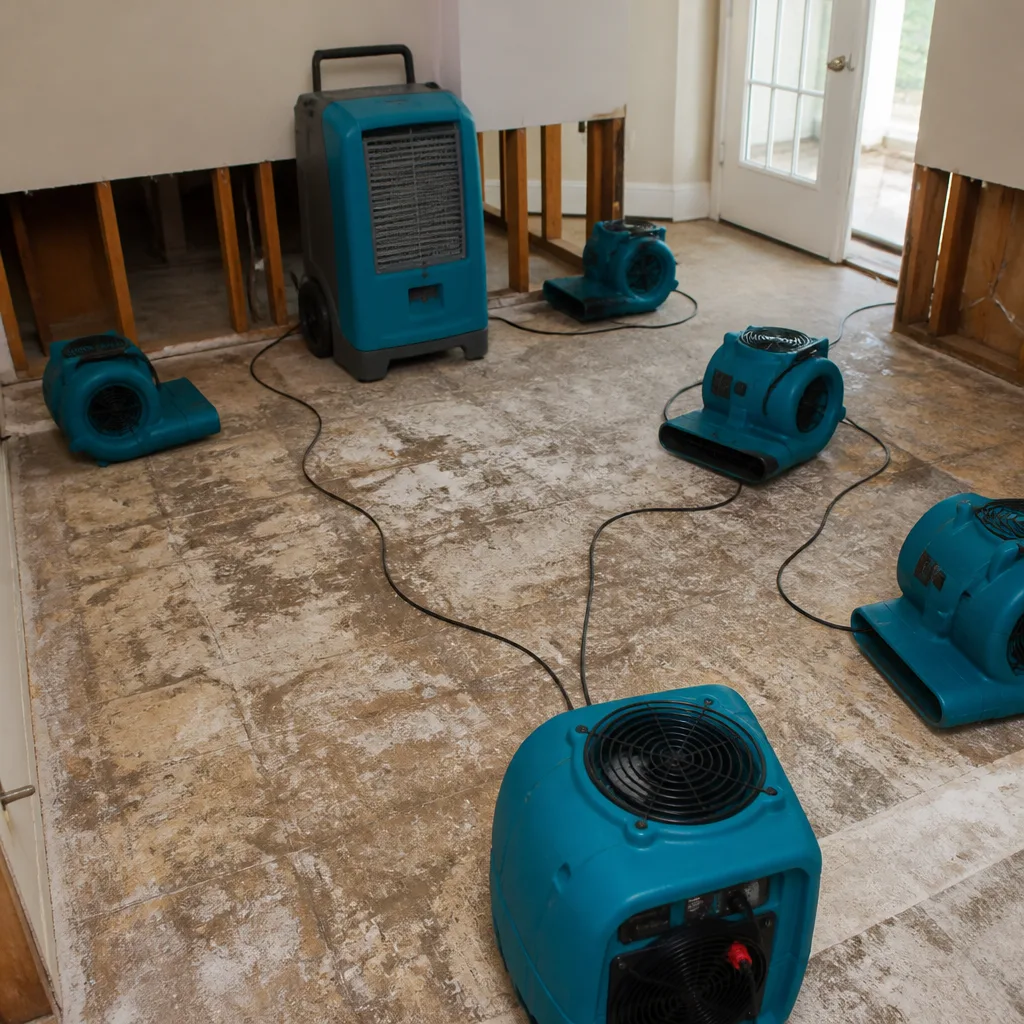
 Water damage drying
 Fire & smoke cleanup
 Mold remediation
 Storm response
 Sewage cleanup
 Reconstruction
Free visual inspection and a written scope of work before any mitigation begins - photos, moisture readings, and drying logs go in your claim file
The scope we write is the scope we bill. Anything new gets shown to you, in writing, before we touch it.
Get your free estimateFast, Reliable Mold Remediation Across Lackland AFB
Mold remediation in Lackland AFB usually costs between $1,200 and $4,800 for a contained area, with full-room remediation running $3,000 to $8,500 depending on how far the colony has spread. Most jobs on base take two to four days once containment is set. If you’re seeing dark staining on walls, smelling something musty that won’t clear, or dealing with the aftermath of a supply line leak, call (325) 252-3917 and a live person answers no matter the hour.
We know Lackland AFB isn’t like the neighborhoods outside the gates. Every visit starts with base access coordination, every technician arrives with a photo ID badge and a name you already have, and every scope of work is written down before any equipment comes off the truck. That’s how we’ve handled mold jobs in base family housing, barracks, and dormitories since the company was founded in 2005.
Why Marsh Water Damage San Antonio Is Lackland AFB’s Preferred Mold Remediation Company
Military families deal with enough uncertainty. Housing assignment changes, deployment schedules, gate wait times. The last thing anyone needs is a restoration crew that shows up late, can’t get through security, or starts tearing out drywall without a clear plan. Our team works inside Lackland AFB regularly enough to know the flow: submit the access request, meet the escort at the designated gate, stage equipment during approved windows. We don’t learn base procedures on your job.
Every technician on a Lackland AFB mold job is background-checked and identity-verified under the Threshold Standard. You get the technician’s name and photo before the visit starts. At the door, they show the same photo badge. Tobias Reyner, who leads our team, insists on that protocol for every job, not just the big ones.
Our technicians hold IICRC, RIA, and IFA credentials, and we run Dri-Eaz and Phoenix drying equipment on mold jobs in Lackland AFB housing. That matters because older military housing holds moisture differently than newer construction. You need equipment calibrated for legacy walls, not just a fan pointed at a wet spot.
Restoration work we handle
Mold Removal Specialist in Lackland AFB
A Mold Removal Specialist in Lackland AFB handles the physical removal of colonized materials and the treatment of surfaces where mold has taken root. On base, that often means cutting out water-damaged drywall, treating framing with antimicrobial agents, and setting up negative air pressure so spores don’t drift into unaffected rooms. When a supply line fails in a mid-century family housing unit, the mold is rarely just on the surface. It’s inside the wall cavity, feeding on paper-backed gypsum and old wood lath.
Most Mold Removal Specialist work in Lackland AFB runs $1,800 to $5,500 for a single room, depending on how much material must be removed and whether containment can be limited to one area. A small bathroom vanity leak that stayed contained might land around $1,500. A ceiling collapse from a failed copper line above a kitchen can push past $6,000 once drywall, insulation, and framing treatment are factored in.
We write every scope of work before any demolition begins. You see exactly what gets cut out, what gets treated, and what the price is. No add-ons after the walls are open.
Moisture Mapping Before Removal Starts
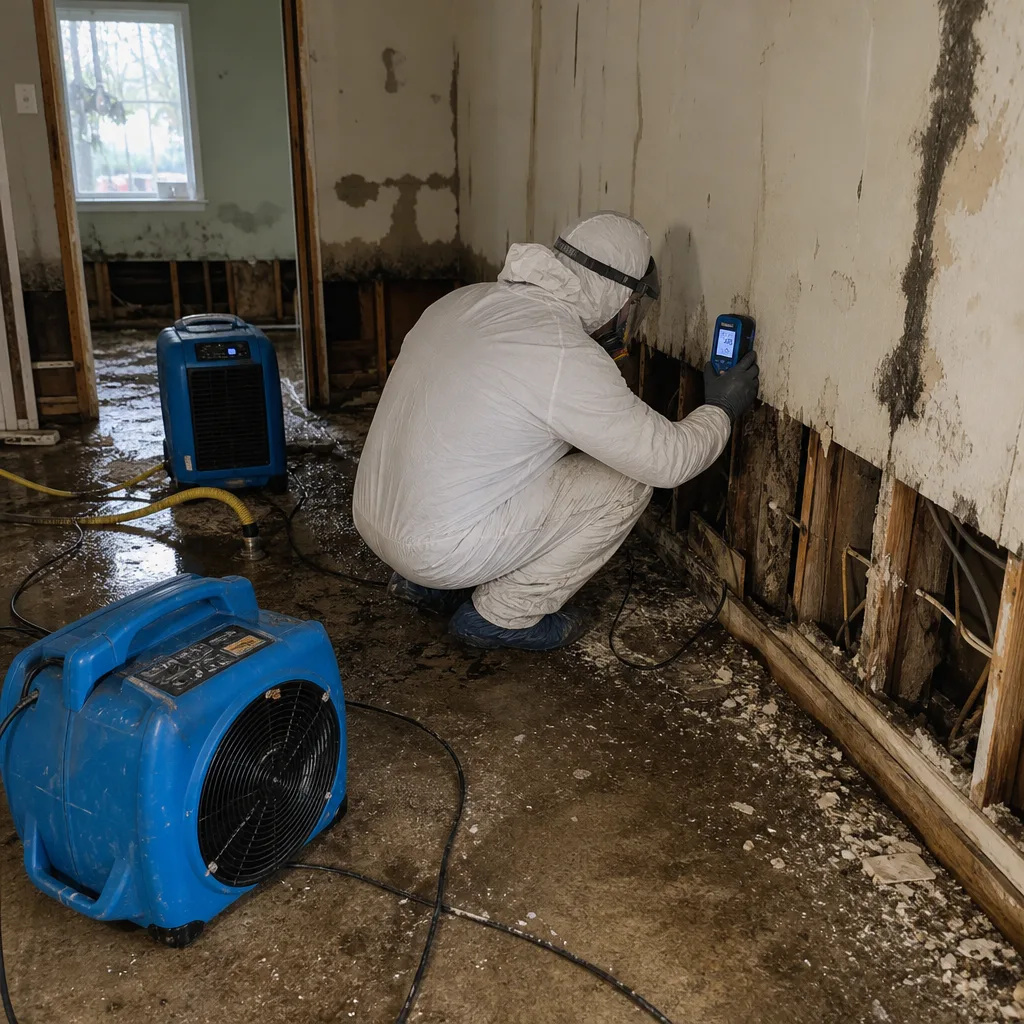
We don’t cut first and look later. Every mold job in Lackland AFB starts with moisture mapping: taking readings across walls, floors, and ceiling cavities to find the full extent of the water damage. In older plaster-over-gypsum walls, moisture hides behind surfaces that feel dry to the touch.
Those readings tell us where to set containment and how much material actually needs to come out. It prevents over-cutting and it prevents leaving colonized material behind. Both mistakes are expensive in different ways.
Containment That Holds Through Crew Changes
One failure mode we see on base is containment breaking during crew changes at the gate. A technician steps out, the escort changes, and the negative air pressure gets interrupted long enough for spores to leave the chamber. We schedule work in Lackland AFB so containment stays sealed through the entire shift, with equipment running continuously and access changes planned around the security rotation.
Black Mold Removal in Lackland AFB
Black Mold Removal in Lackland AFB addresses Stachybotrys chartarum, the specific species most people mean when they say “black mold.” It produces mycotoxins and grows on materials that have stayed wet for days, not hours. That’s exactly what happens in older base housing when a pinhole leak in an original copper supply line weeps behind a vanity or inside a wall for a week before anyone notices the staining.
Black mold removal costs more than standard mold remediation because the containment requirements are stricter and the protective protocols are heavier. In Lackland AFB, expect $2,800 to $8,000 for a contained black mold job, with the higher end covering multi-room spread or duct contamination. Testing before and after removal adds $300 to $700, and we recommend it on every black mold job so you know what you’re dealing with and whether it’s gone afterward.
The danger here isn’t just aesthetic. Black mold in a child’s bedroom or a living space with poor ventilation affects air quality in ways that matter for respiratory health. That’s why we treat it as a serious job with serious protocols, not a quick spray-and-paint.
Testing and Post-Remediation Verification
We collect surface and air samples before work begins so the lab identifies the species. After removal and treatment, we test again. The goal isn’t just visual clearance. It’s verified clearance: air samples inside the contained area that match or beat outdoor baseline readings.
If the clearance test fails, our 365-Day Done Right Promise applies. We return, re-treat, and re-test. That’s a printed commitment on the work order, not a verbal assurance.
When a Pack-Out Is Necessary
In older Lackland AFB enlisted housing, a pack-out isn’t always needed. If the mold is contained to a bathroom wall or a single closet, we can usually remove affected materials and clean remaining contents in place. Full pack-outs are reserved for cases where contamination reached personal belongings, soft goods, or HVAC ducting. We’ll tell you honestly which path applies, because we don’t make money convincing you to move furniture you don’t need to move.
Trusted Brands We Service in Lackland AFB
We run Dri-Eaz dehumidifiers, Phoenix air movers, and RIA-standard antimicrobial treatments on mold jobs in Lackland AFB. Those aren’t consumer-grade machines from a hardware store. They’re commercial drying and air-scrubbing equipment sized for the job, not for a rental counter. Parts and filters are stocked locally so a snapped hose or a burned-out air mover motor doesn’t stall your job for three days. We’re prepared for the kind of access windows base housing gives us, which are sometimes shorter than civilian jobs allow.
See the difference
 Before
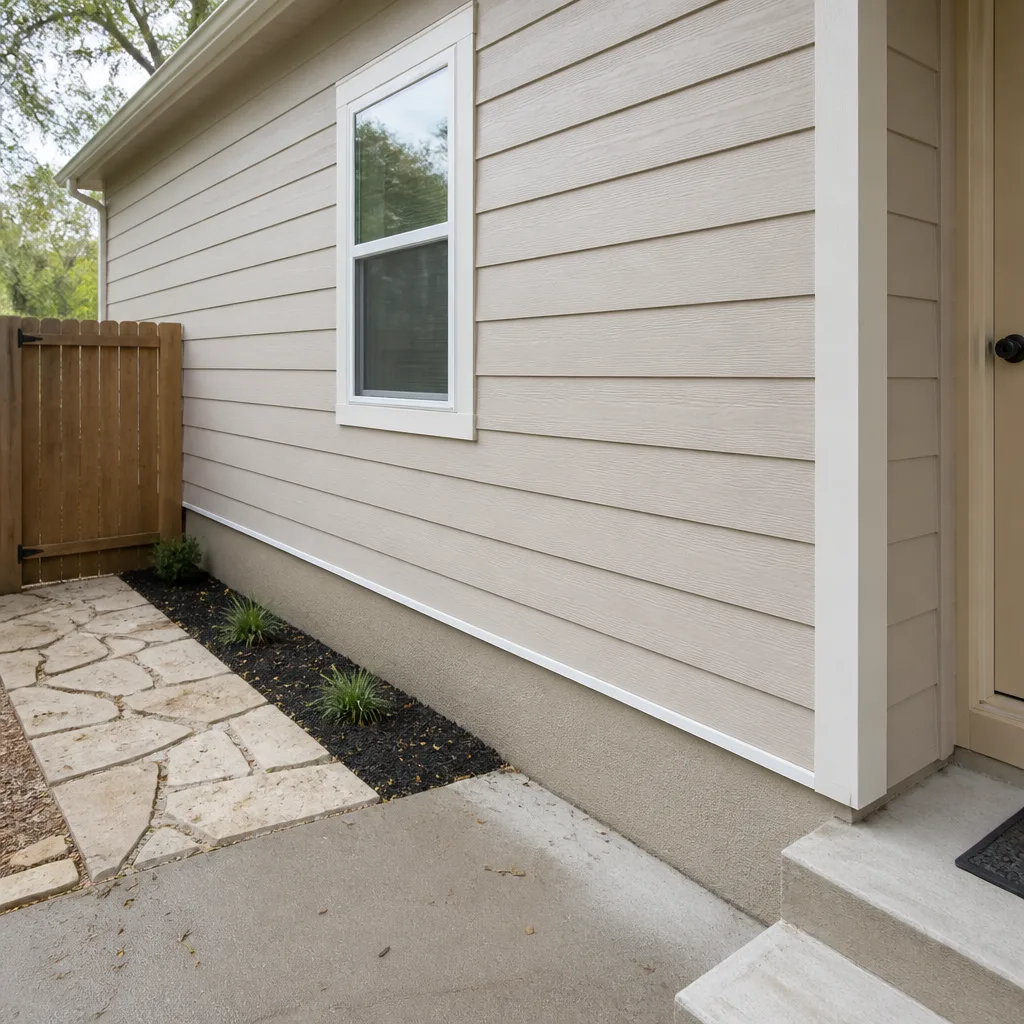 After
After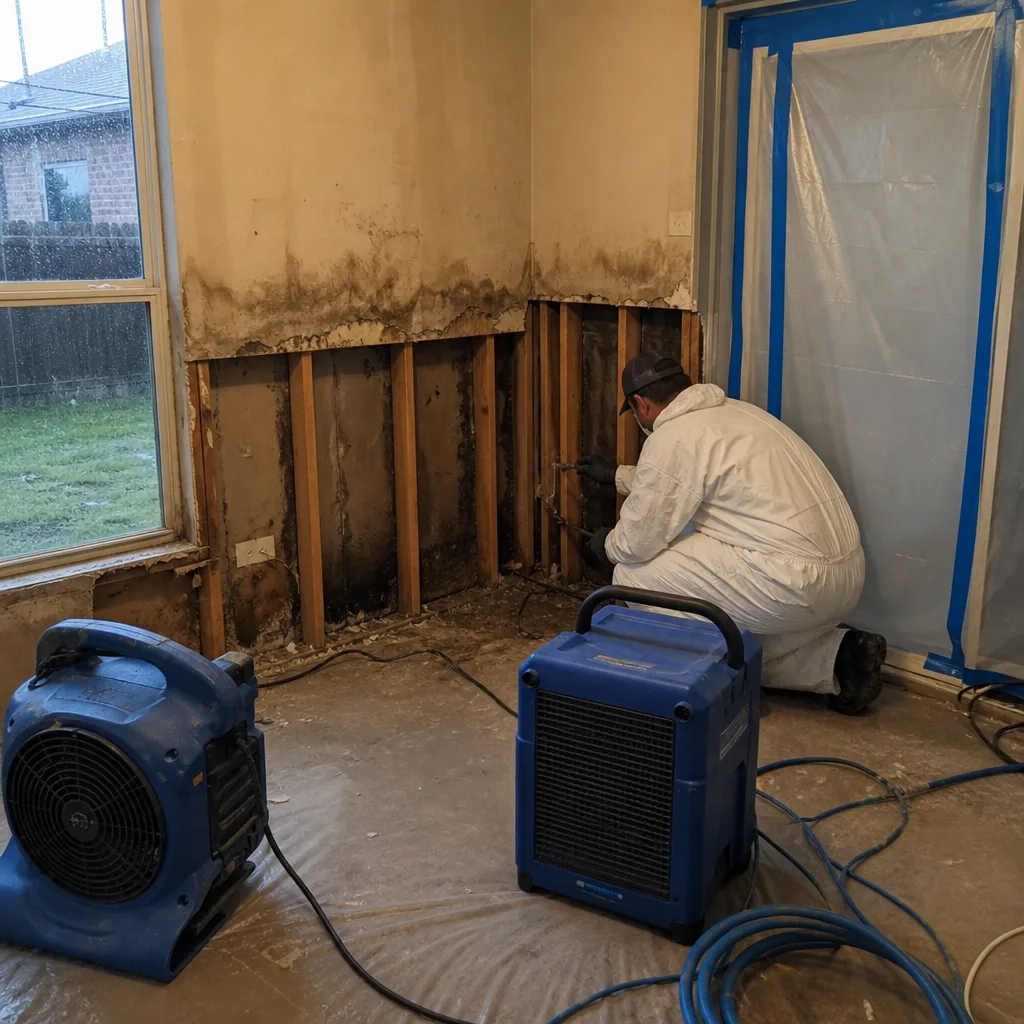 Before
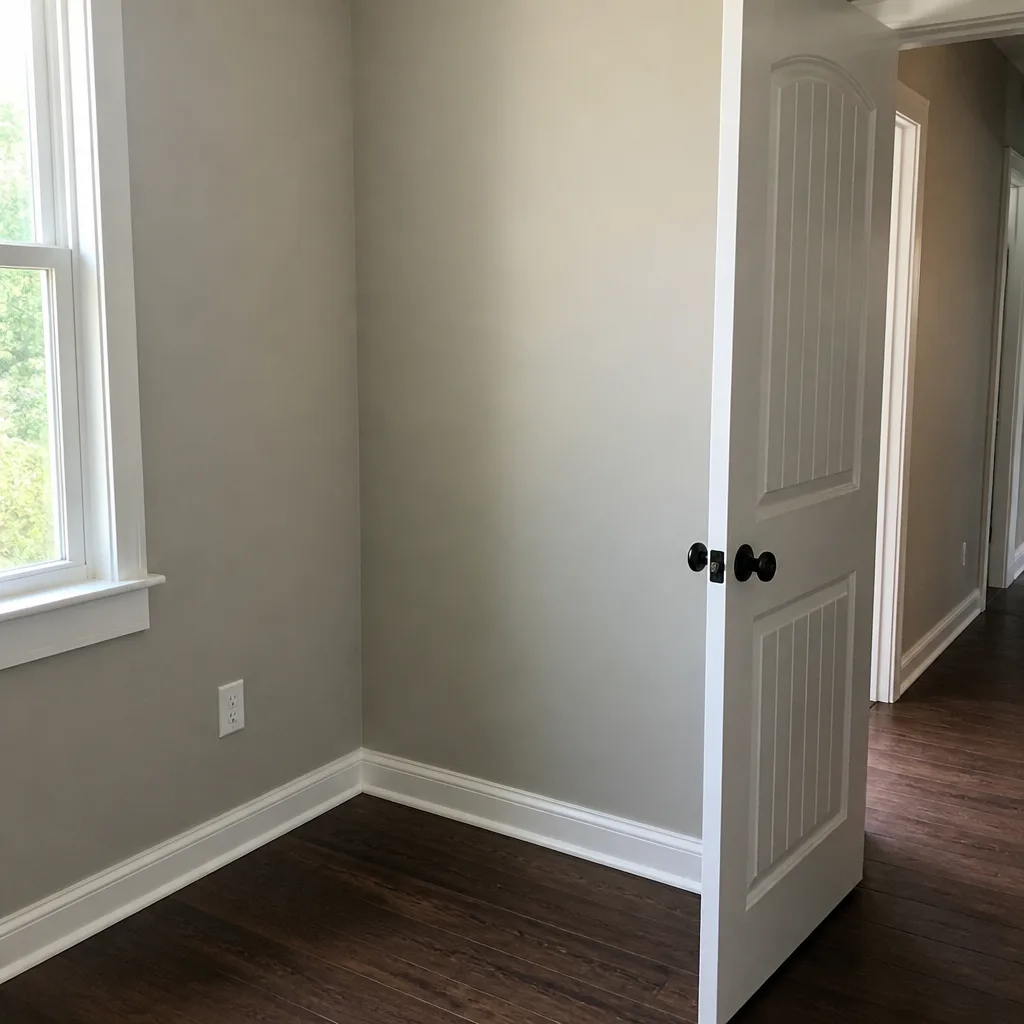 After
After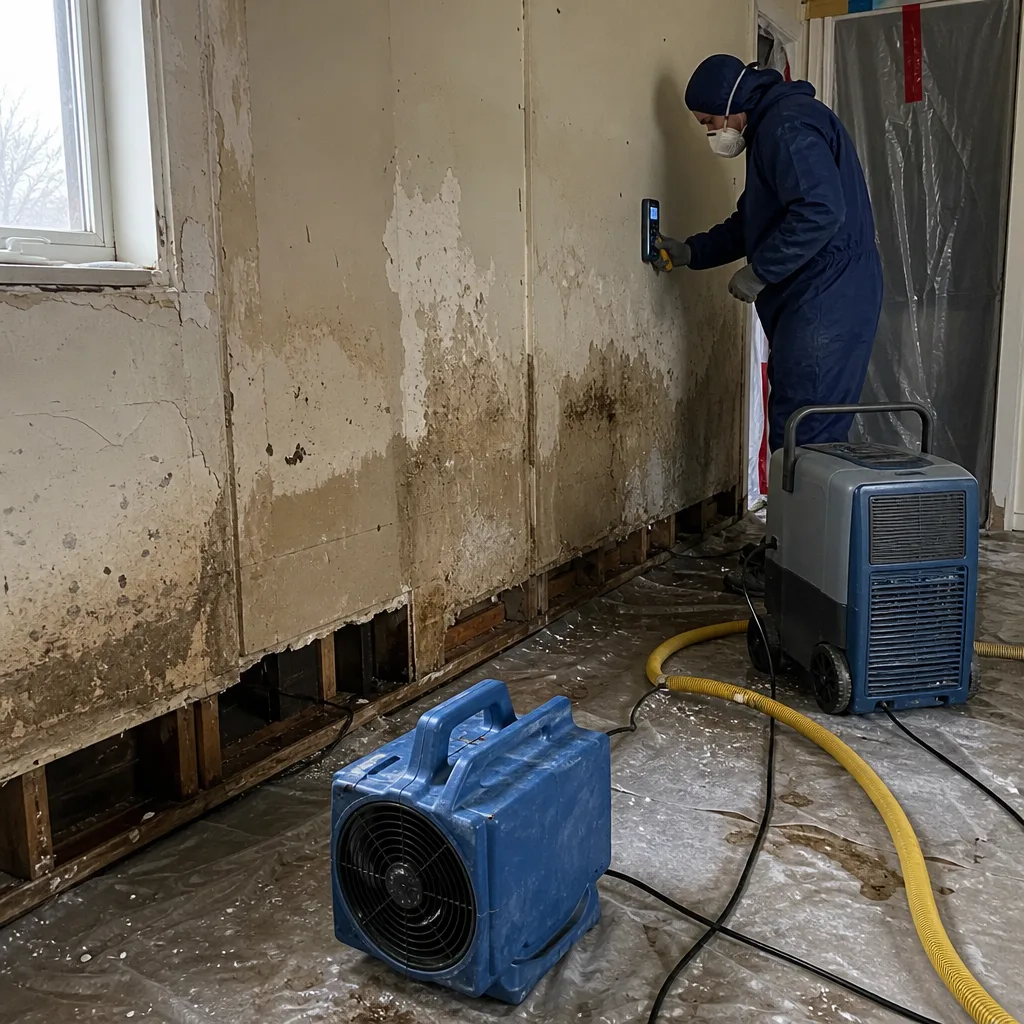 Before
 After
AfterCommon Mold Remediation Problems We See in Lackland AFB Homes
- Original copper supply lines failing behind walls. Mid-century base housing was built with copper that’s now 50 to 70 years old. Pinhole leaks at solder joints weep slowly enough that mold colonizes before water ever pools on a floor.
- Mold returning after containment breaks during gate escort changes. If negative air pressure drops while a technician waits at the gate, spores drift back into the drying chamber. We sequence shifts so the chamber stays sealed through every access transition.
- Slow housing-authority approvals extending drying times. When a scope of work sits waiting for sign-off, wet materials stay wet. Mold can colonize new drywall in 48 to 72 hours in Lackland AFB’s humid summer air. We push paperwork early and document everything so approvals move.
- Hidden moisture in legacy plaster walls. Plaster-over-gypsum construction hides elevated moisture readings behind surfaces that feel bone dry. Without moisture mapping, a remediation crew walks away from a wall that’s still feeding mold inside the cavity.
Pricing for Mold Remediation in Lackland AFB, TX
Here’s what you’re walking into. A small contained mold job in Lackland AFB, like a bathroom vanity leak, runs $1,200 to $2,500. Standard mold removal in a single room runs $1,800 to $5,500. Black mold remediation with full containment, testing, and post-remediation verification runs $2,800 to $8,000. Crawl space treatment under an older base housing unit runs $1,500 to $4,000 depending on square footage and access. Air quality restoration after a mold event, including HEPA air scrubbing and duct cleaning, adds $800 to $2,500.
What moves the number is the square footage of affected material, whether ductwork is involved, and whether base housing requires third-party clearance testing. We give you a written price before any work begins. Call (325) 252-3917 for a free estimate with our actual numbers, not a ballpark.
We Also Serve Cities Near Lackland AFB
Our Mold Remediation team serves Lackland AFB and the surrounding communities, including San Antonio, Selma, Boerne, and Converse. If you’re just outside the gates and dealing with mold after a storm or a plumbing failure, the same Threshold Verified protocol applies: name and photo before arrival, written scope before work, and the 365-Day Done Right Promise on every job. Read more about our work across the region on our Lackland AFB service page.
Serving Lackland AFB, TX - Our Local Coverage Area
We’re based in the Lackland AFB area and know this community well. Use the map below to see our service coverage - if you’re nearby, we can almost certainly help.
FAQs About Mold Remediation in Lackland AFB
Mold can begin colonizing wet drywall and paper-backed materials within 48 to 72 hours in Lackland AFB housing, especially during summer when indoor humidity stays high. If the leak has been weeping for a week, assume mold is already present even if you can’t see it. Call (325) 252-3917 the day you notice water or staining, and we’ll get moisture mapping scheduled before the colony spreads.
Yes, most mold remediation work inside Lackland AFB housing requires a security escort or approved access credential, coordinated through military housing authorities or the appropriate base office. We handle that paperwork on our end and submit access requests before the job starts. The process adds time to scheduling, so we build it into the plan from day one rather than discovering it at the gate.
Category 1 water starts clean, like a fresh supply line leak from an original copper pipe. Category 2 water carries contaminants, like water that’s passed through a wall cavity or sat in a crawl space. The category affects how much material must be removed and how aggressive the antimicrobial treatment needs to be. In older Lackland AFB housing, what starts as a Category 1 leak often becomes Category 2 by the time it soaks insulation and framing, which is why we treat every legacy leak with containment from the first visit.
Not usually. If the mold is contained to a bathroom, closet, or single wall, we can typically remove affected materials and clean remaining contents in place. A pack-out becomes necessary when contamination reached soft goods, personal belongings, or HVAC ducting. We’ll assess that during the initial inspection and write the scope so you know exactly what moves, what stays, and what the plan costs.
We take moisture readings on both sides of the wall, including the adjacent unit’s surface, because shared wall cavities in barracks and dormitories mean mold can spread laterally into neighboring spaces. If readings show moisture migration beyond the unit boundary, we coordinate with housing authorities before opening any shared wall. That’s a base-specific constraint you won’t see in civilian apartment complexes, and it’s one we plan for on every barracks job.
Written by Tobias Reyner, Owner at Marsh Water Damage San Antonio, serving Lackland AFB since 2005.