
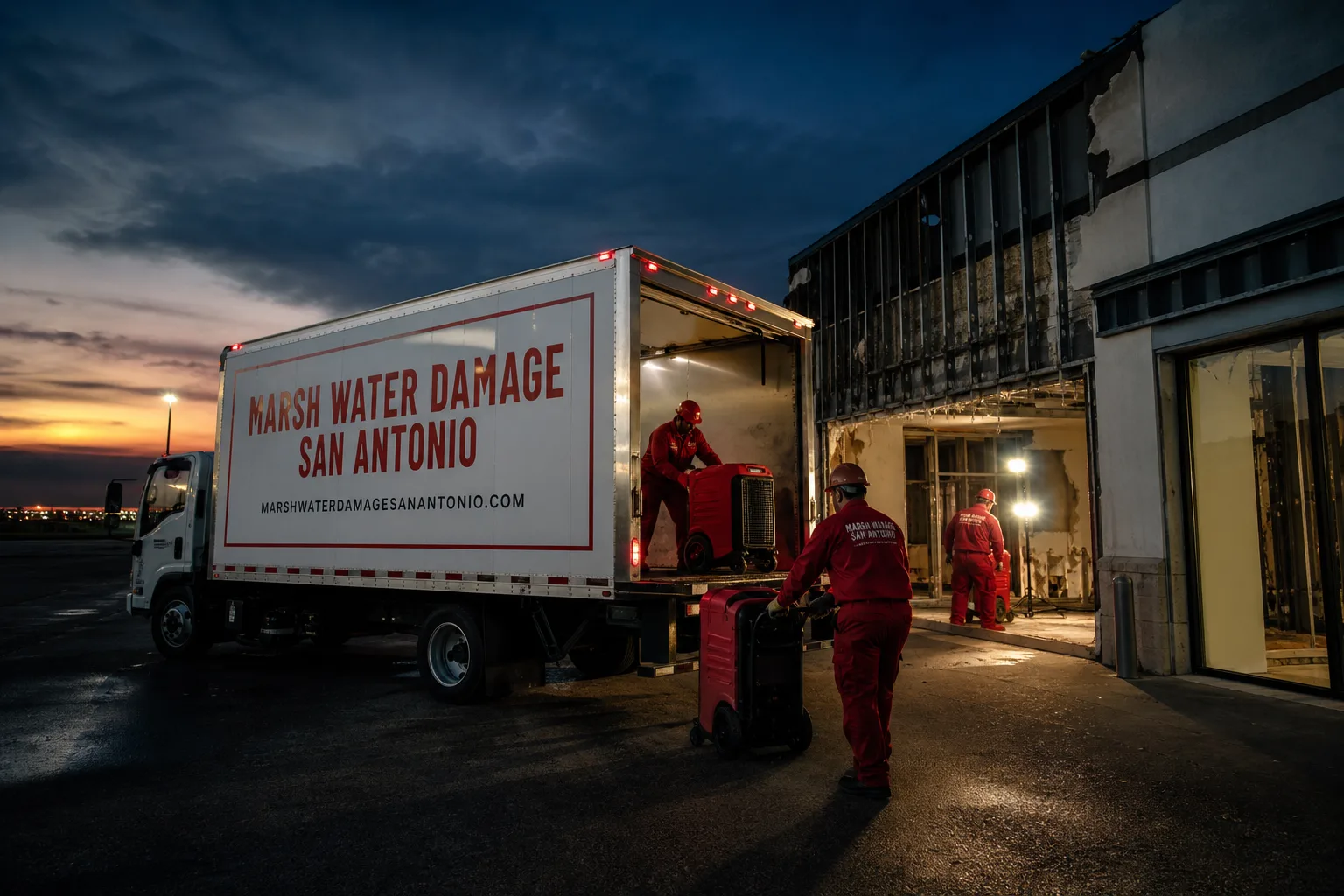
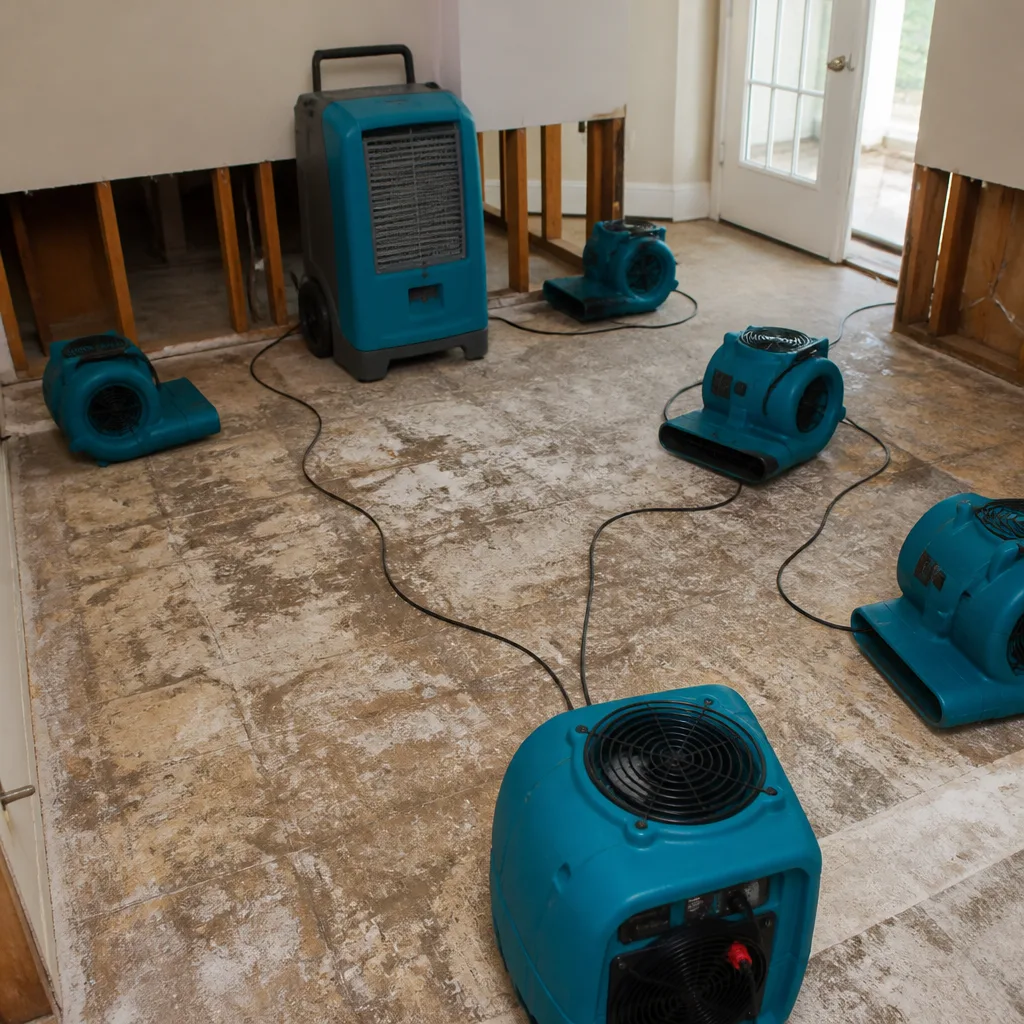
 Water damage drying
 Fire & smoke cleanup
 Mold remediation
 Storm response
 Sewage cleanup
 Reconstruction
Free visual inspection and a written scope of work before any mitigation begins - photos, moisture readings, and drying logs go in your claim file
The scope we write is the scope we bill. Anything new gets shown to you, in writing, before we touch it.
Get your free estimateFast, Reliable Water Damage Restoration Across Lackland AFB
Water damage restoration in Lackland AFB runs a different playbook than anywhere else in Bexar County. The base’s military housing, its security checkpoints, and its flight schedule all shape how a wet emergency gets handled. A burst supply line in a 1960s enlisted housing unit on the north side needs a crew that can get cleared at the gate, coordinate with military housing authorities, and start extraction before mold sets in. Marsh Water Damage San Antonio does exactly that. If you’re standing in water on base right now, call (325) 252-3917 and a live person answers, no voicemail.
We’ve worked inside Lackland AFB enough to know the rhythms: the morning gate backups, the housing office procedures, the way stormwater collects in the flat-roofed legacy units after a hard San Antonio downpour. Our Water Damage Restoration crews arrive with a written scope and a name tag. You’ll know exactly who’s coming through your door before we knock.
Why Marsh Water Damage San Antonio Is Lackland AFB’s Preferred Water Damage Restoration Company
Most restoration companies can dry out a house. Very few can get on base, adhere to the Defense Health Agency’s moisture and mold protocols for military housing, and still move fast enough to save your drywall. That’s the job in Lackland AFB. Our team knows that restoration work here means more aggressive structural drying, tighter documentation, and coordination with housing authorities, not just a homeowner. The DHA protocols demand it, and so do the aging plumbing systems in these units.
Tobias Reyner, who leads our San Antonio operation, has built our crew around one principle: the person at your door should be someone you already know by name and face. Every technician is background-checked, identity-verified, and photo-badged under the Threshold Verified standard. Before a tech arrives, you get their name and photo. When they show up, they hand you a photo ID. No exceptions, not even at 2 a.m. on a flooded holiday.
We’ve been doing this since 2005 as part of the Threshold Group family. Our technicians hold IICRC, RIA, and IFA credentials. We use Dri-Eaz dehumidifiers, XPOWER air movers, and Phoenix axial fans, the same equipment national franchises fly in for commercial losses. And every job gets a written price before demo starts, a written guarantee, and the 365-Day Done Right Promise: if the repair isn’t right within a year, we come back and make it right, at no charge. That promise is printed on every work order.
Restoration work we handle
Water Extraction in Lackland AFB
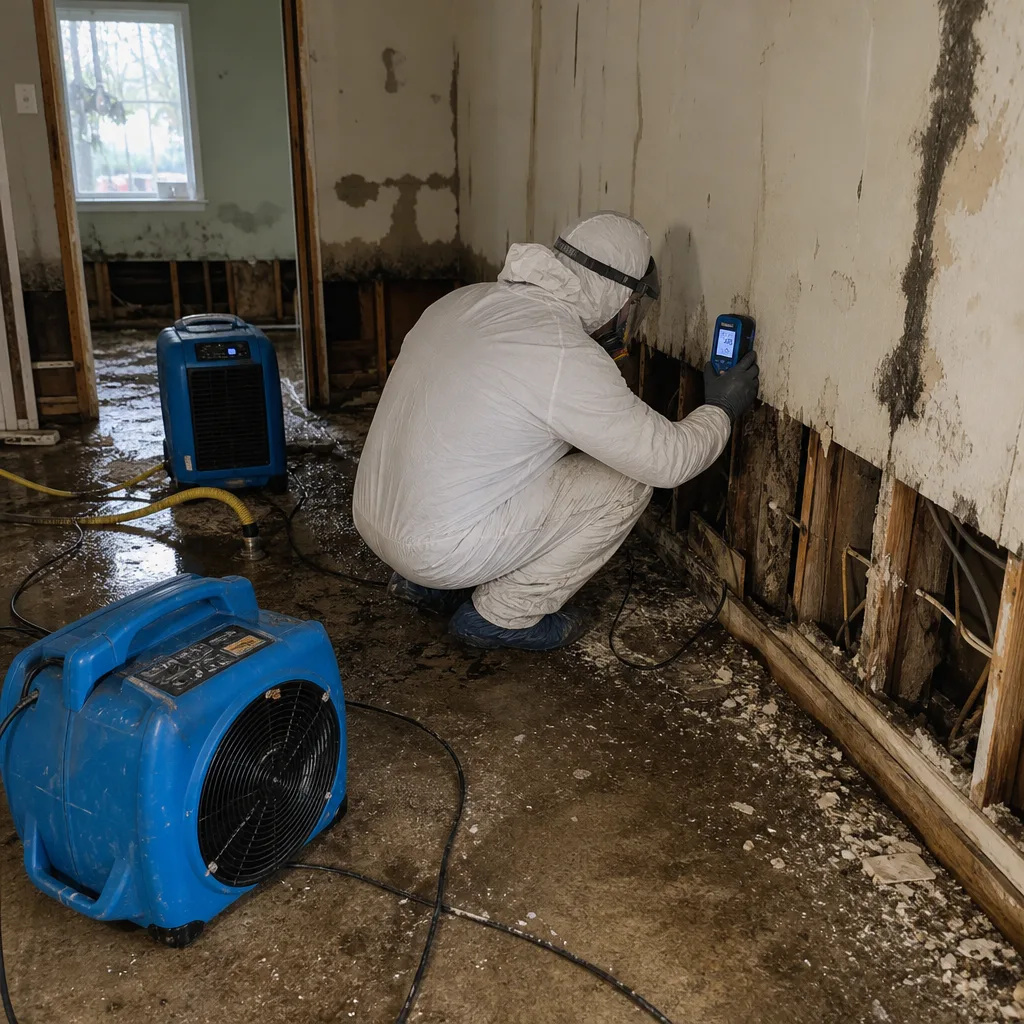
Water extraction in Lackland AFB means pulling standing water out of base housing fast enough to stop it from wicking into drywall, subflooring, and the framing behind it. In a mid-century unit on the north side of base, a burst supply line can dump 50 gallons into a hallway in under an hour. Our crews arrive with truck-mounted extractors and portable units sized for tight hallways and barracks corridors, then follow with moisture mapping to find what the eye misses. A typical water extraction in Lackland AFB runs between $400 and $900 before drying equipment is set, depending on how much water is standing and how far it traveled.
What We Pull Out First
Standing water goes first, every time. Carpet pad beneath it goes second, because wet pad holds water against the slab and starts degrading within hours. On base housing with original concrete slabs, that matters more: the clay-rich soil underneath moves with moisture, and a slab crack that stays wet becomes a recurring water path.
Category 1 to Category 3
A clean water line break is Category 1. Let it sit, and it becomes Category 2, then Category 3 if sewage or storm runoff mixes in. Our crews classify every source before extraction begins, because DHA protocols for military housing treat anything beyond Category 2 as requiring containment and antimicrobial treatment, not just drying.
Emergency Water Removal in Lackland AFB
Emergency water removal in Lackland AFB means a crew on the move while you’re still on the phone. Calls to (325) 252-3917 are answered by a live person 24/7. We coordinate with base security so the crew isn’t stuck at the gate while water keeps spreading. A standard emergency removal, meaning arrival within about an hour of gate clearance, runs between $550 and $1,200 depending on volume and how many rooms are involved, before drying equipment is added to the scope.
Flat Roof Failures on Legacy Housing
The original flat roofs on the older enlisted family housing units are the biggest storm-season culprit, which is why we offer Lackland AFB Storm Damage Restoration. When the drains clog or the membrane splits, water pools and finds every seam in the ceiling. We’ve pulled water from living rooms where the ceiling gave way entirely. Emergency removal starts with stopping the source, then extraction, then structural drying, in that order.
Frozen Pipe Response
Rare freezes catch Lackland AFB off guard because the housing stock was built for heat, not cold snaps. Pipes in exterior walls freeze and split, then thaw and pour. Emergency removal on a freeze event means getting into the unit fast, shutting the water at the main, and extracting before the drywall turns to paste.
Trusted Brands We Service in Lackland AFB
We work on all the major equipment brands and water intrusion points inside Lackland AFB housing. Whether it’s a failing PRV on a Rheem water heater line, a cracked Moen supply line under a sink, or a ruptured Apollo PEX manifold in the wall, our techs carry the fittings and connectors to handle it. For older units with original copper or galvanized, we stock the adapters and transition fittings to stop the leak before rebuild starts. The same goes for water heater pans and washing machine hoses, two of the most common flood sources in military family housing where laundry rooms sit on upper floors.
See the difference
 Before
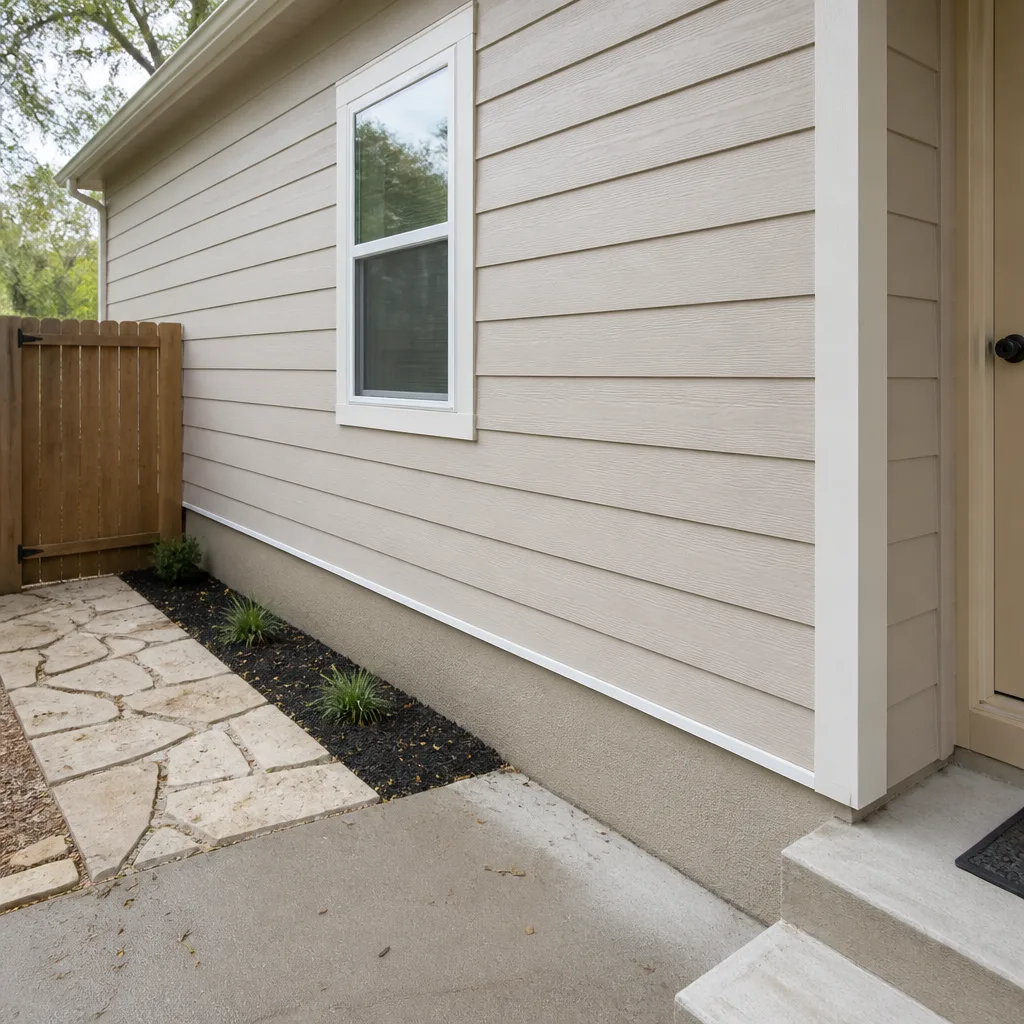 After
After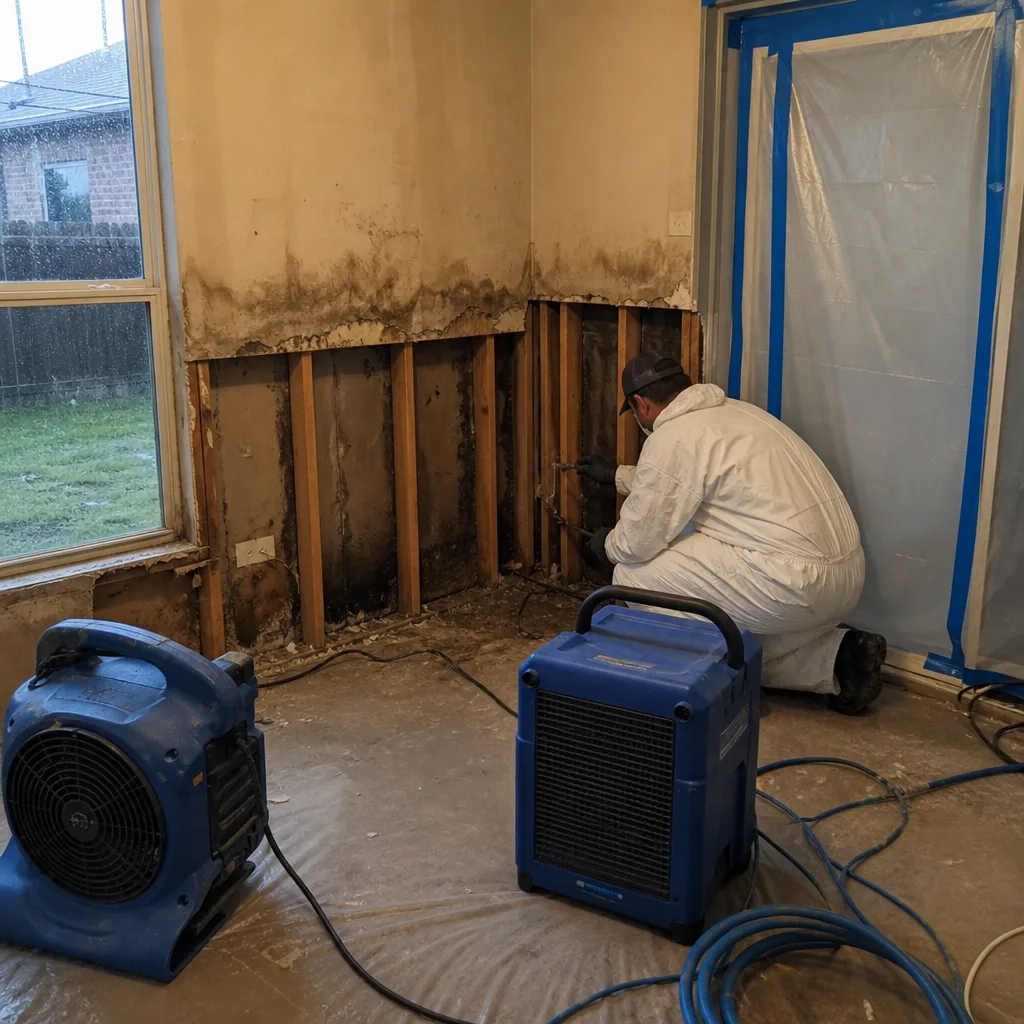 Before
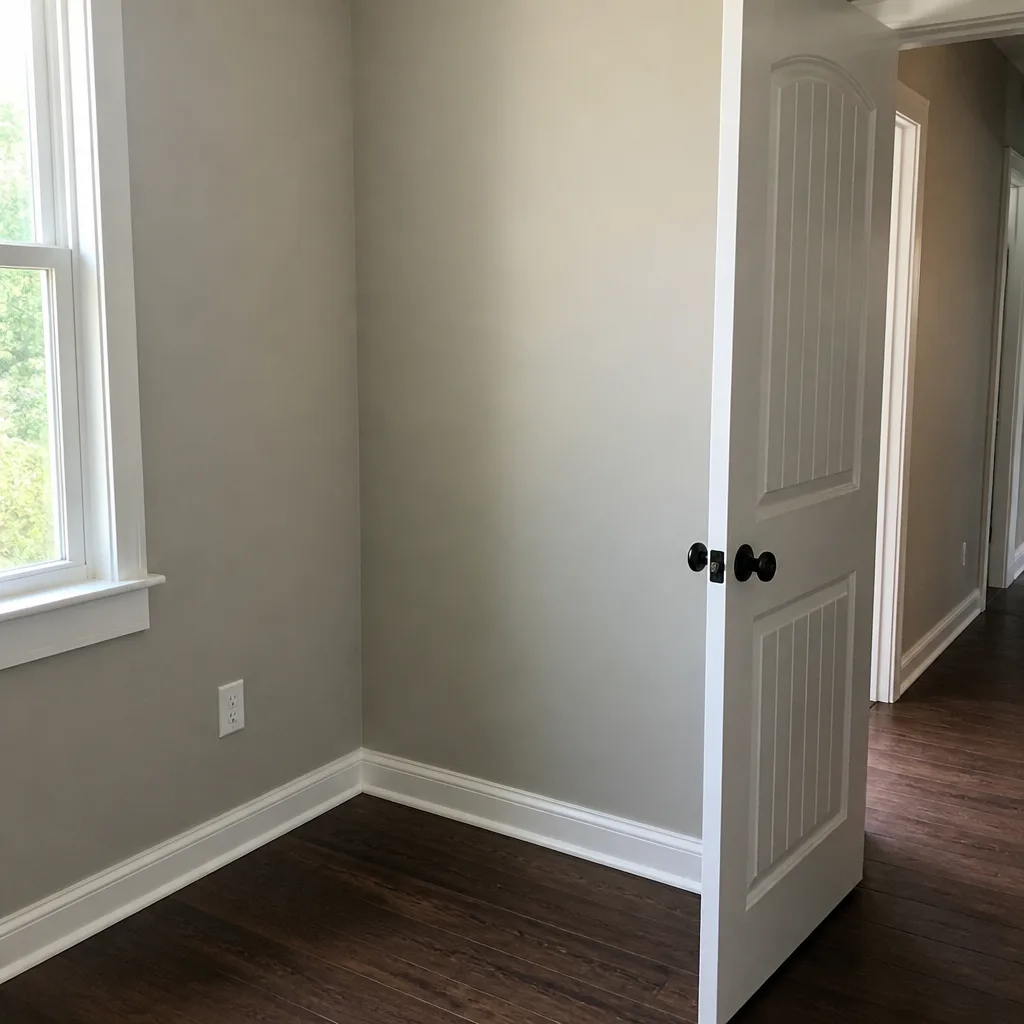 After
After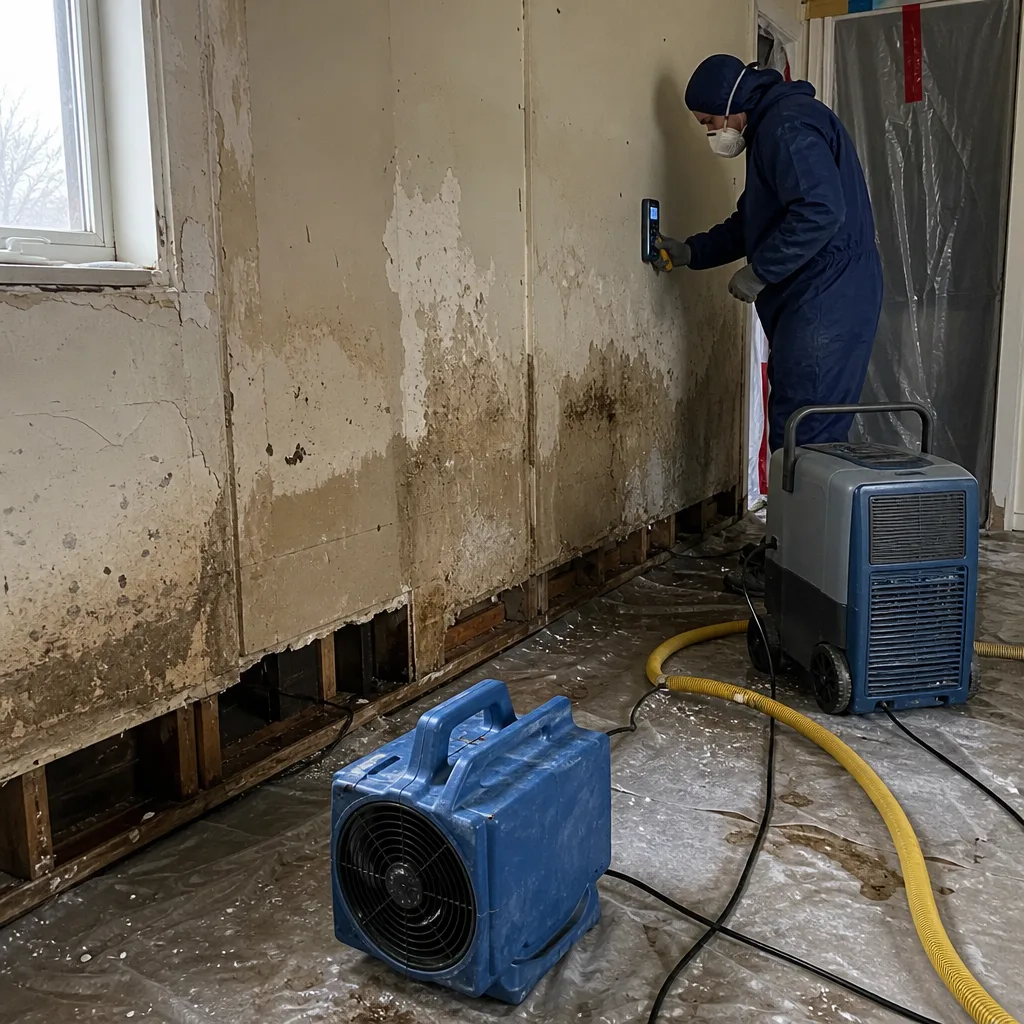 Before
 After
AfterCommon Water Damage Restoration Problems We See in Lackland AFB Homes
- Original plumbing under renovated surfaces. Many base housing units got cosmetic upgrades, but the supply lines and shutoff valves behind the walls are still 40 to 60 years old. When they fail, the water often runs inside the wall cavity for hours before anyone notices.
- Flat roof drainage failures. The legacy enlisted family housing on the north side has low-slope roofs and aging downspouts. A clogged drain turns a normal storm into an interior waterfall, saturating ceiling insulation and drywall in minutes.
- Clay-soil slab movement. The clay-rich ground under Lackland AFB expands and contracts with moisture. Foundation movement stresses rigid copper supply lines, which develop slow slab leaks that stay hidden until the water finds a crack in the slab and wets the flooring from below.
- Barracks and dormitory multi-unit spread. Water from one unit in a barracks building doesn’t usually stay in that unit. It travels along plumbing chases and electrical conduits to the floors below. Restoration on these buildings requires containment and coordination with base housing, because shutting down one unit often affects the whole floor.
Pricing for Water Damage Restoration in Lackland AFB, TX
Honest numbers, because you shouldn’t have to guess. A water extraction in Lackland AFB typically runs $400 – $900. Emergency water removal with extraction and initial drying equipment setup runs $900 – $2,200 for a single room, or $2,500 – $5,500 for a multi-room event like a ceiling collapse or a slab leak that spread under flooring. Structural drying equipment rental adds $50 – $90 per day per air mover or dehumidifier, and most jobs need 3 to 5 days of drying. What moves the price: water category, square footage affected, whether baseboard and drywall need removal, and whether containment is required under DHA mold protocols. Every Marsh job gets a written scope with line-item pricing before any work starts. No one touches a wall until you’ve seen the number. Call (325) 252-3917 for a free estimate.
We Also Serve Cities Near Lackland AFB
If you live just outside the gates, we handle Water Damage Restoration in Lackland AFB and the surrounding communities. That includes San Antonio, Selma, Boerne, and Converse. Same live-answer dispatch, same written scope, same 365-Day Done Right Promise.
Serving Lackland AFB, TX - Our Local Coverage Area
We’re based in the Lackland AFB area and know this community well. Use the map below to see our service coverage - if you’re nearby, we can almost certainly help.
FAQs About Water Damage Restoration in Lackland AFB
You need a vendor that’s already in the system or can get processed quickly through the Visitors Center and the military housing office. Marsh has worked inside Lackland AFB before and understands the access process. Our dispatch coordinates gate clearance at the same time the crew is being dispatched, so a security delay doesn’t mean a longer wait while your home keeps taking on water. Call us and we’ll handle the logistics, including the housing office coordination.
You have roughly 24 to 48 hours before mold spores begin colonizing wet drywall and insulation, and the DHA protocols for military housing treat that window as the hard deadline for structural drying to begin. In older units on Lackland AFB, the window can be shorter in humid summer months when ambient moisture already sits high. Our crews run Dri-Eaz dehumidifiers and XPOWER air movers immediately after extraction to drive the moisture out before that window closes.
That depends on the water category and what’s been affected. For a clean water extraction in one room, you can usually remain in the unit while equipment runs. For Category 2 or 3 water, or when drywall is being removed, the housing office and our team will advise relocation, at least from affected rooms. We document everything for military housing, and we’ll give you a clear read on whether staying is safe or it’s time to file for temporary lodging.
Yes. Barracks and dormitories fall under DOD facility management rules, which mean stricter documentation, different disposal requirements for contaminated materials, and coordination with base engineering before any structural changes. Our crews work within those rules, handling containment, negative air, and moisture mapping to DOD standards. We also schedule around flight-line operations and base electrical constraints, which a civilian restoration crew might not know to consider.
We treat it like any other emergency, but faster, because freeze damage in uninsulated walls means the water often runs for hours before anyone catches it. We shut the main, extract standing water, and use thermal imaging to find every wet pocket in the wall cavity. Then we dry the structure to the DHA standard, not just to the surface. The re-freeze risk is why we push drying to completion fast; trapped moisture freezes again and causes secondary damage in the next cold snap.
Written by Tobias Reyner, Owner at Marsh Water Damage San Antonio, serving Lackland AFB since 2005.